
You’re trying to lose weight, and you’ve heard nuts are healthy—but you’ve also heard they’re calorie bombs. The confusion makes sense: a single serving of almonds has almost 200 calories and 14 grams of fat, which sounds dangerous when you’re in a deficit. But people who lose weight successfully eat nuts regularly. The difference isn’t whether nuts work; it’s whether you eat them by the handful or by the measured portion.
The verdict is clear: yes, you can absolutely eat nuts and lose weight, but only if you treat them like a measured snack, not a bottomless bowl. This article will show you exactly how many nuts fit a daily weight-loss calorie budget, which nuts give you the best nutrition for the fewest calories, and why the container your nuts come in matters more than their fat content.
Quick Answer
You can eat nuts daily while losing weight—aim for one 1-ounce serving (about 23 almonds, 14 walnut halves, or 49 peanuts) per day, or 150–200 calories worth. This fits comfortably into a typical 1500–2000 calorie weight-loss diet and gives you fiber, protein, and healthy fats that keep you full. The critical caveat: this only works if you measure your portions beforehand and avoid eating straight from a bag or shared bowl, where a typical handful is actually 2–3 servings and 400+ calories.
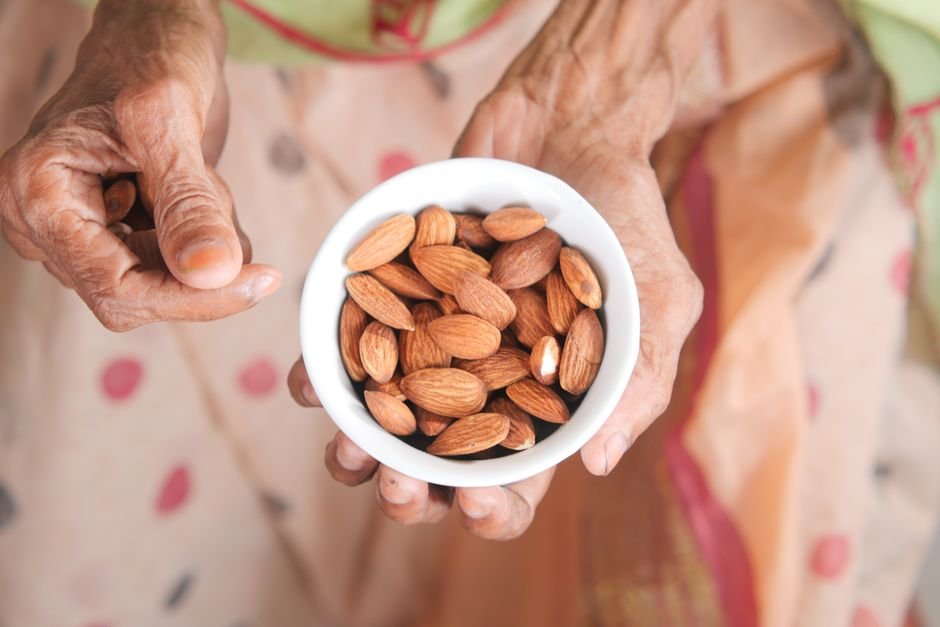
Almonds vs. Mixed Nuts: The Weight-Loss Comparison
Almonds (Portion-Controlled Approach)
- Calories per 1 oz (23 almonds): 164
- Protein: 6g (supports satiety and muscle preservation during weight loss)
- Fiber: 3.5g (aids digestion and helps you feel full longer)
- Fat: 14g (mostly unsaturated; no trans fat)
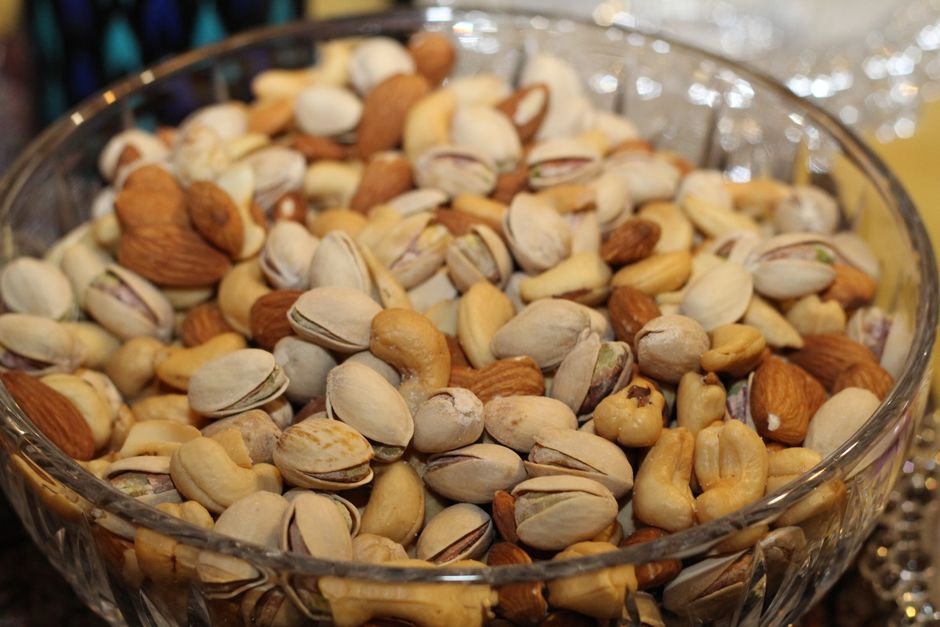
Mixed Nuts (Unrestricted Snacking Pattern)
- Calories per 1 oz typical mix (cashews, almonds, walnuts, peanuts): 160–180
- Protein: 5–6g (varies by ratio; less consistent than almonds alone)
- Fiber: 2–3g (lower fiber makes satiety unpredictable)
- Fat: 14–16g (higher proportion of saturated fat from cashews)
| Metric | Almonds (1 oz) | Mixed Nuts (1 oz typical) |
|---|---|---|
| Calories | 164 | 170 |
| Protein (g) | 6 | 5–6 |
| Fiber (g) | 3.5 | 2–3 |
| Total Fat (g) | 14 | 14–16 |
| Saturated Fat (g) | 1 | 2.5–3 |
| Magnesium (mg) | 76 | 50–70 |

Etekcity Food Scale
0.1g accuracy — the perfect companion for exact portions.
Which Is Better for Sustainable Weight Loss?
Almonds win for weight-loss consistency. A single-nut portion (almonds) is easier to measure, higher in fiber and protein per calorie, and psychologically simpler—you know exactly what you’re eating. The extra fiber and protein in almonds create more lasting fullness, which reduces the chance of overeating later. Mixed nuts are fine nutritionally but introduce decision fatigue: each handful is slightly different in calorie content depending on the cashew-to-almond ratio, and the lower fiber means you’re more likely to keep reaching back into the bowl.
However, mixed nuts work perfectly well for weight loss if you commit to pre-portioning them into small containers or bags. Some people find one nut boring and genuinely stick better to a mixed-nut routine. The trick is making the 1-ounce boundary non-negotiable—either by buying pre-portioned packets or by measuring and storing every serving individually. If you’re someone who snacks from a shared bowl or eats straight from a bulk bag, mixed nuts (or any nuts) will derail your deficit. For those with strong portioning discipline, the choice is purely preference.
Why the Numbers Don’t Tell the Whole Story
A 1-ounce portion of almonds is listed at 164 calories—but that assumes you’re using a food scale or counting the exact nuts. In reality, most people eyeball a handful, which is typically 1.3–1.5 ounces (210–245 calories) without realizing it. A restaurant nut mix or a “healthy” snack bag labeled “2 servings” gets eaten in one sitting and quietly adds 320 calories to your day. Store brands vary: one bulk almond supplier may have larger nuts (23 per ounce) while another has smaller ones (26 per ounce), shifting the calorie count by 10–15.
The oil content also matters in ways a label doesn’t capture. Dry-roasted almonds have roughly the same calories as raw almonds, but oil-roasted nuts (which absorb extra oil during processing) can add 20–30 calories per ounce compared to their dry counterparts. If you eat honey-roasted or salt-and-vinegar-flavored nuts, you’re also consuming added sugars or sodium that aren’t part of the plain nut’s nutrition profile.
This is where our free AI nutrients calculator at https://nutrientscalculator.com/ becomes invaluable. Instead of guessing your portion, you can enter the exact nut type, brand, and amount you actually ate, and get the precise calorie and macro breakdown of what’s in front of you. The benefits include:
- Accounting for brand-specific variations in nut size and oil content
- Tracking the actual calories in your mixed nuts (not a generic “mixed” estimate)
- Spotting hidden sugars or oils in flavored nut blends
Common Mistakes
People make these errors when adding nuts to a weight-loss plan:
❌ Assuming all fat is equally bad and cutting nuts entirely, losing out on satiety and micronutrients that actually help weight loss.
❌ Eating a “small handful” without measuring, which typically equals 2–3 servings and 400–500 calories—enough to sabotage a daily deficit without appearing in their food log.
❌ Buying pre-made nut mixes with dried fruit, chocolate, or candy coated in, then eating “one serving” of the mixture while unknowingly consuming 50+ extra grams of sugar.
❌ Switching between nut types daily without checking differences in calorie density, so they accidentally eat cashews (high-calorie) one day and think nuts are “worse” than they actually are.
Each mistake shifts the math enough to turn a 1-ounce daily nut habit from weight-loss compatible to weight-loss sabotage.
FAQ
How many nuts can I eat per day and still lose weight?
One 1-ounce serving (roughly 23 almonds, 14 walnut halves, or 49 peanuts) is the standard safe daily amount for a calorie deficit. Some people can fit 1.5 ounces (around 240 calories) if they’re eating above 2000 calories per day, but going above 1.5 ounces consistently erodes the deficit.
Are macadamia nuts or cashews worse for weight loss than almonds?
Yes—macadamia nuts contain 204 calories per ounce (and only 2g fiber), while cashews are 155 calories but lower in protein and fiber than almonds. If you love cashews or macadamias, eat them, but reduce your portion to 0.75 ounces to stay in the same calorie range as 1 ounce of almonds.
Can I eat nuts if I’m doing low-carb weight loss?
Absolutely. Most nuts are very low in carbs (almonds have just 6g net carb per ounce) and fit perfectly into keto or low-carb diets. Cashews and pistachios are slightly higher in carbs (8–9g per ounce) but still acceptable in a 1-ounce daily serving.
Should I buy raw, roasted, or flavored nuts?
Raw or dry-roasted with no added oils are equal nutritionally. Oil-roasted nuts add 20–30 extra calories per ounce. Flavored nuts (honey-roasted, cinnamon, barbecue) add sugars or sodium and are fine occasionally but harder to portion mindfully because they’re designed to be addictive. Stick to plain if you’re relying on nuts as a daily weight-loss tool.
Conclusion
Yes, you can eat nuts every day and lose weight. A single 1-ounce serving of almonds or similar nuts fits neatly into a calorie deficit, provides genuine nutrition (fiber, protein, magnesium), and keeps you feeling full between meals. The science supports this: studies consistently show that nut eaters don’t gain more weight than non-nut eaters when calories are equal, and often lose slightly more because the protein and fiber suppress hunger.
The real work is in the portioning. Pre-measure your nuts, store them in individual containers, and avoid the bowl-and-handful approach that turns 164 calories into 400. If you’re unsure whether what you’re eating matches the “1 ounce” standard, use a reliable nutrients calculator to check your actual serving. This removes guesswork and keeps nuts as the weight-loss helper they’re meant to be, not an unintended calorie leak.
