Key takeaways
- How much water should I drink a day? The National Academies’ reference is about 2.7 liters of total water for women and 3.7 liters for men.
- “Total water” includes food. About 20% usually comes from what you eat, leaving roughly 9 cups (women) to 12.5 cups (men) from drinks.
- All drinks count, including tea, coffee and milk.
- Thirst and pale-yellow urine are good everyday guides. Heat, exercise, pregnancy and illness raise your needs.
“Drink eight glasses of water a day” is one of the most repeated health rules, and one of the least precise. It isn’t harmful, but it’s a guess, and it leaves out food, other drinks, body size, climate and exercise. So how much water should I drink a day, really? Here’s what the official reference says, how to turn it into an everyday target, and when you need more.
How much water should I drink a day? The official reference

In 2004 the National Academies reviewed national survey data and set Adequate Intakes for water: about 2.7 liters (91 oz) a day for women and 3.7 liters (125 oz) for men, aged 19 and over (National Academies). These are “total water” figures: everything from drinks plus the water in food. They describe what healthy, moderately active people in a temperate climate typically consume, not a minimum you must hit.
Pregnancy raises the reference to 3.0 liters a day and breastfeeding to 3.8 liters.


Etekcity Food Scale
0.1g accuracy — the perfect companion for exact portions.
How much comes from food?
In a typical diet about 20% of total water comes from food (Mayo Clinic). Fruit, vegetables, soups, yogurt and cooked grains are mostly water. USDA data show that cucumber is about 95% water, watermelon 92%, an orange 87% and even cooked white rice 68%.
Take 20% away and the drinks part is roughly:
- Women: about 2.2 liters, or 9 cups (8 oz each).
- Men: about 3.0 liters, or 12.5 cups.
If you eat lots of fruit, vegetables and soup, you’ll need a bit less from drinks. Our list of water-rich foods shows which foods contribute most.
What counts as “water”?
Every drink counts toward your fluid intake:
- Water, sparkling or still, is ideal: no calories, no sugar.
- Milk is about 89% water and adds protein and calcium.
- Tea and coffee count. In a study of regular coffee drinkers, four cups a day hydrated about as well as the same amount of water (Killer et al., 2014). Details in does coffee count as water?
- Juice and soft drinks hydrate too, but bring sugar and calories: a 12 oz can of cola has about 155 calories.
Alcohol is the exception worth knowing about: it increases urine output, so it’s a poor way to hydrate.
When you need more water
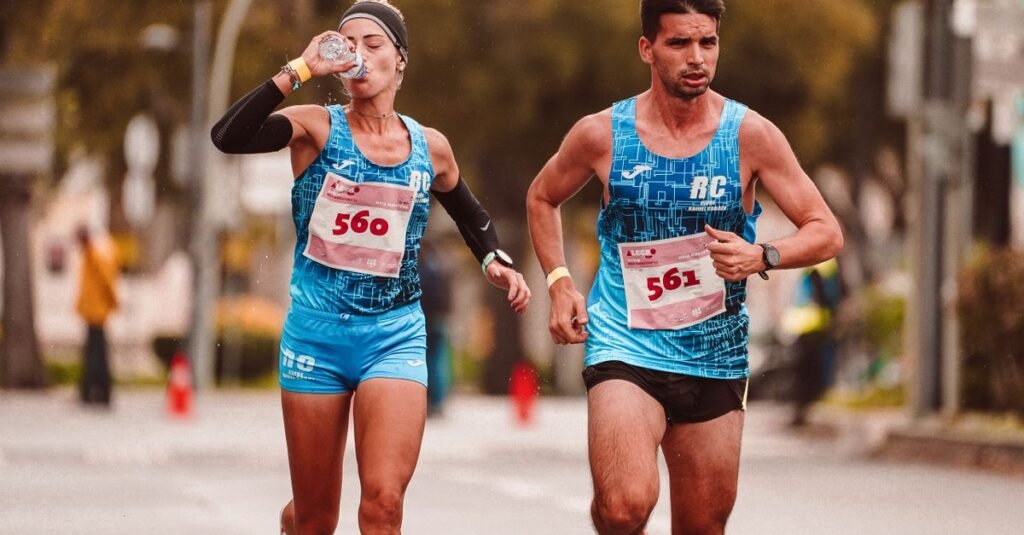
The reference is for an average day. You’ll need more when you lose more:
- Exercise. Sweat rates vary hugely, from about half a liter to more than two liters an hour depending on the person, intensity and heat (Baker, 2017). A practical rule: drink before you start, sip during anything longer than an hour, and drink afterward to thirst.
- Hot or humid weather, and high altitude.
- Illness with fever, vomiting or diarrhea. Oral rehydration solutions replace salts as well as water.
- Pregnancy and breastfeeding.
- Older age. Thirst becomes less reliable, so older adults benefit from drinking on a routine rather than waiting to feel thirsty.
For long, sweaty sessions you may need salts as well as water; see whether you need electrolyte drinks.
How to tell if you’re drinking enough
You don’t need to measure every glass. Two simple checks work for most healthy adults:
- Thirst. If you rarely feel thirsty, you’re probably fine.
- Urine color. Pale straw to light yellow usually means good hydration; dark yellow or amber means drink more. (Some vitamins, especially B2, can turn urine bright yellow regardless.)
Headaches, tiredness, dizziness and dark urine can all be early warning signs. Our guide to signs of dehydration covers what to watch for, and when it’s serious.
A simple daily water routine
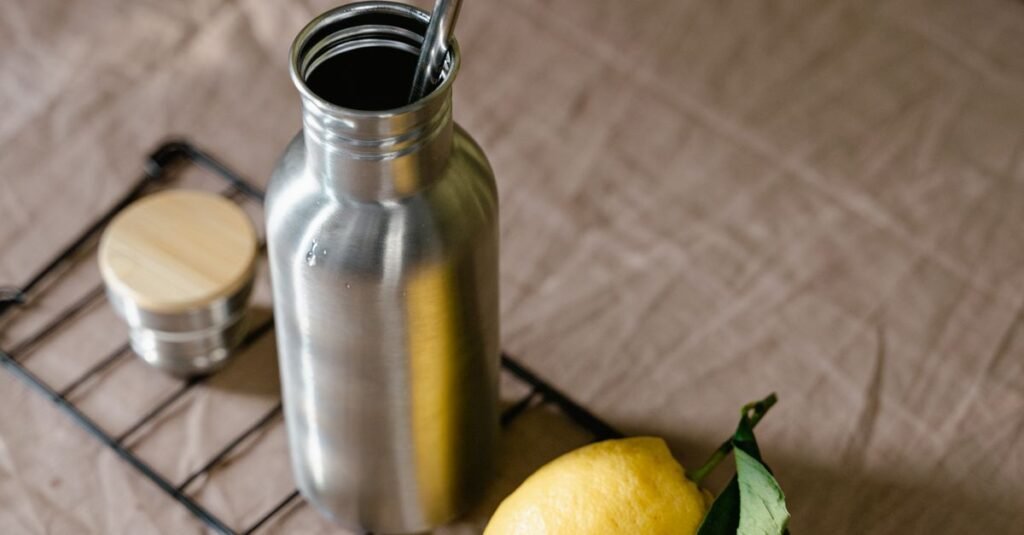
- A glass when you wake up. You’ve gone 7–8 hours without fluid.
- One drink with every meal and snack. That alone is five or six glasses.
- A bottle where you work. Refilling it twice is roughly a liter and a half.
- Extra around exercise. About a glass before and after, more on hot days.
- Eat your water. Fruit, vegetables and soup make up the rest.
More ways to make it automatic are in how to drink more water.
Can you drink too much?
It’s uncommon, but yes. Drinking far more than you lose, very quickly, can dilute the sodium in your blood, a condition called hyponatremia. It mostly affects endurance athletes who drink large volumes during long events and people with certain medical conditions. For everyday life, drinking to thirst is safe. If you have heart, kidney or liver disease, follow your doctor’s fluid advice instead of general targets.
Track it without thinking about it
Seeing your intake makes it easier to adjust. Our free water tracker logs glasses in one tap and shows your day against a target based on your body and activity.
The bottom line
How much water should I drink a day? About 2.7 liters of total water for women and 3.7 liters for men is the official reference, and around a fifth of it comes from food. In practice that’s roughly 9–13 cups of drinks, more when it’s hot or you’re active. Let thirst and urine color guide you, and drink a little extra when you sweat.
Frequently asked questions
Do I really need 8 glasses of water a day?
There's no study behind exactly eight glasses. The National Academies' reference is about 2.7 liters of total water a day for women and 3.7 liters for men, and around 20% of that usually comes from food. For many people that works out to roughly 9 to 13 cups of drinks, not all of it plain water.
Does tea and coffee count toward my water intake?
Yes. Tea, coffee, milk and other drinks all count. Research in regular coffee drinkers found moderate coffee intake hydrated about as well as water.
How can I tell if I'm drinking enough water?
If you rarely feel thirsty and your urine is usually pale yellow, you're probably drinking enough. Dark yellow urine, headaches and fatigue can be signs you need more.
Can you drink too much water?
Yes, though it's rare. Drinking very large amounts quickly, especially during long endurance events, can dilute blood sodium (hyponatremia), which can be dangerous. Drink to thirst and don't force fluids far beyond your needs.
Sources
- National Academies: Dietary Reference Intakes for Water, Potassium, Sodium, Chloride, and Sulfate (2005)
- Mayo Clinic: Water — how much should you drink every day?
- Killer SC et al. No evidence of dehydration with moderate daily coffee intake. PLoS One, 2014
- Baker LB. Sweating rate and sweat sodium concentration in athletes. Sports Medicine, 2017
- USDA FoodData Central
This article is for general information and isn’t medical advice. Talk to your doctor or a registered dietitian about your own needs, especially if you have a health condition, are pregnant or take medication.