Part of our guide: How Much Water Should I Drink a Day? What the Science Actually Says
Key takeaways
- The early signs of dehydration are thirst, a dry mouth, less frequent urination and dark yellow urine.
- Headaches, tiredness, dizziness and trouble concentrating often come next.
- Older adults, babies, young children and people who are sick or exercising in heat are most at risk.
- Confusion, fainting, a racing heart or no urine for many hours need urgent medical care.
Your body is about 60% water, and it loses some all day through breath, sweat and urine. When you lose more than you take in, you become dehydrated. Most of the time it’s mild and fixed with a glass or two of water, but it’s worth knowing the signs of dehydration early, because thirst isn’t always a reliable signal, especially as you get older.
9 common signs of dehydration

From mildest to more serious (Mayo Clinic):
- Thirst. The most obvious signal, though it can lag behind your actual needs.
- Dry or sticky mouth and lips.
- Peeing less often, and smaller amounts.
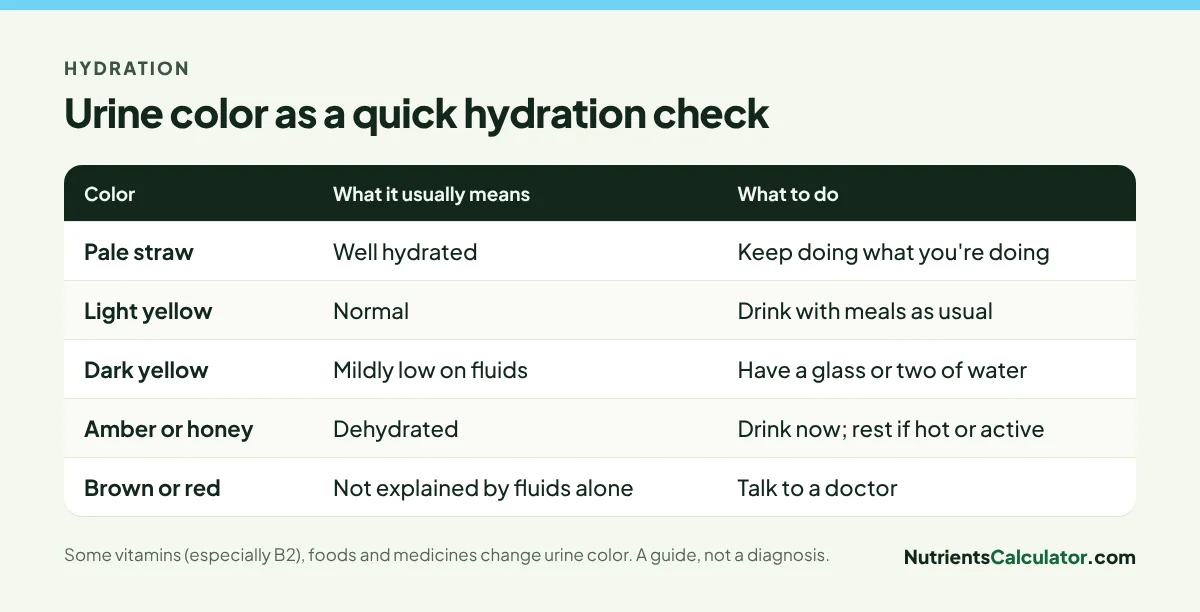
- Dark yellow urine. One of the easiest signs to check (see the chart below).
- Headache.
- Tiredness or low energy.
- Dizziness or light-headedness, especially when you stand up quickly.
- Trouble concentrating or irritability.
- Muscle cramps, particularly during or after exercise in the heat.
Severe dehydration can cause confusion, a rapid heartbeat, rapid breathing, fainting and very little or no urine. Those need medical attention.

Etekcity Food Scale
0.1g accuracy — the perfect companion for exact portions.
Reading your urine color
Urine color is a simple, free hydration check. Pale straw to light yellow generally means you’re well hydrated; dark yellow or amber means you need more fluid. A couple of caveats:
- B vitamins, especially riboflavin (B2), can turn urine bright yellow even when you’re well hydrated.
- Some foods and medicines (beets, blackberries, certain antibiotics) change the color.
- Brown, red or cola-colored urine isn’t a hydration issue. Talk to a doctor.
Who is most at risk?

- Older adults. Thirst sensation weakens with age, and some medicines (such as diuretics) increase fluid loss. Drinking on a routine, with meals and medications, works better than waiting for thirst.
- Babies and young children. They lose fluid quickly with fever, vomiting or diarrhea. Signs include a dry mouth, no tears when crying, no wet diaper for three hours, sunken eyes and unusual sleepiness.
- People with an illness. Fever, vomiting and diarrhea all drain fluid and salts.
- Athletes and outdoor workers. Sweat losses can range from about half a liter to over two liters an hour in some people (Baker, 2017).
- People with diabetes. High blood sugar increases urination.
Common causes
- Not drinking enough on busy days (no water bottle, long meetings, travel).
- Heat and humidity.
- Exercise, especially long sessions.
- Illness with fever, vomiting or diarrhea.
- Alcohol, which increases urine output.
- High altitude.
Coffee and tea, despite their reputation, don’t dehydrate regular drinkers in moderate amounts; we explain why in does coffee count as water?
How to rehydrate

For mild dehydration:
- Drink a glass or two of water, then keep sipping over the next hour.
- Eat something with water and salt in it: soup, fruit, yogurt.
- Rest somewhere cool if you’ve been in the heat.
After heavy sweating, vomiting or diarrhea: an oral rehydration solution (from a pharmacy) replaces sodium and potassium as well as water, and is absorbed faster than plain water. Sports drinks also contain salts, though usually less sodium and more sugar. See do you need electrolyte drinks? for when they’re worth it.
How to prevent dehydration
- Know your baseline. The National Academies’ reference is about 2.7 liters of total water a day for women and 3.7 liters for men, including water from food (National Academies). Our pillar guide on how much water to drink a day explains what that means in cups.
- Drink with every meal and snack.
- Carry a bottle and refill it at set times.
- Eat water-rich foods: cucumber, watermelon, oranges, soups and yogurt (water-rich foods).
- Drink before, during and after exercise, more in heat.
- Track it if you often forget. A simple tracker makes gaps obvious.
Small habits make the biggest difference; our list of ways to drink more water has a dozen easy ones.
When to get medical help
Seek urgent care if you or someone you’re caring for has:
- Confusion, extreme sleepiness or fainting.
- A very fast heartbeat or breathing.
- Vomiting or diarrhea that stops you keeping fluids down for more than a day (sooner for children and older adults).
- Very little or no urine for many hours.
- In babies: no wet diaper for three hours, a sunken soft spot on the head, or no tears.
The bottom line
The early signs of dehydration are thirst, a dry mouth, peeing less and darker urine, often with a headache or fatigue. A glass or two of water usually fixes mild dehydration. Pay closer attention to older adults, young children and anyone who’s sick or sweating heavily, and get help quickly for confusion, fainting or very low urine output.
Frequently asked questions
What are the first signs of dehydration?
Thirst, a dry or sticky mouth, peeing less often and darker yellow urine are usually the first signs. Headaches and tiredness often follow.
How quickly can you rehydrate?
Mild dehydration usually improves within an hour or two of drinking water or another fluid. If you've lost a lot through sweat, vomiting or diarrhea, an oral rehydration solution replaces salts as well as water.
Can dehydration cause headaches?
Yes. Dehydration is a common headache trigger. If a headache eases after a couple of glasses of water and some rest, fluid was probably part of the cause.
When is dehydration an emergency?
Get urgent help for confusion, fainting, a very fast heartbeat, not being able to keep fluids down, or very little urine for many hours. In babies, watch for no wet diaper for three hours, a dry mouth and crying without tears.
Sources
- Mayo Clinic: Dehydration — symptoms and causes
- National Academies: Dietary Reference Intakes for Water, Potassium, Sodium, Chloride, and Sulfate (2005)
- Baker LB. Sweating rate and sweat sodium concentration in athletes. Sports Medicine, 2017
This article is for general information and isn’t medical advice. Talk to your doctor or a registered dietitian about your own needs, especially if you have a health condition, are pregnant or take medication.