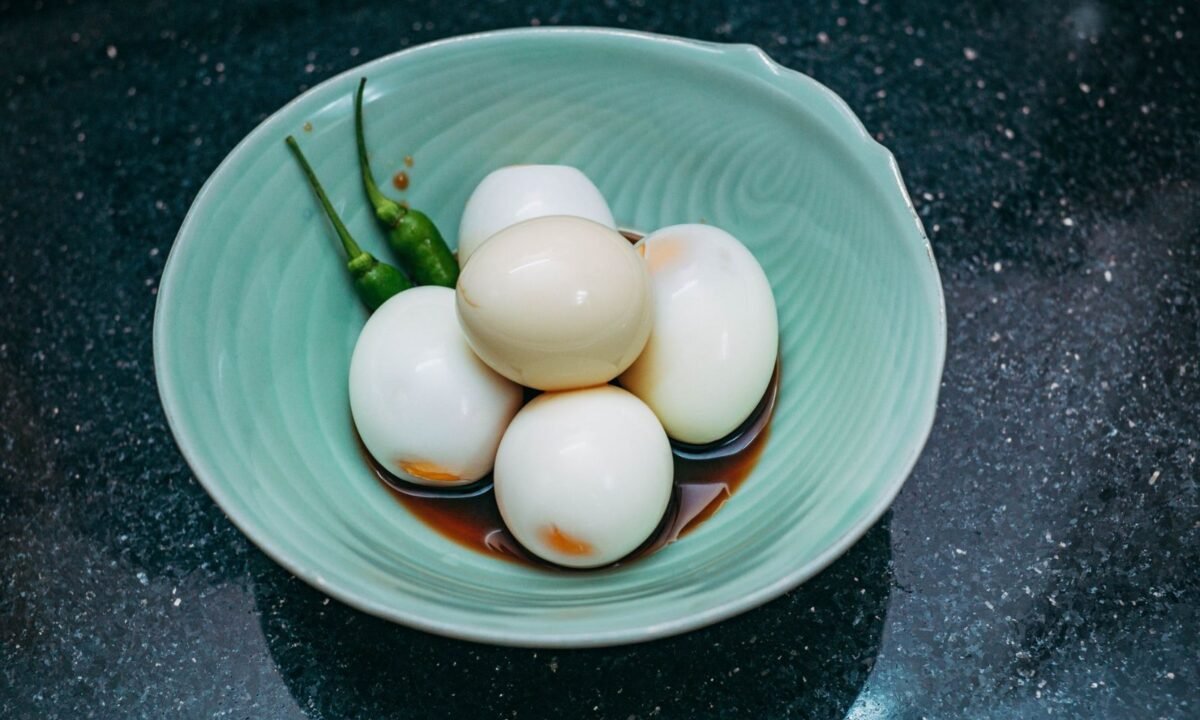
Knowing how to hard boil eggs is one of the most useful skills in a home kitchen. A batch of cooked eggs gives you a fast protein boost for breakfast, a portable snack, or an easy topping for salads and grain bowls. The method is simple, but small details like starting water temperature, cooling time, and peeling technique make the difference between a rubbery, gray-ringed yolk and a tender, golden one.
This guide walks through a foolproof stovetop method for making six large eggs at a time. You will get firm, fully set whites, yolks that are creamy rather than chalky, and shells that slip off with minimal fuss. The full process takes about 20 minutes once the water is boiling, with a few extra minutes of cooling.
Eggs are one of the most affordable whole-food proteins, and they pair well with vegetables and whole grains for a balanced snack or meal. The recipe card below has the exact amounts, timing, and yield.
Full recipe below
Perfect Hard Boiled Eggs
Why this method gives you perfect hard boiled eggs
The biggest enemy of a good hard boiled egg is overcooking. When eggs boil for too long at a hard simmer, the proteins in the yolk tighten and release sulfur compounds that react with iron in the yolk, creating the gray-green ring you may have seen. Starting the eggs in a single layer of cold water, bringing them to a boil, then cutting the heat and letting them rest covered gives the whites time to set gently while the yolk stays moist and bright.
Cooling is the other half of the process. An ice bath stops carryover cooking immediately and causes the egg to contract slightly away from the shell, which is why it peels more easily. Eggs that are very fresh tend to cling to their membranes, so if you have a carton that was just purchased, plan on a few extra minutes of cooling and a gentler peel. Eggs that are a week or two old are often easier to peel than fresh ones.
For food safety, eggs should be cooked until both the white and yolk are firm. The USDA recommends cooking eggs to 160°F for dishes where eggs are the main ingredient, and a fully set yolk in a hard boiled egg meets that standard. The method below reliably gets there without drying out the yolk.
Ingredients you need for hard boiled eggs
- Large eggs, 6 (about 3 oz each): Large is the standard size these timings are built around. Medium eggs will need about 1 minute less, and extra-large eggs about 1 to 2 minutes more. Refrigerated eggs work fine; cold eggs go into the pot straight from the fridge.
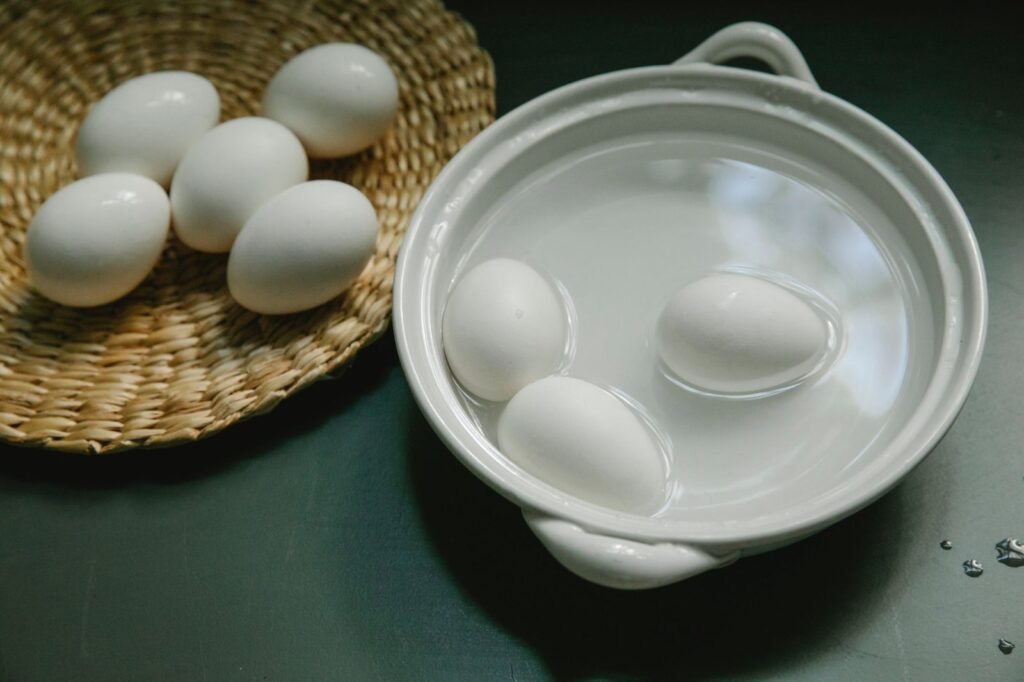
- Cold tap water, about 1 quart: Enough to cover the eggs by about 1 inch. Starting with cold water heats the eggs gradually, which helps prevent cracking.
- Ice, 1 cup plus 1 cup cold water: For the ice bath. Keeping it very cold is what stops cooking quickly and makes peeling easier.
- Table salt or baking soda, optional, 1 tsp: A teaspoon of salt in the water can help if a shell cracks during boiling, because it may slow leakage of white into the water. Baking soda in the water is sometimes suggested to raise pH and ease peeling, but results vary, so it is optional.
- Kitchen tongs or a slotted spoon: Useful for moving eggs in and out of the pot without cracking them.
How to make hard boiled eggs step by step
- Place 6 large eggs in a single layer in a medium saucepan. Add cold tap water until the eggs are covered by about 1 inch. Add 1 tsp salt if you like.
- Set the pan over high heat and bring the water to a full rolling boil. Watch for large bubbles breaking across the surface; this usually takes 6 to 10 minutes.
- As soon as the water boils, cover the pan, remove it from the heat, and set a timer for 11 minutes. Do not lift the lid during this time; the residual heat cooks the eggs evenly.
- While the eggs cook, fill a large bowl with 1 cup ice and 1 cup cold water to make an ice bath.
- When the timer goes off, drain the hot water and immediately transfer the eggs to the ice bath. Leave them there for at least 10 minutes, adding more ice if the water warms.
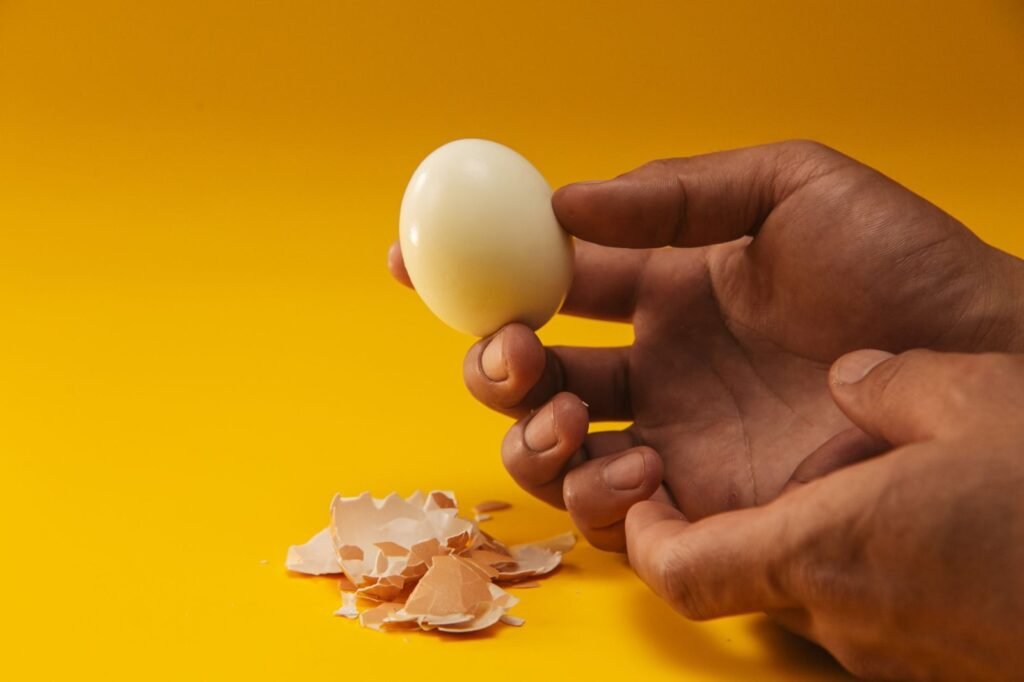
- Gently tap each egg on a hard surface, then roll it under your palm until the shell is covered in fine cracks. Start peeling at the wider end, where the air pocket usually sits.
- Peel under running water if needed, which helps slide shell and membrane away. Pat the eggs dry and serve, or refrigerate them in a covered container.
- Tip: For a softer yolk, cook for 9 to 10 minutes instead. For a fully firm, slightly chalky yolk, extend to 12 to 13 minutes. Avoid going past 14 minutes unless you want a dry, gray-ringed center.
Storage and reheating for hard boiled eggs
Unpeeled hard boiled eggs keep best. Once cooked and fully cooled, store them in the refrigerator in a covered container, ideally in their shells, for up to 7 days. Peeled eggs should be eaten within about 5 days and kept in a sealed container lined with a dry paper towel to absorb moisture. The FoodSafety.gov cold food storage chart lists the general timeframes for cooked eggs, and keeping them at 40°F or below is the key to safety.
Hard boiled eggs do not need reheating. They are typically eaten cold, sliced over salads, or mashed into a sandwich filling. If you prefer them warm, place peeled eggs in a bowl of hot tap water for 2 to 3 minutes, or microwave one egg at a time for about 20 seconds, checking as you go, since the whites can turn rubbery if overheated.
Do not leave cooked eggs at room temperature for more than 2 hours. Freezing hard boiled eggs is not recommended, because the whites become watery and rubbery once thawed.
Common mistakes to avoid when you hard boil eggs
- Boiling the water first and dropping eggs in: This can crack shells and cook the outside faster than the inside. Starting in cold water gives the most even result.
- Letting the water boil hard for the full cooking time: A vigorous boil knocks eggs against each other and the pan, and extra heat toughens the whites. Keep the heat off once the water reaches a boil.
- Skipping the ice bath: Without an ice bath, carryover heat keeps cooking the yolk, and the shell sticks more stubbornly to the white.
- Peeling while still warm: Warm eggs tear easily. Let them cool completely in ice water first.
- Using very old eggs for the first attempt: Older eggs peel more easily, but for a dish where appearance matters, use eggs that are around one week old for a balance of good peeling and good texture.
- Forgetting to date the carton: Keep track of when you cooked the eggs so you can use them within the recommended storage window.
Swaps and variations for hard boiled eggs
- Lighter option, egg whites only: Cook egg whites separately for a lower-fat snack. Two large whites provide about 7 g of protein for roughly 34 calories, with no cholesterol. Use the whole egg when you want the flavor and nutrients of the yolk.
- Smoky paprika eggs: Peel cooked eggs and dust with smoked paprika and a pinch of flaky salt for a quick deviled-style snack.
- Everything bagel eggs: Roll peeled eggs in everything bagel seasoning or sesame seeds for a crunchy, savory finish.
- Pickled eggs: Store peeled eggs in a jar of vinegar brine with beets, garlic, and peppercorns for at least 3 days in the refrigerator.
- Air fryer method: Some cooks steam eggs in an air fryer at 270°F for about 15 minutes, then transfer to an ice bath. Results vary by machine, so the stovetop method remains the most consistent choice.
- Egg salad: Chop peeled eggs and mix with Greek yogurt, mustard, and chives for a higher-protein filling with less mayonnaise.

What to serve with hard boiled eggs
Hard boiled eggs pair well with fresh vegetables and whole grains for a balanced plate. Slice them over a bed of greens with cucumber, cherry tomatoes, and a light vinaigrette, or add them to a grain bowl with quinoa and roasted vegetables. For a simple snack, serve eggs with crunchy carrot sticks, snap peas, and a small handful of nuts.
For breakfast, pair one or two eggs with whole-grain toast and fresh fruit. If you want a hearty side for lunch, try them alongside a bowl of soup, which adds volume without a lot of extra calories. The USDA MyPlate guidance suggests filling half your plate with vegetables and fruit, with a quarter for protein like eggs and a quarter for whole grains, which makes eggs an easy fit.
Frequently asked questions
How long should you boil eggs for hard boiled eggs?
For large eggs started in cold water and removed from heat once boiling, cover and rest for 11 minutes, then chill in an ice bath. This gives a fully set white and a firm but creamy yolk.
Why is there a green ring around my hard boiled egg yolk?
The green-gray ring forms when the yolk is overcooked or cooled slowly, causing iron and sulfur in the egg to react. Using the timing in this recipe and cooling promptly in ice water prevents it.
How do you hard boil eggs so they peel easily?
Use eggs that are about a week old, cool them fully in ice water, crack the shell all over, and peel under running water starting from the wider end.
Are hard boiled eggs safe to eat if they sit out?
Cooked eggs should not sit at room temperature for more than 2 hours. Refrigerate them promptly, where they keep for up to 7 days in the shell.
Can you hard boil eggs in the Instant Pot or microwave?
Yes, but results vary by appliance. The stovetop method in this recipe is the most consistent way to learn how to hard boil eggs evenly, and it is a good baseline before trying other tools.
Perfect Hard Boiled Eggs
Simple stovetop hard boiled eggs with creamy yolks, firm whites, and easy-to-peel shells.
Ingredients
Instructions
- Place 6 large eggs in a single layer in a medium saucepan and add cold tap water to cover by about 1 inch. Add 1 tsp salt if using.
- Set over high heat and bring to a full rolling boil.
- Cover, remove from heat, and let stand for 11 minutes.
- Meanwhile, fill a large bowl with 1 cup ice and 1 cup cold water.
- Drain the hot water and transfer eggs to the ice bath for at least 10 minutes.
- Tap and roll each egg to crack the shell, then peel starting at the wide end, under running water if needed.
- Serve immediately or refrigerate in a covered container for up to 7 days.
Notes
- Medium eggs need about 1 minute less; extra-large eggs need about 1 to 2 minutes more.
- For a softer yolk, cook 9 to 10 minutes. For a firmer yolk, cook 12 to 13 minutes.
- Cooked eggs should be refrigerated within 2 hours and used within 7 days.
Nutrition per serving
- Calories
- 246
- Protein
- 14.5g
- Carbs
- 16.8g
- Fat
- 13.2g
- Saturated fat
- 4.1g
- Fiber
- 0g
- Sugar
- 8.4g
- Sodium
- 990mg
- Cholesterol
- 381mg