
Buckwheat is a nutrient-dense pseudocereal consumed for thousands of years across Europe, Asia, and Russia. Despite its name, it contains no wheat and is naturally gluten-free, making it popular among people with celiac disease, gluten sensitivity, and those seeking diverse grain alternatives. It’s eaten as a staple in traditional diets, particularly in Eastern Europe, Japan, and Korea.
Buckwheat offers impressive protein content, resistant starch, and minerals like manganese and magnesium, drawing interest from fitness enthusiasts, weight-loss seekers, and those managing blood sugar. But exactly how many calories are in a serving of buckwheat? This article breaks down complete nutrition facts, portion sizes, and practical guidance for making buckwheat work for your health goals.
Calories in Buckwheat (Quick Answer)
Here are calorie counts for common buckwheat preparations:
- 1 cup cooked buckwheat groats: 155 calories
- 1 cup raw buckwheat groats: 583 calories
- ¼ cup raw buckwheat groats: 146 calories
Calorie content varies slightly by brand, storage time, and moisture content. Cooked buckwheat contains far fewer calories per volume due to water absorption during cooking, which roughly triples the weight while spreading the same calories across more food.
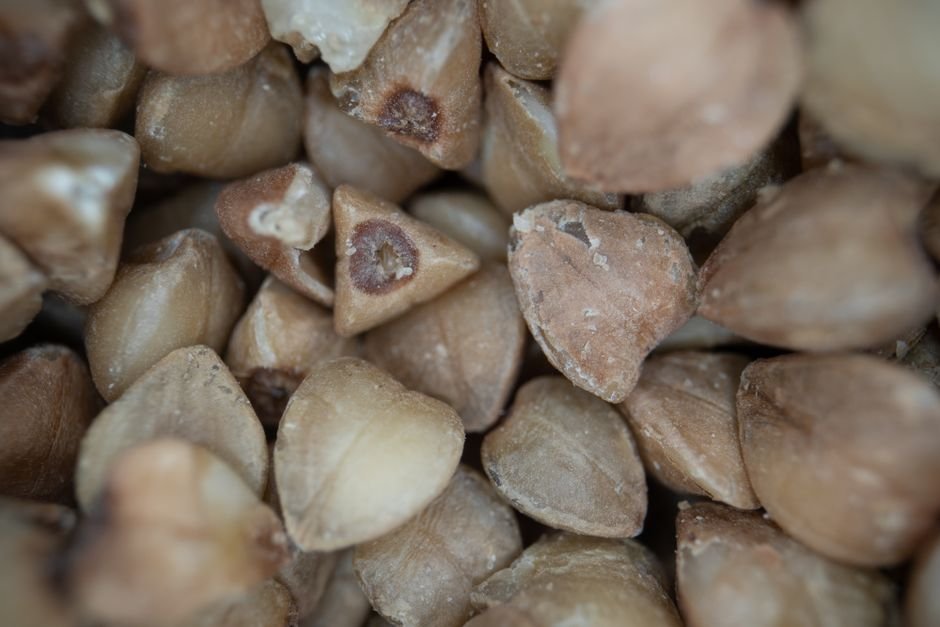
Full Nutrition Facts for 1 Cup of Cooked Buckwheat Groats
One cup of cooked buckwheat groats (168g) provides a balanced mix of carbohydrates, protein, and fiber. Here are the complete nutrition facts:
| Nutrient | Amount | % Daily Value |
|---|---|---|
| Calories | 155 kcal | — |
| Total Fat | 1.0 g | 1% |
| Saturated Fat | 0.2 g | <1% |
| Cholesterol | 0 mg | 0% |
| Sodium | 3 mg | <1% |
| Total Carbohydrate | 33 g | 11% |
| Dietary Fiber | 4.5 g | 18% |
| Total Sugars | 0.9 g | — |
| Protein | 6.0 g | 12% |
| Manganese | 0.42 mg | 18% |
| Magnesium | 86 mg | 21% |
| Phosphorus | 118 mg | 8% |
*Percent Daily Values are based on a 2,000-calorie diet. Source: USDA FoodData Central.
Key insight: Buckwheat stands out for its exceptional magnesium content (21% DV per cooked cup), which supports muscle function and blood sugar regulation. Its fiber-to-calorie ratio is also favorable—4.5g of fiber in just 155 calories means it promotes satiety without excessive calorie density. Unlike many grains, buckwheat contains all eight essential amino acids, making it a complete plant protein source.

Etekcity Food Scale
0.1g accuracy — the perfect companion for exact portions.
Raw Buckwheat vs. Cooked Buckwheat
Raw Buckwheat Groats
- More calorie-dense: 583 calories per cup due to no water content
- Harder to digest when eaten raw; most people cook or soak before eating
- Longer shelf life; good for long-term storage in cool, dry conditions
Cooked Buckwheat Groats
- Lower calorie density: 155 calories per cup after absorbing water during cooking
- More digestible and bioavailable nutrients; easier on the digestive system
- Ready to eat; can be added to salads, porridges, or served as a side dish immediately
Practical takeaway: Always cook buckwheat before eating to improve digestibility and nutrient absorption. Cooked buckwheat’s lower calorie density makes it easier to manage portion sizes and calorie intake, while raw groats work well for storage if you plan to cook them soon. One cup of raw groats yields approximately 3 cups of cooked buckwheat.
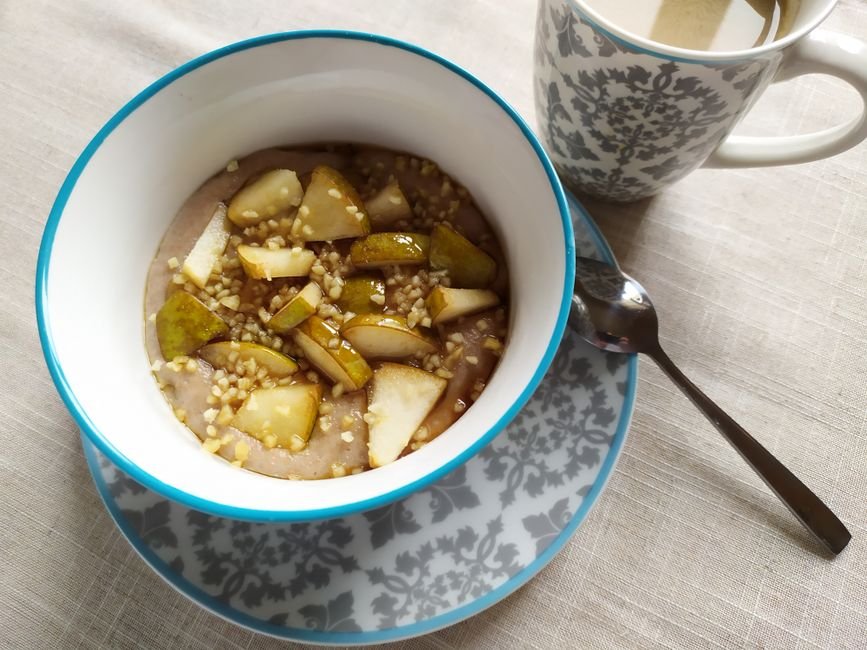
Is Buckwheat Good for Weight Loss?
Yes, buckwheat can support weight loss when eaten in appropriate portions. Its combination of fiber, protein, and resistant starch promotes satiety—meaning you feel full longer on fewer calories. The 4.5g of fiber in one cooked cup slows digestion and blood sugar spikes, reducing cravings and energy crashes. At 155 calories per cooked cup with 6g of protein, buckwheat is a nutrient-dense, low-calorie choice compared to refined white rice (206 calories, 4.3g protein per cooked cup) or pasta (220 calories, 7.6g protein per cooked cup).
Tips to Eat Buckwheat Without Gaining Weight:
- Measure cooked portions: Use a measuring cup to limit servings to 1 cup (155 calories). It’s easy to overeat when buckwheat is mixed into larger dishes.
- Pair with lean protein: Add grilled chicken, fish, or legumes to create a complete, satiating meal that keeps you full longer.
- Avoid heavy toppings: Skip cream sauces, butter, and excessive oil. Instead, dress cooked buckwheat with olive oil (1 tsp), herbs, and vegetables.
- Choose whole groats over flour: Buckwheat flour has less fiber and digests faster, spiking blood sugar. Whole groats provide sustained fullness.
Buckwheat shines in weight-loss diets because it’s versatile, affordable, and genuinely filling. Even modest portions prevent the blood sugar crashes that trigger overeating later in the day.
How Portion Size Affects Calories
Buckwheat’s calorie count shifts dramatically with serving size, especially when comparing raw to cooked. A small portion may feel insufficient, but buckwheat expands significantly during cooking, so what looks like a small amount of raw groats becomes a satisfying meal once heated. Understanding this difference prevents both underestimating calorie intake and inadvertently eating too much.
Example:
- Small portion (½ cup cooked): 77 calories, 2.25g fiber, 3g protein
- Large portion (2 cups cooked): 310 calories, 9g fiber, 12g protein
For weight loss, a single cooked cup (155 calories) with vegetables and lean protein makes a filling lunch or dinner side. For muscle building, 1.5–2 cups provides enough calories and protein to support recovery.
Best Way to Measure Buckwheat Accurately
Accurate measurement is crucial for calorie tracking and consistent results. Buckwheat groats can be measured by weight (grams) or volume (cups), but weight is most precise because moisture and packing density vary. Whether you’re tracking calories or scaling a recipe, choosing one method and sticking with it prevents overestimation of portions and calories.
Options:
- Kitchen scale (most accurate): Measure 100g of raw buckwheat groats for 340 calories, or 168g of cooked buckwheat for 155 calories. Scales eliminate guesswork.
- Measuring cup (convenient): 1 cup raw = ~168g (583 cal); 1 cup cooked = ~168g (155 cal). Pack the cup loosely to avoid compressing groats.
- By grain count: Less practical, but one handful of raw groats ≈ 30g (102 calories). Useful as a quick visual check when scales aren’t available.
Calculate Your Exact Calorie Intake
Knowing the calories in buckwheat is a start, but understanding how it fits into your daily calorie needs requires tracking the entire meal. If you eat buckwheat regularly—for breakfast as porridge, as a lunch side, or in salads—those calories add up quickly without conscious monitoring. Even a small daily surplus of 100–200 calories from buckwheat portions can translate to unwanted weight gain over weeks.
Our site offers a free AI-powered nutrient calculator that analyzes your buckwheat serving and calculates exact calories, macronutrients (protein, carbs, fat), and micronutrients automatically. Simply input your portion size, and the tool delivers precise nutrition data tailored to your meal.
- Track protein intake: Ensure you’re meeting daily protein goals when buckwheat is your primary carb source.
- Monitor carb totals: Especially helpful if you follow low-carb or keto protocols; cooked buckwheat contains 33g carbs per cup.
- Identify micronutrient gaps: See exactly how much manganese, magnesium, and phosphorus one serving provides to round out your nutrition.
Common Mistakes When Eating Buckwheat
Even nutritious foods like buckwheat can sabotage health goals when prepared or consumed incorrectly. Here are the most common pitfalls to avoid:
❌ Eating raw or undercooked buckwheat. Raw groats contain phytic acid and tannins that inhibit mineral absorption and cause digestive discomfort. Always cook or soak for at least 30 minutes.
❌ Confusing portion sizes between raw and cooked. One cup of raw groats contains 583 calories but yields 3 cups when cooked. Many people accidentally eat triple their intended calorie intake by not accounting for this expansion.
❌ Adding excessive oil, butter, or creamy sauces. A plain cooked cup is just 155 calories, but drizzling in 2 tablespoons of oil adds 240 calories—making it 395 total and less filling per calorie.
❌ Buying buckwheat flour instead of whole groats for weight loss or blood sugar control. Flour is more processed, has less fiber, and causes faster glucose spikes than whole groats.
Awareness of these mistakes takes buckwheat from a healthy grain to a powerful tool for your nutrition goals.
FAQ
How many calories are in 100g of buckwheat?
Raw buckwheat groats contain approximately 340 calories per 100g. Cooked buckwheat contains approximately 92 calories per 100g due to water absorption during cooking.
Is buckwheat fattening?
No, buckwheat is not inherently fattening. At 155 calories and 4.5g fiber per cooked cup, it’s lower in calories and higher in satiety than many grains. Weight gain occurs only with excessive portions or high-calorie additions like oil and cream.
Can you eat buckwheat every day?
Yes, eating buckwheat daily is safe and nutritious. Its complete amino acid profile, fiber, and minerals make it a reliable grain. Aim for 1–2 cups of cooked buckwheat daily as part of a varied diet including other grains, legumes, and vegetables.
Does buckwheat spike blood sugar?
Buckwheat has a low glycemic index (54), meaning it causes slower, gentler blood sugar rises than white bread (75) or regular pasta (66). The fiber and resistant starch content slow carbohydrate digestion, making it suitable for people managing diabetes or prediabetes.
Conclusion
Buckwheat is a low-calorie, nutrient-dense pseudocereal offering 155 calories per cooked cup along with 6g protein, 4.5g fiber, and significant amounts of magnesium and manganese. Its complete amino acid profile, gluten-free nature, and low glycemic index make it an excellent choice for weight loss, blood sugar management, and general health. Whether you’re building muscle, losing fat, or simply seeking nutritious carbohydrates, buckwheat delivers genuine nutritional value without excessive calories.
Start by measuring your portions accurately using a kitchen scale, cook buckwheat thoroughly for better digestion, and pair it with lean protein and vegetables for balanced meals. For more detailed tracking of how buckwheat fits into your specific nutritional needs, use a **reliable nutrient calculator** to see exactly how each serving contributes to your daily targets.
