
Mussels are a nutrient-dense shellfish enjoyed across Mediterranean, Asian, and European cuisines. Whether steamed in white wine, roasted, or added to paella, they’re a favorite among seafood lovers—and increasingly popular with fitness enthusiasts and those managing weight or blood sugar. Their impressive protein-to-calorie ratio makes them particularly valuable for muscle building and satiety without excess calories.
But how many calories are actually in mussels? And how do they fit into different nutritional goals? This guide breaks down the complete nutrition profile of mussels, portion guidance, and practical strategies for eating them without derailing your health objectives.
Calories in Mussels (Quick Answer)
A typical 100g serving of cooked mussels delivers roughly 172 calories, making them a lean protein option compared to many other meats.
- 100g cooked mussels: 172 calories
- 1 cup (150g) cooked mussels: 258 calories
- Raw mussels (100g): 86 calories (before cooking; values increase as water evaporates)
Actual calorie counts depend on cooking method, added fats (butter, oil), sauce ingredients, and the specific mussel variety. Steamed mussels with minimal added fat are lowest; those cooked in cream or butter sauce will be significantly higher.
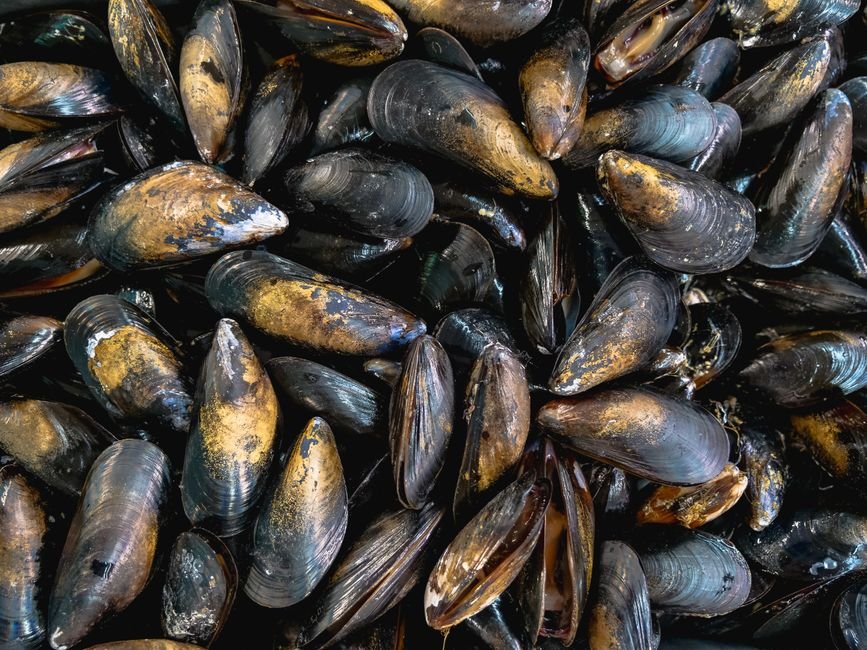
Full Nutrition Facts for 100g of Cooked Mussels
Here’s the complete nutritional breakdown for a 100g serving of cooked blue mussels (the most common variety), based on USDA data:
| Nutrient | Amount | % Daily Value |
|---|---|---|
| Calories | 172 | — |
| Total Fat | 4.5g | 6% |
| Saturated Fat | 0.9g | 5% |
| Cholesterol | 28mg | 9% |
| Sodium | 286mg | 12% |
| Total Carbohydrate | 7.5g | 3% |
| Dietary Fiber | 0g | 0% |
| Total Sugars | 0g | 0% |
| Protein | 23.8g | 48% |
| Iron | 5.5mg | 31% |
| Selenium | 67.7 mcg | 123% |
| Vitamin B12 | 24 mcg | 400% |
*Percent Daily Values are based on a 2,000-calorie diet. Source: USDA FoodData Central.
Key insight: Mussels are exceptionally high in vitamin B12 (covering 400% of your daily need in just 100g) and selenium, a powerful antioxidant mineral. The protein-to-calorie ratio is exceptional—nearly a quarter of the weight is pure protein, making mussels among the leanest seafood options available. Despite being shellfish, their cholesterol content is actually modest and their saturated fat minimal.
Etekcity Food Scale
0.1g accuracy — the perfect companion for exact portions.
Raw Mussels vs. Cooked Mussels: How Cooking Changes Nutrition
Raw Mussels (per 100g)
- 86 calories — significantly lower because the raw meat contains more water
- 11.9g protein — still excellent, but less concentrated than cooked
- 3.6g fat — lower fat and cholesterol (15mg) due to water content
Cooked Mussels (per 100g)
- 172 calories — nearly double, as water evaporates during steaming or boiling
- 23.8g protein — more concentrated after water loss (nearly 48% of calories from protein)
- 4.5g fat and 28mg cholesterol — slightly elevated but still lean compared to chicken or fish
Practical takeaway: Cooking doesn’t change the actual nutrient content of mussels (proteins, minerals, and vitamins remain), but it concentrates them by removing water. A typical serving of cooked mussels (100–150g) delivers far more usable protein and micronutrients than the equivalent raw weight would suggest. For calorie counting, always measure cooked mussels and use the cooked nutrition data.
Are Mussels Good for Weight Loss?
Yes—mussels are an excellent choice for weight loss. With 172 calories and nearly 24g of protein per 100g, they’re among the most efficient protein sources available. The high protein content promotes satiety, reducing overall calorie intake, while their low fat and carbohydrate content fits cleanly into most calorie-deficit diets. Unlike many protein sources (beef, pork), mussels are also naturally low in saturated fat, supporting heart health alongside weight goals.
Tips to Eat Mussels Without Gaining Weight:
- Steam or boil: Prepare mussels without added butter or oil. Use white wine, broth, herbs, and garlic for flavor instead.
- Watch portions: A typical serving is 150–200g cooked mussels. That’s 260–340 calories—reasonable for a protein base in a meal.
- Pair wisely: Combine mussels with vegetables, whole grains, or a salad rather than creamy sauces or fried sides.
- Avoid cream sauces: A mussel dish made with heavy cream or hollandaise can double or triple the calorie count. Request light broth-based preparations instead.
When eaten as the protein component of a balanced meal—not as an appetizer of garlic butter mussels—mussels actively support a weight-loss plan through protein satiety and nutritional efficiency.
How Portion Size Affects Calories
Portion size makes a dramatic difference when counting mussel calories. A small appetizer portion looks deceptively large due to shells (which are inedible), but the actual meat is surprisingly light. Understanding true portion sizes helps you avoid underestimating calories.
Example:
- Small portion (75g cooked meat): 129 calories, 18g protein — a reasonable appetizer or addition to pasta
- Standard serving (150g cooked meat): 258 calories, 36g protein — a full protein entrée or main component
Always weigh the actual edible meat (not shells) to track accurately. Most restaurant servings are 200–300g, which amounts to 340–520 calories before accounting for added fats or sauces.
Best Way to Measure Mussels Accurately
Because mussels include inedible shells, standard measuring methods can be misleading. The most reliable approach is to weigh the cooked, shelled meat on a kitchen scale. This ensures you’re tracking actual calories consumed, not the weight of shells.
Options:
- Kitchen scale (most accurate): After cooking and shelling, weigh the edible meat in grams. This is the gold standard for calorie tracking.
- Volume estimate: A standard cup measure of shelled cooked mussels is roughly 150g and contains approximately 258 calories. Use this if a scale isn’t available.
- Count-based estimate: A typical medium-sized mussel yields about 10–12g of meat. Counting your mussels can help, but weight remains more reliable.
Calculate Your Exact Calorie Intake
If you’re tracking mussels as part of a larger meal or nutritional plan, calculating total calorie and nutrient intake becomes essential—especially when mussels are combined with grains, sauces, or side dishes. A simple calculator can instantly show you the complete nutrition profile of your actual portion.
Our site offers a free AI-powered nutrients calculator that breaks down calories, protein, fat, carbs, and micronutrients for mussels and any other foods you eat. Simply input your portion size in grams and get a complete nutritional snapshot in seconds.
- Instantly adjust portion size and see how calories change
- Get complete macro and micronutrient breakdowns
- Track entire meals to stay on target for your health goals
Common Mistakes When Eating Mussels
Even nutrient-dense foods like mussels can become problematic when preparation and consumption habits go wrong. Here are the mistakes that most commonly derail mussel-based nutrition plans:
❌ Drowning mussels in butter or cream sauce: A 150g serving of steamed mussels is 258 calories. The same mussels in a cream or butter sauce can reach 500+ calories. Always ask how mussels are prepared, or steam them yourself.
❌ Not accounting for shells in portion estimates: A bowl of mussels in shells looks much larger than the actual edible portion. One 150g serving of meat in shell may weigh 350–400g total. Weigh only the meat for accurate tracking.
❌ Pairing mussels with refined carbohydrates and fried sides: Mussels with fries, white bread, or heavily sauced pasta negates their lean nutritional advantage. Pair them with vegetables, whole grains, or salad instead.
❌ Treating restaurant portions as single servings: Most restaurants serve 200–300g of mussels, which is 1.5–2 times a standard serving size. Account for this when estimating calories; don’t assume a bowl equals one portion.
Simple awareness of these mistakes—especially cooking method and portion clarity—makes mussels an easy nutrition win rather than a calorie trap.
FAQ
How many calories are in 100g of mussels?
Cooked mussels contain approximately 172 calories per 100g. Raw mussels are lower at around 86 calories per 100g due to higher water content, but cooked mussels are the standard for calorie counting and eating.
Are mussels fattening?
No—mussels are among the leanest protein sources available. With only 4.5g of fat and just 0.9g of saturated fat per 100g, they’re significantly leaner than chicken, beef, or most fish. Their high protein content actually promotes satiety and supports weight loss when prepared without added butter or cream.
Can mussels fit into a low-carb diet?
Yes. While mussels do contain 7.5g of carbs per 100g (slightly more than many fish), this is still considered low-carb in absolute terms. For keto or very strict low-carb approaches, mussels are acceptable but should be factored into daily carb totals. Most people find them compatible with low-carb and moderate-carb eating patterns.
What cooking method keeps mussels lowest in calories?
Steaming or boiling mussels in water or broth without added fats is the lowest-calorie method. Avoid butter, cream-based sauces, and oil-heavy preparations. Herb-infused steaming water or white wine provides flavor with virtually no added calories.
Conclusion
Mussels are a nutritional powerhouse—high in protein, exceptionally rich in B12 and selenium, and remarkably low in calories and saturated fat. A 100g serving of cooked mussels delivers 172 calories and nearly 24g of protein, making them one of the most efficient seafood choices for muscle building, weight loss, and overall health. Unlike many animal proteins, they support heart health and fit seamlessly into modern dietary approaches from Mediterranean to keto.
The key to making mussels work for your goals is preparation awareness and accurate portion measurement. Steam rather than cream, weigh the edible meat rather than estimating shells, and pair them with vegetables and whole grains instead of fried sides. When you’re ready to track a mussel-based meal in detail, use a reliable nutrients calculator to ensure your portion and preparation method align with your calorie and macro targets.
