
Arugula is a peppery leafy green that has become a staple in modern salads, pasta dishes, and Mediterranean cuisine. Whether you’re eating it in trendy restaurants, farmer’s markets, or growing it in your garden, arugula has gained popularity among health-conscious eaters and weight-loss enthusiasts. It’s favored by people managing their calorie intake, athletes tracking macronutrients, and anyone seeking nutrient-dense, low-calorie vegetables.
But how many calories are actually in arugula? This guide breaks down the complete nutrition profile of this leafy green, including calories, macronutrients, micronutrients, and practical tips for incorporating it into your diet. Whether you’re eating raw or cooked arugula, we’ll help you understand exactly what you’re putting on your plate.
Calories in Arugula (Quick Answer)
A single serving of arugula contains just a handful of calories, making it one of the lowest-calorie vegetables available.
- 1 cup raw arugula (20g): 5 calories
- 100g raw arugula: 25 calories
- 1 cup cooked arugula (66g): 17 calories
Calorie values vary slightly depending on how tightly packed the leaves are and whether the arugula is young (tender) or mature (with thicker stems).
Full Nutrition Facts for 100g of Raw Arugula
Here’s the complete nutritional breakdown for 100 grams of raw arugula, a serving size roughly equivalent to about 2 cups of loosely packed leaves.
| Nutrient | Amount | % Daily Value |
|---|---|---|
| Calories | 25 | 1% |
| Total Fat | 0.66g | 1% |
| Saturated Fat | 0.16g | 1% |
| Cholesterol | 0mg | 0% |
| Sodium | 85mg | 4% |
| Total Carbohydrate | 3.65g | 1% |
| Dietary Fiber | 1.6g | 6% |
| Total Sugars | 0.29g | — |
| Protein | 2.78g | 6% |
| Vitamin K | 145μg | 121% |
| Vitamin A | 474μg | 53% |
| Folate | 97μg | 24% |
*Percent Daily Values are based on a 2,000-calorie diet. Source: USDA FoodData Central.
Key insight: Arugula is exceptional for vitamin K content—100g provides 121% of the daily value. This fat-soluble vitamin is essential for bone health and blood clotting. The combination of minimal calories, negligible fat, and significant fiber makes arugula an ideal choice for satiety without caloric burden. The protein content, while modest in absolute terms, is impressive for a leafy green and contributes to the satiating effect of eating raw arugula in salads.
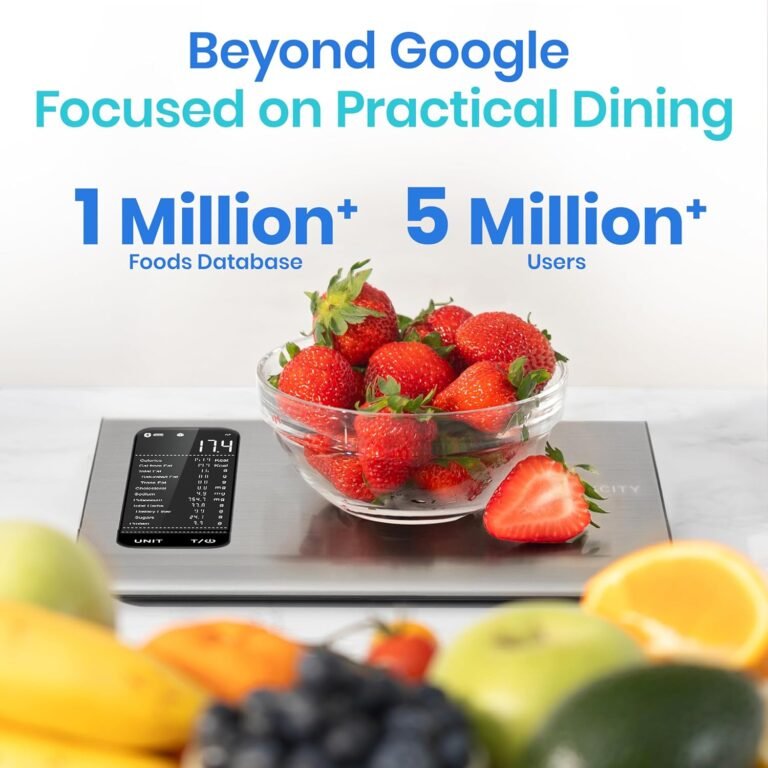
Etekcity Food Scale
0.1g accuracy — the perfect companion for exact portions.
Raw Arugula vs. Cooked Arugula: Calorie & Nutrition Comparison
Raw Arugula
- 5 calories per cup; minimal nutrient loss from cooking
- Crisp, peppery flavor; commonly used in salads and toppings
- Compounds like sulforaphane and indoles better preserved in raw form
Cooked Arugula
- 17 calories per cup; volume reduces significantly when wilted or sautéed
- Mellower, slightly nuttier flavor; easier to digest for some people
- More compact serving allows larger quantities; vitamin K and beta-carotene remain stable during brief cooking
Practical takeaway: If you’re minimizing calories, raw arugula in salads is your best bet—each cup is essentially negligible. If you prefer cooked greens or have digestive sensitivity, sautéing arugula briefly in a little olive oil still keeps calories minimal (roughly 60–80 calories per cup when lightly cooked with oil). The difference comes down to your eating preference, not nutritional necessity.
Is Arugula Good for Weight Loss?
Yes, arugula is excellent for weight loss. At 25 calories per 100g, it’s among the lowest-calorie foods available. You can eat substantial volumes of arugula—in salads, on sandwiches, or cooked as a side—without meaningful caloric impact. The fiber content (1.6g per 100g) promotes satiety, helping you feel full longer. The near-zero fat and sugar content means arugula won’t spike blood sugar or trigger cravings. For people in a calorie deficit, arugula is a filling vegetable that contributes nutrients without derailing progress.
Tips to Eat Arugula Without Gaining Weight:
- Watch your dressing: A light vinaigrette (balsamic or lemon-based) adds flavor without excess calories. Creamy dressings, oils, and heavy preparations can quickly exceed the arugula’s calorie content.
- Pair with protein: Add grilled chicken, baked tofu, or legumes to arugula salads to balance macronutrients and improve satiety without adding significant calories from the arugula itself.
- Bulk it up consciously: Use arugula as the base of your salad (not a small side) and add other low-calorie vegetables like cucumbers, bell peppers, and tomatoes for volume.
- Cook lightly if desired: Sautéing arugula in a thin spray of oil or a tablespoon of olive oil keeps it weight-loss-friendly while improving digestibility for some people.
The key principle: arugula’s negligible calorie count means you can eat as much as you want without concern. The challenge is how you prepare and dress it. Focus on whole-food pairings and light seasonings, and arugula becomes a calorie-free vehicle for nutrition.
How Portion Size Affects Calories
Because arugula is so low in calories, portion size rarely presents a weight-gain risk. However, understanding how volume translates to calories is useful for meal tracking and satiety planning. A single leaf contains less than 0.3 calories. Most people eat arugula by the cup or by the handful, not by individual leaves, so thinking in terms of practical serving sizes is more helpful.
Example:
- Small salad (1 cup raw arugula): 5 calories—negligible impact; typically eaten as part of a mixed salad
- Large salad (4 cups raw arugula): 20 calories—still under 25 calories; the base of a filling, low-calorie meal
Even if you eat a towering 4-cup salad of pure arugula (unlikely), you’re consuming the caloric equivalent of a small apple. For practical purposes, arugula can be considered a free food in weight-loss contexts—focus your calorie counting on the dressing, toppings, and proteins instead.
Best Way to Measure Arugula Accurately
Arugula’s light, leafy structure makes weight-based measurement more accurate than volume. A cup of tightly packed arugula will weigh more than a cup of loosely arranged leaves, leading to calorie discrepancies. For precise tracking, especially if logging meals in an app, using a food scale is ideal. If you don’t have a scale, cup measurements are reasonably reliable if you pack leaves consistently—either loosely or moderately, and stick to one method.
Options:
- Food scale (most accurate): Weigh in grams. 100g is the standard serving size for nutrition labels and the easiest to cross-reference. Most digital scales are affordable and precise to 1g.
- Volume (practical for daily eating): Use a standard measuring cup (8 oz). One cup loosely packed = roughly 20g and 5 calories. This method works well for casual meal prep if you’re consistent.
- Handful method (rough approximation): One loose handful of arugula ≈ 0.5 cup ≈ 10g ≈ 2–3 calories. Useful for quick estimates when cooking or plating, but less precise than a scale or cup.
Calculate Your Exact Calorie Intake
If you’re tracking arugula as part of a larger meal or diet plan, knowing the calories in arugula is just one piece. Calculating your total daily nutrient intake—calories, protein, carbs, fat, and micronutrients—gives you a complete picture of whether your meals align with your health goals.
Our free AI nutrients calculator makes this easy. Simply enter the foods you eat, and it automatically calculates calories, macronutrients, and key vitamins and minerals. Instead of manually adding up arugula + dressing + protein, the calculator does it in seconds.
- Track multiple meals and get a daily summary of all nutrients
- See instantly whether you’re meeting protein, fiber, and micronutrient targets
- Adjust portions and recipes in real-time to hit your calorie and macro goals
Use the free nutrients calculator here.
Common Mistakes When Eating Arugula
Arugula’s low calorie count makes it easy to eat mindfully, but a few common pitfalls can undermine weight loss or health goals.
❌ Drowning arugula in dressing. A typical salad dressing adds 100–250 calories, instantly making a 5-calorie arugula base into a 150–350 calorie meal. Use 1–2 tablespoons of dressing and supplement flavor with lemon juice, vinegar, or spices instead.
❌ Assuming raw is always better. Raw arugula is fine, but wilting it slightly in a pan actually makes some nutrients (like lycopene in tomatoes if combined) more bioavailable. Brief, light cooking doesn’t reduce arugula’s benefits.
❌ Pairing arugula only with high-fat additions. Cheese, nuts, bacon, and oil-packed toppings turn a weight-loss vegetable into a calorie bomb. Balance arugula with lean proteins, legumes, and other low-calorie vegetables.
❌ Eating arugula in isolation without protein. Arugula alone doesn’t provide sustained satiety. A handful of arugula with no protein will leave you hungry. Pair it with chicken, fish, eggs, or plant-based protein to stabilize blood sugar and appetite.
These mistakes aren’t about arugula itself—it’s nearly impossible to overeat it—but about how surrounding foods are prepared. Stay mindful of preparation methods and pairings, and arugula becomes a powerful tool for weight management and nutrition.
FAQ
How many calories are in 100g of arugula?
100g of raw arugula contains 25 calories. This is roughly equivalent to 2 cups of loosely packed leaves or a standard mixed salad base.
Is arugula fattening?
No. Arugula is extremely low in calories, fat, and carbohydrates. It contains no dietary cholesterol and minimal saturated fat. Unless prepared with heavy dressings or oils, arugula is one of the least fattening vegetables available and actually supports weight loss.
Does cooking arugula reduce its vitamin K content?
Vitamin K is fat-soluble and stable during brief cooking. Light sautéing or steaming arugula for 1–2 minutes retains most vitamin K. Extended cooking (boiling for 5+ minutes) may result in some loss, but a quick wilt in a hot pan is nutritionally equivalent to raw.
Can I eat unlimited arugula on a diet?
Yes, in practical terms. The calorie density is so low that even eating several large salads of pure arugula daily would contribute fewer than 100 calories. The limiting factor for weight loss is what you put on or with the arugula—dressings, oils, and dense toppings—not the arugula itself.
Conclusion
Arugula is a nutrient-dense, virtually calorie-free leafy green that fits seamlessly into any weight-loss, low-carb, or health-focused diet. At just 25 calories per 100g and exceptional in vitamin K, vitamin A, and folate, it offers significant nutritional return with minimal caloric input. Whether raw in salads or lightly cooked as a side, arugula’s peppery flavor and satisfying texture make it easy to include in regular meals without feeling restricted.
The real key to using arugula effectively for weight loss and nutrition is pairing it with whole-food proteins, light seasonings, and mindful preparation. Skip heavy creamy dressings, balance it with lean protein, and you’ll find arugula becomes a staple of sustainable, nutritious eating. For comprehensive meal tracking beyond individual foods, consider using a reliable nutrients calculator to ensure your full diet aligns with your health goals.
