
Orange juice is one of the most consumed beverages worldwide, especially at breakfast tables. Whether you’re starting your day or reaching for a quick refreshment, orange juice offers vitamin C, potassium, and natural sugars from citrus fruit. People choose orange juice for hydration, immune support, and energy—yet calorie and sugar content vary significantly depending on how it’s prepared and what’s added.
The question “How many calories are in orange juice?” has a straightforward answer, but the full story involves portion size, processing method, and whether you’re drinking fresh-squeezed or bottled varieties. This guide breaks down the complete nutrition profile, helps you understand portion impact, and shows you how to fit orange juice into your diet without exceeding calorie goals.
Calories in Orange Juice (Quick Answer)
A standard 8 fl oz (240 ml) glass of orange juice contains around 110 calories, though this varies based on preparation method and brand.
- Freshly squeezed orange juice: ~110 calories per 8 fl oz
- Store-bought 100% orange juice (no added sugar): ~110 calories per 8 fl oz
- Orange juice from concentrate: ~110 calories per 8 fl oz
Calorie values remain fairly consistent across these types because all are pure orange juice without added sugars. However, brands vary slightly, and added sugars or lower-juice blends can push calories higher.
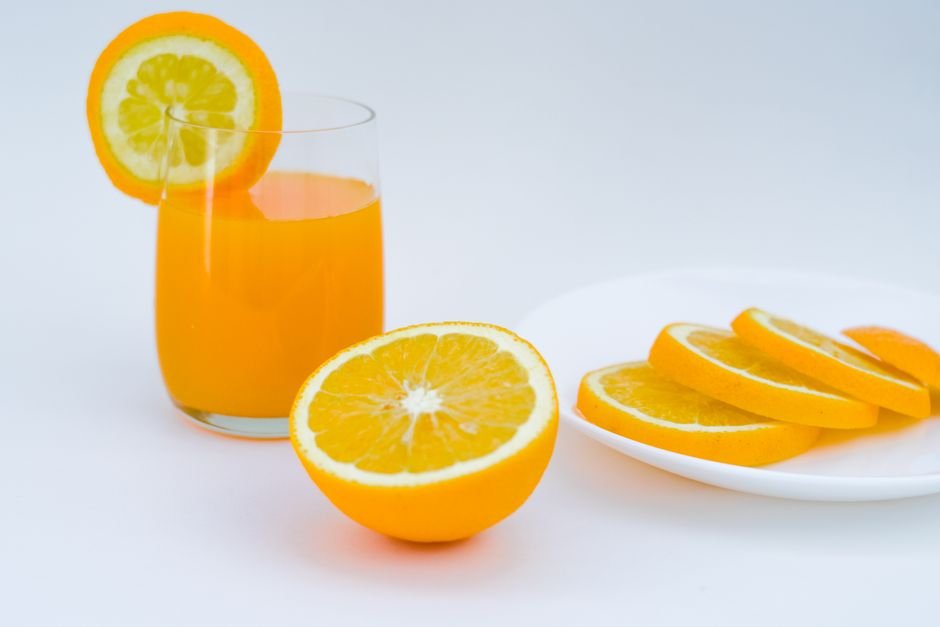
Full Nutrition Facts for 8 fl oz (240 ml) of Orange Juice
A standard glass of 100% orange juice (no added sugar) provides essential micronutrients along with natural sugars from the fruit.
| Nutrient | Amount | % Daily Value |
|---|---|---|
| Calories | 110 | 5% |
| Total Fat | 0.5 g | 1% |
| Saturated Fat | 0.1 g | <1% |
| Cholesterol | 0 mg | 0% |
| Sodium | 2 mg | <1% |
| Total Carbohydrate | 26 g | 9% |
| Dietary Fiber | 0.5 g | 2% |
| Total Sugars | 21 g | 42% |
| Protein | 2 g | 4% |
| Vitamin C | 97 mg | 108% |
| Potassium | 496 mg | 14% |
| Folate | 74 mcg | 18% |
*Percent Daily Values are based on a 2,000-calorie diet. Source: USDA FoodData Central.
Key insight: Orange juice’s standout nutrient is vitamin C—a single glass delivers more than your full daily requirement, supporting immune function and collagen production. However, the 21g of natural sugars means orange juice spikes blood sugar quickly despite lacking fiber that whole oranges provide. This makes portion control especially important for people managing diabetes or watching added sugar intake.
Etekcity Food Scale
0.1g accuracy — the perfect companion for exact portions.
Freshly Squeezed vs. Store-Bought Orange Juice
Freshly Squeezed Orange Juice
- Retains enzymes and phytonutrients lost during heating and packaging
- Contains visible pulp, offering slightly more fiber (0.5–1.5 g per glass)
- Highest vitamin C content, though degrades within 15 minutes of squeezing due to oxidation
Store-Bought Packaged Orange Juice
- Pasteurized to extend shelf life, which reduces some heat-sensitive nutrients like folate
- Often fortified with additional vitamin C and sometimes calcium to compensate for processing losses
- More consistent taste and longer storage (weeks to months refrigerated, years if shelf-stable)
Practical takeaway: Freshly squeezed tastes superior and offers marginally more live nutrients if consumed immediately, but store-bought 100% juice is nearly equivalent nutritionally and far more convenient. The key difference is that neither retains the whole fruit’s fiber, so if your goal is satiety or blood sugar control, eating a whole orange is superior to any juice form.
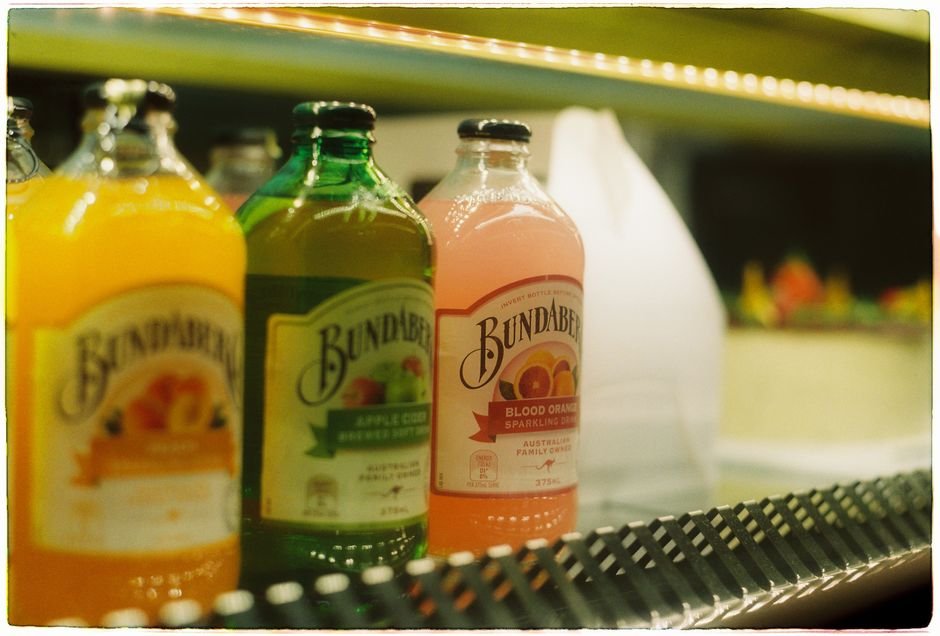
Is Orange Juice Good for Weight Loss?
Orange juice can fit into a weight-loss diet, but it’s not ideal because it provides calories and sugar without the satiating fiber that whole fruit offers. A glass is only 110 calories—reasonable for a snack—yet those calories come almost entirely from sugar (21g), which triggers quick blood sugar spikes and doesn’t trigger lasting fullness. For weight loss, water, unsweetened tea, or eating the whole orange (about 60 calories with 3g fiber) is usually a smarter choice.
Tips to Eat Orange Juice Without Gaining Weight:
- Drink it with a meal: Pairing juice with protein and fat (e.g., eggs, yogurt, nuts) slows sugar absorption and improves satiety.
- Reduce portion to 4 fl oz: Cut the serving in half to get vitamin C without excess sugar (about 55 calories instead of 110).
- Choose 100% juice with no added sugars: Avoid “juice blends” or drinks with added sweeteners that push calories and sugar even higher.
- Treat it as dessert, not a free drink: Count orange juice toward your daily calorie and sugar budget, not as a “health pass” to drink unlimited amounts.
If you love orange juice, small portions and smart timing make it compatible with weight loss. The danger lies in drinking multiple large glasses throughout the day—that’s 200–300 extra calories and 40–60g sugar with minimal satiety.
How Portion Size Affects Calories
Orange juice calories scale linearly with volume. Most nutrition data focuses on 8 fl oz (240 ml) as the standard serving, but people often pour much larger glasses. Understanding how portion size impacts total intake helps you make informed choices without guessing.
Example:
- Small 4 fl oz glass: 55 calories, 10.5g sugar (half a standard serving)
- Large 16 fl oz bottle or glass: 220 calories, 42g sugar (double a standard serving)
Many commercial juice bottles and cups contain 15–20 fl oz, delivering 165–220 calories in a single serving. Check the label’s “servings per container” to see how many servings you’re actually drinking.
Best Way to Measure Orange Juice Accurately
Unlike solid foods, liquids are easiest to measure by volume. A standard measuring cup or kitchen scale makes accurate portion tracking simple, ensuring you know exactly how many calories and grams of sugar you’re consuming.
Options:
- Liquid measuring cup: Mark 8 fl oz or 240 ml on a clear cup; most households have one for cooking.
- Kitchen scale (if you have one): 240g of orange juice ≈ 8 fl oz; scales offer precision for people counting grams of sugar or macros.
- Nutrition label servings: Check the bottle’s label for “servings per container” and count servings rather than pouring freely.
Calculate Your Exact Calorie Intake
Orange juice nutrition varies slightly by brand, freshness, and whether it’s fortified with extra vitamins. If you want to track your exact calorie and nutrient intake when consuming orange juice alongside other foods, a personalized calculation beats generic estimates.
Our free AI nutrients calculator lets you input your specific juice brand, portion size, and meal context to see how orange juice fits into your daily macros and micronutrients. This removes guesswork when managing weight, diabetes, or fitness goals.
- Account for brand-specific nutrition differences (some fortified brands have added calories or sodium)
- Track how orange juice’s natural sugars affect your daily carb and sugar targets
- See how pairing juice with protein or fat changes nutrient absorption and satiety
Common Mistakes When Eating Orange Juice
Even though orange juice seems straightforward, several habits can derail nutrition goals without people realizing it.
❌ Drinking juice on an empty stomach — causes rapid blood sugar spikes, followed by energy crashes and hunger. Always pair with protein or fat.
❌ Confusing “100% juice” with “healthy” — pure juice still lacks fiber and delivers 20+ grams of sugar per cup; it’s not a substitute for whole fruit or vegetables.
❌ Forgetting that “natural sugar is better” — while juice contains no added sugar, your body metabolizes natural fructose similarly to table sugar, so portion control matters equally.
❌ Assuming juice is calorie-free because it’s a beverage — many people mentally exclude drinks from their calorie count, yet two large glasses (16 oz) are 220 calories—equivalent to a small snack.
Treating orange juice as a calorie-containing beverage rather than a “free” drink is the first step to using it wisely in your diet.
FAQ
How many calories are in 100g of orange juice?
100g (approximately 3.4 fl oz) of orange juice contains about 46 calories. Since orange juice is roughly 100% water by weight with minimal fat, calories scale proportionally with volume: simply divide any larger portion by its weight ratio.
Is orange juice fattening?
Orange juice itself is fat-free and won’t directly cause weight gain in small portions. However, its high sugar content and lack of satiety make it easy to overconsume, leading to excess calories. Drinking large quantities daily or using it as a beverage staple rather than an occasional treat is a common path to weight gain.
Does fresh-squeezed orange juice have fewer calories than store-bought?
No—both contain roughly 110 calories per 8 fl oz. The difference is in processing: fresh-squeezed loses vitamin C over time due to oxidation, while store-bought is fortified to compensate. Fresh juice may taste better and contain more live enzymes, but calorie counts are nearly identical.
Can I drink orange juice if I have diabetes?
Orange juice is not recommended for people with diabetes due to its fast-digesting sugars (21g per cup) and lack of fiber. If you love it, consult your doctor about tiny portions (2–4 oz) paired with a meal that includes protein and healthy fat to minimize blood sugar spikes.
Conclusion
Orange juice delivers 110 calories, excellent vitamin C (108% of daily value), and key minerals like potassium in every 8 fl oz glass. However, those calories come almost entirely from natural sugars with minimal fiber, making it a poor choice for satiety or blood sugar control compared to eating a whole orange. It’s a reasonable beverage in small portions when paired with meals, but drinking large quantities daily is an easy way to exceed calorie and sugar goals without feeling full.
The healthiest approach is treating orange juice as an occasional drink rather than a dietary staple, measuring portions carefully, and pairing it with protein or fat when you do drink it. For precise tracking of how orange juice fits your personal nutrition needs, use a **reliable nutrients calculator** to account for your specific brand and portion size—removing guesswork from your daily intake.
