
Pistachios are one of the most nutrient-dense nuts available, widely consumed across the Middle East, Mediterranean, and increasingly in North America. Whether you’re snacking at work, adding them to salads, or measuring portions for a fitness goal, pistachios offer a compelling mix of protein, healthy fats, and fiber that makes them popular among people managing their weight, building muscle, or simply eating well.
But understanding the caloric content of pistachios—and how it varies by preparation and portion size—is essential for fitting them into your daily nutrition plan. This guide breaks down exactly how many calories are in pistachios, provides complete nutrition data, and answers the practical questions you need to eat them confidently.
Calories in Pistachios (Quick Answer)
A standard 1-ounce (28g) serving of pistachios contains roughly 160 calories, making them a calorie-dense food packed with nutrients.
- 1 ounce (28g) raw unsalted pistachios: 160 calories
- 1 ounce (28g) roasted salted pistachios: 162 calories
- 1 cup (128g) shelled roasted pistachios: 730 calories
Calorie counts can vary slightly by roasting method, salt content, and brand. Raw varieties and roasted varieties are nearly identical in calories—the difference lies in sodium and a marginal shift in fat composition during roasting.
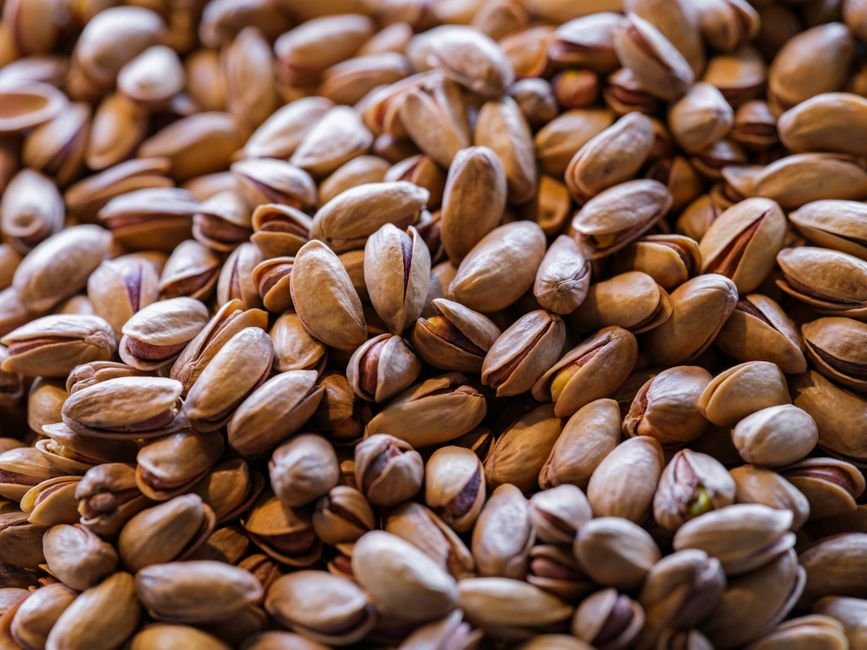
Full Nutrition Facts for 1 Ounce (28g) of Pistachios
Here’s the complete nutritional breakdown for a standard 1-ounce serving of raw pistachios, sourced from USDA data:
| Nutrient | Amount | % Daily Value |
|---|---|---|
| Calories | 160 | 8% |
| Total Fat | 14.7g | 19% |
| Saturated Fat | 1.7g | 9% |
| Cholesterol | 0mg | 0% |
| Sodium | 2mg | <1% |
| Total Carbohydrate | 8.1g | 3% |
| Dietary Fiber | 3.0g | 11% |
| Total Sugars | 1.6g | N/A |
| Protein | 6.0g | 12% |
| Vitamin E | 2.9mg | 19% |
| Copper | 0.4mg | 44% |
| Potassium | 291mg | 8% |
*Percent Daily Values are based on a 2,000-calorie diet. Source: USDA FoodData Central.
Key insight: Pistachios deliver nearly 6g of protein per ounce while remaining low in saturated fat (only 1.7g). The 3g of fiber slows digestion and helps maintain stable blood sugar, while the 2.9mg of vitamin E provides powerful antioxidant support. This combination makes pistachios one of the most nutrient-efficient nuts, offering far more micronutrients per calorie than many snack alternatives.
Etekcity Food Scale
0.1g accuracy — the perfect companion for exact portions.
Roasted Salted vs. Raw Unsalted Pistachios
Roasted Salted Pistachios
- Calorie count nearly identical (162 calories per ounce)
- Sodium typically ranges from 200–500mg per ounce depending on salt level
- Enhanced flavor can lead to mindless overeating; portion control is critical
Raw Unsalted Pistachios
- Nearly salt-free (2mg sodium per ounce)
- Subtler, nuttier flavor requires more intentional chewing
- Better choice for anyone monitoring sodium intake or managing blood pressure
Practical takeaway: If you’re eating pistachios for weight loss or blood pressure management, raw unsalted is the superior choice. The lack of added salt forces slower eating and requires more chewing, which increases satiety signals and reduces the likelihood of consuming the entire bag. Roasted salted varieties are fine in moderation but work best with portion control measures like pre-measuring into small bowls.
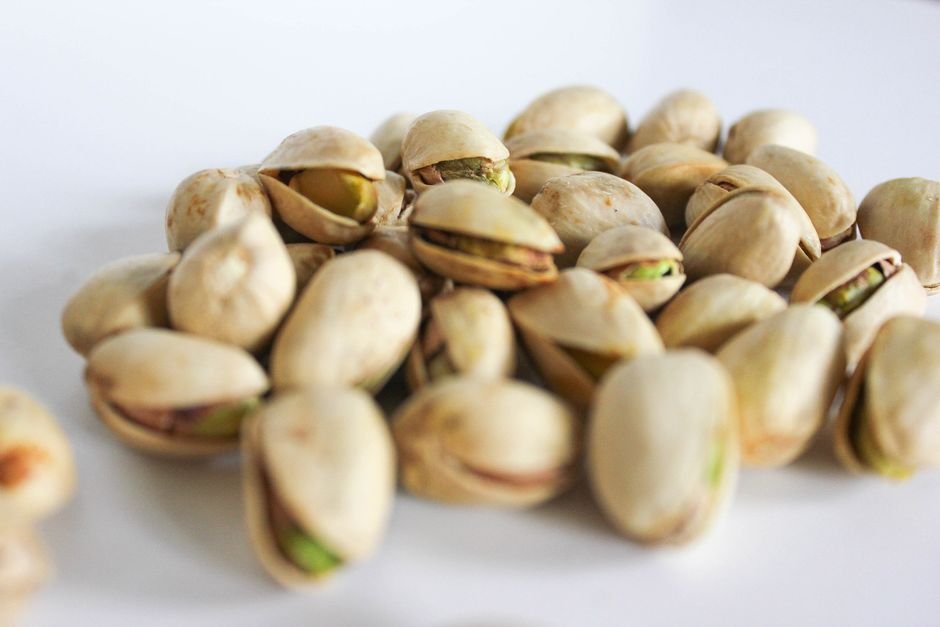
Is Pistachio Good for Weight Loss?
Yes, pistachios can actively support weight loss when eaten in controlled portions. Despite being calorie-dense at 160 calories per ounce, their combination of protein (6g), fiber (3g), and healthy monounsaturated fats triggers strong satiety signals, meaning you eat less overall. Studies show that nuts, including pistachios, are associated with modest weight loss when substituted for less nutritious snacks. The in-shell variety is particularly effective because the effort required to crack and eat each nut slows consumption and increases feelings of fullness.
Tips to Eat Pistachios Without Gaining Weight:
- Buy in-shell pistachios — the physical effort of cracking slows eating speed and reduces total intake by up to 20%
- Pre-portion into small containers — measure 1-ounce (28g) servings into small bags or bowls before snacking
- Pair with water or tea — hydration enhances satiety and prevents confusing thirst with hunger
- Eat as a snack between meals — avoid adding pistachios on top of existing calories; use them to replace less nutritious options
The key is treating pistachios as a strategic tool within your calorie target, not an unlimited snack. One ounce per day fits comfortably into most weight-loss diets while delivering meaningful nutrition.
How Portion Size Affects Calories
Pistachios are easy to overeat because one handful barely registers as “eating,” yet it easily contains 200+ calories. A typical mindless snacking session—eating from an open bag while working or watching TV—can deliver 500+ calories without clear awareness. Understanding how serving size scales is essential for staying accountable.
Example:
- Small portion (0.5 oz / 14g): 80 calories, ~3g protein, ~1.5g fiber
- Large portion (2 oz / 56g): 320 calories, ~12g protein, ~6g fiber
A single 2-ounce portion delivers a full day’s allowance for many snackers, so measuring before eating is non-negotiable.
Best Way to Measure Pistachios Accurately
Visual estimation is unreliable for pistachios because shelled and unshelled varieties have dramatically different volumes for the same weight. A standard 1-ounce serving looks different depending on whether you’re eating them in-shell or pre-shelled. Using a food scale is the only reliable method, though practical alternatives exist for convenience.
Options:
- Digital food scale: Place a small bowl on the scale, tare to zero, and add pistachios until the display reads 28g (1 ounce). Most accurate method.
- Pre-portioned snack bags: Buy pre-measured 1-ounce packets from brands like Wonderful; slightly more expensive but eliminates guesswork
- Small measuring scoop: A ¼-cup dry measure holds roughly 1 ounce of shelled pistachios; useful for quick snacking at home
Calculate Your Exact Calorie Intake
If you’re tracking calories for weight loss, fitness, or disease management, relying on label estimates alone is insufficient. Pistachios vary by moisture content, variety, and harvest, meaning the 160-calorie estimate might be 155 or 165 calories depending on the specific product and serving size you’re eating.
The most reliable way to stay accountable is using a comprehensive nutrients calculator. The site’s free AI nutrients calculator lets you log your exact pistachio intake—including variety, weight, and preparation—and instantly calculates calories, macros, and micronutrients. This removes all guesswork and syncs with your broader nutrition goals.
- Log any food by weight or standard serving size with instant nutrition breakdown
- Track macros and micronutrients across multiple meals to identify patterns
- Compare your intake against personalized daily targets
Common Mistakes When Eating Pistachios
Even health-conscious eaters often make simple errors that undermine their nutrition goals. Here are the most frequent pistachio-related mistakes:
❌ Eating straight from the bag without measuring — a seemingly harmless habit that leads to consuming 500+ calories without awareness, especially when distracted by work or screens.
❌ Conflating “healthy fat” with “unlimited fat” — pistachios contain excellent monounsaturated fats, but they’re still 160 calories per ounce, and excess calories regardless of source lead to weight gain.
❌ Ignoring sodium in roasted varieties — a 2-ounce serving of salted pistachios can deliver 400–500mg of sodium, problematic for anyone managing hypertension or on a DASH diet.
❌ Buying pre-shelled varieties without considering volume — shelled pistachios take up three times the space of in-shell, making it far easier to overeat without feeling satiated.
Awareness of these patterns is the first step toward consistent, guilt-free pistachio consumption.
FAQ
How many calories are in 100g of pistachios?
One hundred grams of raw pistachios contains approximately 575 calories. This is roughly 3.5 ounces, or about two large handfuls. For context, a typical 100g serving delivers 22g of protein and 11g of fiber, making it a nutritionally complete snack or side portion.
Is pistachio fattening?
Pistachios themselves are not fattening when eaten in measured portions; the issue is portion control. Because they’re calorie-dense and flavorful, it’s easy to overconsume them without realizing it. Eaten mindfully—one pre-measured ounce per day—they’re associated with weight loss, not gain. The problem occurs when people treat them as a free snack and consume multiple ounces without counting calories.
Can you eat pistachios every day?
Yes, eating one ounce of pistachios daily is safe and beneficial for most people. One ounce fits within a standard 2,000-calorie diet and delivers valuable protein, fiber, and micronutrients without excessive sodium or sugar. People with tree nut allergies should avoid them, and anyone with kidney disease should check with their physician regarding potassium content.
Which nuts have fewer calories than pistachios?
Almonds (160 cal/oz) and macadamia nuts (200 cal/oz) are comparable, while cashews (155 cal/oz) are slightly lower. Peanuts (160 cal/oz) are nearly identical. If you’re seeking the lowest-calorie nut, almonds and cashews edge out pistachios by a narrow margin, but the practical difference is negligible.
Conclusion
Pistachios are one of the most nutrient-dense nuts available, delivering 160 calories per ounce along with 6g of protein, 3g of fiber, and exceptional micronutrient density including copper and vitamin E. Their caloric density—while high per ounce—is offset by strong satiety signals, making them compatible with weight loss and general health goals when eaten in measured portions. The distinction between raw and roasted varieties is primarily sodium content; raw unsalted is preferable for blood pressure management, while roasted salted works fine with portion control.
Success with pistachios hinges on one habit: measuring before eating. Use a digital scale to portion 1-ounce servings, buy in-shell varieties to slow consumption, or opt for pre-measured snack bags. If you’re tracking calories for weight loss or fitness, use a reliable nutrients calculator to log your exact intake and stay accountable to your targets. With these small adjustments, pistachios become a powerful, enjoyable addition to any balanced diet.
