
Pomegranates are a nutrient-dense fruit enjoyed across the Mediterranean, Middle East, and Asia for thousands of years. They’re increasingly popular in North America among people focused on antioxidant intake, heart health, and natural energy from whole fruits. Whether you’re tracking calories for weight loss or simply curious about what this ancient fruit offers nutritionally, understanding pomegranate’s calorie and nutrient profile is essential.
But how many calories are actually in a pomegranate? The answer depends on the fruit’s size and which part you eat. This guide covers the exact calorie counts, complete nutrition facts, portion guidance, and practical tips for eating pomegranate as part of a balanced diet.
Calories in Pomegranate (Quick Answer)
A medium pomegranate (about 282g whole) contains roughly 234 calories, though this varies based on the fruit’s size and ripeness.
- 1 pomegranate (medium, ~282g whole fruit): 234 calories
- 1 cup pomegranate arils (seeds, ~174g): 144 calories
- 100g pomegranate arils: 83 calories
Calorie content varies slightly depending on ripeness, variety, and growing conditions. Riper, sweeter pomegranates tend toward the higher end of this range.
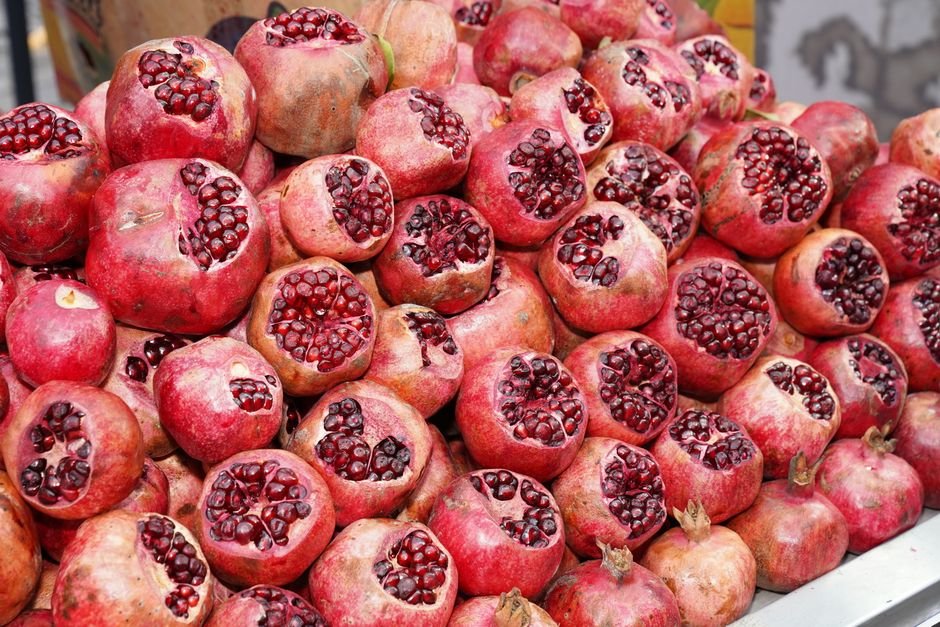
Full Nutrition Facts for 1 Cup of Pomegranate Arils (174g)
Here’s the complete nutritional breakdown for one cup of pomegranate arils (the edible seeds and juice sacs), the most common way to consume this fruit:
| Nutrient | Amount | % Daily Value |
|---|---|---|
| Calories | 144 kcal | 7% |
| Total Fat | 0.7g | 1% |
| Saturated Fat | 0.1g | <1% |
| Cholesterol | 0mg | 0% |
| Sodium | 4mg | <1% |
| Total Carbohydrate | 32.3g | 11% |
| Dietary Fiber | 7.2g | 26% |
| Total Sugars | 23.8g | — |
| Protein | 3g | 6% |
| Vitamin C | 16.2mg | 27% |
| Potassium | 567mg | 16% |
| Copper | 0.3mg | 33% |
*Percent Daily Values are based on a 2,000-calorie diet. Source: USDA FoodData Central.
Key insight: Pomegranate’s exceptional fiber-to-calorie ratio (7.2g fiber in just 144 calories) makes it one of the most satiating fruits. That high fiber content, combined with significant potassium and copper contributions, supports digestive health and metabolic function without excessive calorie density.

Etekcity Food Scale
0.1g accuracy — the perfect companion for exact portions.
Whole Pomegranate vs. Pomegranate Arils: Which Should You Eat?
Eating the Whole Pomegranate (with skin)
- Must spit out or discard the tough, bitter skin and white pith
- Time-consuming extraction process takes 10–15 minutes per fruit
- Total edible portion is only about 50% of the whole fruit’s weight
Eating Pre-Extracted Pomegranate Arils (seeds)
- Ready to eat immediately; no prep work or mess required
- Slightly higher price per ounce but saves time and effort
- Easy to measure portions and add to yogurt, salads, or oatmeal
Practical takeaway: If you’re eating pomegranate regularly for its antioxidants and fiber, buy pre-extracted arils from the refrigerated section or frozen. If cost matters more than convenience, buy whole pomegranates during peak season (September–November) and extract them yourself. Either way, you’re getting the same nutrition—the difference is time and effort.
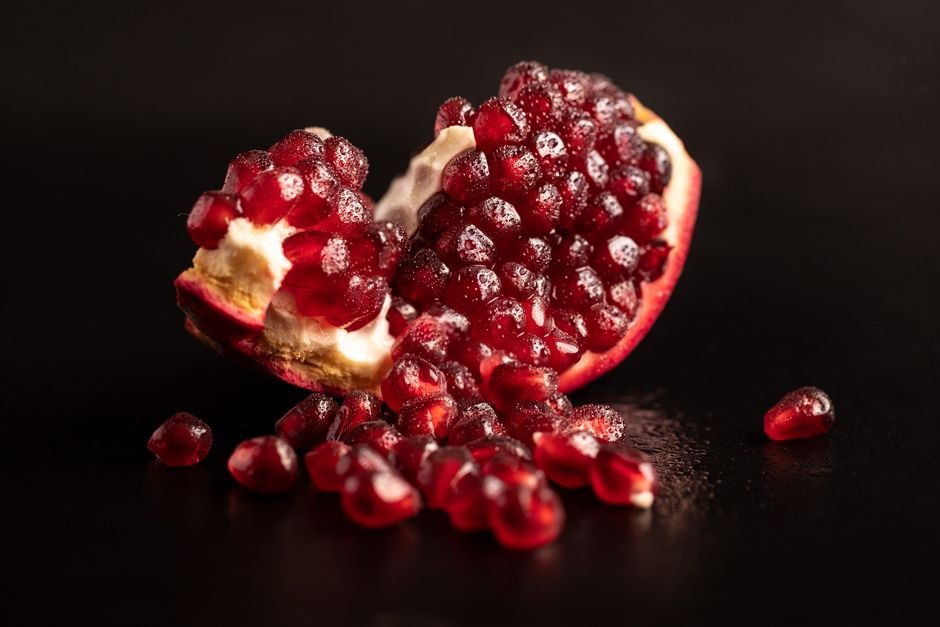
Is Pomegranate Good for Weight Loss?
Yes, pomegranate can support weight loss when eaten in controlled portions. At 83 calories per 100g and packed with fiber (7.2g per cup), pomegranate promotes satiety and stable blood sugar, reducing overall calorie intake throughout the day. However, its natural sugars (23.8g per cup) mean you should count it as a carbohydrate-based snack rather than a “free” food. Eating 1 cup of arils (144 calories) as a post-workout snack or part of breakfast is reasonable; eating 3–4 cups daily could tip your daily sugar intake higher than intended.
Tips to Eat Pomegranate Without Gaining Weight:
- Limit serving to 1 cup of arils (about 144 calories) per day, or 2–3 tablespoons as a topping
- Pair pomegranate with protein (Greek yogurt, nuts, cottage cheese) to slow sugar absorption
- Avoid pomegranate juice, which removes fiber and concentrates sugar into drinkable form—juice has 150+ calories per cup with almost no fiber
- Track the entire fruit if eating a whole pomegranate; don’t assume it’s “light” just because it’s whole food
When combined with balanced meals and regular activity, pomegranate’s nutrient density makes it a smart fruit choice for weight loss goals. The key is portion awareness and not treating it as unlimited.
How Portion Size Affects Calories
Pomegranate calories scale directly with serving size, so knowing what one “serving” looks like prevents accidental overeating. The USDA standard serving is 1 cup of arils (174g), but most people eat less at a time, which is why portion awareness matters. A handful of arils is roughly 2–3 tablespoons and contains about 30–40 calories; this is reasonable as a topping for oatmeal or yogurt.
Example:
- Small serving (3 tablespoons of arils): ~35 calories, 1.5g fiber, 5g natural sugar
- Large serving (1 full cup of arils): 144 calories, 7.2g fiber, 23.8g natural sugar
If you eat pomegranate daily, tracking the difference between a sprinkle and a full cup prevents adding 100+ unintended calories to your day.
Best Way to Measure Pomegranate Accurately
Since pomegranate arils vary slightly in size and juice content, the most accurate way to track calories is by weight using a food scale. If you don’t have a scale, volume measurement (cups or tablespoons) is the next-best option, though it’s less precise. When buying whole pomegranates, weight on a kitchen scale (target 280–320g for a “medium” fruit) ensures consistency.
Options:
- Food scale (most accurate): Weigh 100g or 174g portions of fresh arils; digital scales are inexpensive ($15–30)
- Measuring cup (reasonably accurate): Use a standard 1-cup measuring cup; one cup of firmly packed arils equals about 174g
- Visual portion guide: A closed fist of pomegranate arils ≈ 3–4 tablespoons ≈ 35–50 calories (useful for quick estimation when scales aren’t available)
Calculate Your Exact Calorie Intake
If you’re eating pomegranate as part of a larger meal or tracking total daily calories, knowing the exact contribution requires accurate portion data. Pomegranate by itself is straightforward—144 calories per cup—but when combined with other foods (yogurt, granola, nuts), your total meal calories add up quickly.
Our free AI nutrients calculator lets you input your exact portion of pomegranate and automatically total your meal’s calories, fiber, sugar, potassium, and other key nutrients in seconds. No logging accounts or app subscriptions required—just use the calculator to build accurate meal profiles.
- Calculate combined calories and macros for mixed meals in one step
- See exactly how pomegranate fits into your daily carbohydrate and fiber goals
- Get instant micronutrient breakdowns (potassium, vitamin C, copper) without manual research
Common Mistakes When Eating Pomegranate
Even though pomegranate is nutrient-dense, several common habits can undermine weight loss or health goals. Here are the most frequent errors:
❌ Drinking pomegranate juice instead of eating whole arils. Juice removes the 7g fiber per serving, leaving you with 150 calories of pure carbs—it spikes blood sugar quickly without the satiety benefit.
❌ Eating an entire pomegranate at once without measuring. A whole medium pomegranate is 234 calories and 47g of natural sugar; eating it as a mindless snack can add nearly 250 calories unintentionally to your daily total.
❌ Assuming pomegranate “seeds” are low-calorie because they’re small. Each aril (individual seed with juice) is nutrient-dense but still calorie-bearing; 100 arils ≈ 83 calories, so handfuls add up.
❌ Pairing pomegranate with other high-sugar foods (granola, honey, sweetened yogurt) without tracking total sugar. Pomegranate already contains 24g natural sugar per cup; adding 15g more from granola or honey exceeds recommended daily added-sugar limits.
Tracking portions, choosing whole arils over juice, and pairing with protein are simple fixes to these common mistakes.
FAQ
How many calories are in 100g of pomegranate?
100g of pomegranate arils contains 83 calories. A whole medium pomegranate (282g) contains 234 calories, but most of that weight is inedible skin and pith.
Is pomegranate fattening?
No, pomegranate is not fattening when eaten in moderate portions. At 83 calories per 100g with 7.2g fiber per cup, it’s one of the least calorie-dense fruits. The risk is eating too much at once due to its natural sugars—moderation is key.
How much pomegranate should I eat per day?
One cup of arils (144 calories) per day is a reasonable serving that provides significant antioxidants, fiber, and potassium without excessive sugar intake. If you prefer smaller amounts, 3–4 tablespoons as a topping provides about 35–50 calories and is often more practical.
Does pomegranate have more calories than other fruits?
Pomegranate is actually lower in calories than many fruits: it has 83 per 100g, compared to 89 for grapes, 89 for banana, and 60 for watermelon. Its high fiber content makes it notably satiating relative to its calorie count.
Conclusion
Pomegranate is a nutrient-rich fruit with 83 calories per 100g and exceptional fiber content (7.2g per cup), making it an excellent choice for weight loss and metabolic health. One medium fruit contains 234 calories, but since roughly half is inedible skin, the true calorie burden of eating a whole pomegranate is around 144–150 calories once extracted. Its potassium (567mg per cup), vitamin C, and copper contributions support cardiovascular function and immune health without the calorie density of many processed snacks.
To use pomegranate wisely, measure portions with a food scale or measuring cup, choose whole arils over juice, and pair with protein to slow sugar absorption. Whether you eat it as a topping, snack, or part of a mixed meal, tracking your portions ensures pomegranate fits your daily calorie and nutrient goals. For the most accurate calorie accounting across all your meals, use a reliable nutrients calculator to integrate pomegranate and other foods into your daily total.
