
Popcorn is one of the world’s most popular snacks, enjoyed at movie theaters, sporting events, and home gatherings. It’s a whole grain made from corn kernels that explode under heat, and it appeals to people across all ages and diets. Whether you’re watching your weight, managing diabetes, or simply looking for a satisfying snack, understanding popcorn’s calorie and nutritional content is essential.
But here’s the key question: how many calories are actually in popcorn? The answer depends heavily on preparation method, toppings, and portion size. This guide breaks down the exact nutrition facts, calorie counts for different varieties, and practical strategies to enjoy popcorn without derailing your health goals.
Calories in Popcorn (Quick Answer)
Plain air-popped popcorn is a low-calorie, whole-grain snack when prepared without added fats or toppings.
- 3 cups air-popped popcorn: 93 calories
- 3 cups buttered popcorn: 150–170 calories
- 3 cups movie theater popcorn (large serving): 600–1,000 calories
Calorie counts vary significantly based on cooking method, oil type, salt, and toppings like butter, cheese, or caramel. Always check packaging labels for accurate values from the manufacturer.
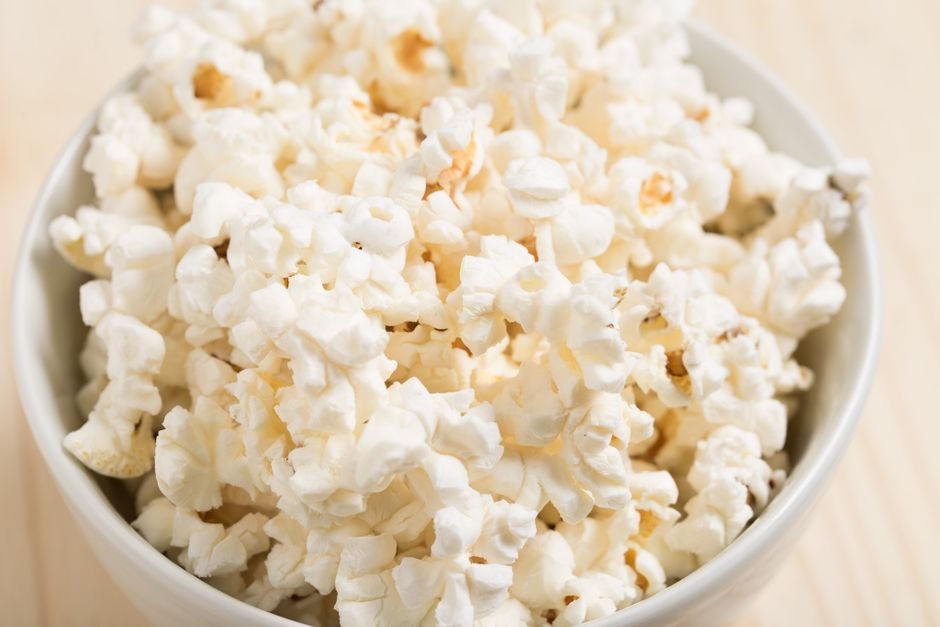
Full Nutrition Facts for 3 Cups (24g) of Air-Popped Popcorn
Air-popped popcorn without added oil or salt is the closest you can get to popcorn in its most natural form. Here’s the complete nutritional breakdown:
| Nutrient | Amount | % Daily Value |
|---|---|---|
| Calories | 93 | 5% |
| Total Fat | 1g | 1% |
| Saturated Fat | 0.2g | <1% |
| Cholesterol | 0mg | 0% |
| Sodium | 1mg | <1% |
| Total Carbohydrate | 18g | 7% |
| Dietary Fiber | 3.5g | 14% |
| Total Sugars | 0.7g | — |
| Protein | 3g | 6% |
| Manganese | 0.2mg | 9% |
| Phosphorus | 72mg | 6% |
| Magnesium | 23mg | 6% |
*Percent Daily Values are based on a 2,000-calorie diet. Source: USDA FoodData Central.
Key insight: Air-popped popcorn is a whole grain with 3.5 grams of fiber per 3-cup serving, making it one of the few snacks that provides meaningful satiety without excess calories. The fiber content supports digestive health and helps you feel fuller longer, which is why plain popcorn can be an excellent choice for weight management when not paired with high-calorie toppings.
Etekcity Food Scale
0.1g accuracy — the perfect companion for exact portions.
Plain Air-Popped vs. Buttered Movie Theater Popcorn
Air-Popped Popcorn
- No added oil means minimal fat and calories (93 calories per 3-cup serving)
- High in fiber and offers natural whole grain benefits
- Requires seasoning at home to add flavor without excess sodium or calories
Buttered Movie Theater Popcorn
- Coated in coconut oil or butter topping, reaching 600–1,000 calories per large serving
- Contains artificial butter flavoring (diacetyl) and high sodium content (up to 1,500mg per serving)
- Often includes trans fats from the topping, which significantly raise LDL cholesterol
Practical takeaway: The difference between plain and theater popcorn can be 500+ calories and 1,000+ mg sodium in a single serving. Air-popping at home gives you full control over toppings and allows you to satisfy cravings for a fraction of the calories. If you enjoy cinema popcorn, sharing a large or opting for a small unbuttered portion keeps intake reasonable.

Is Popcorn Good for Weight Loss?
Yes—air-popped popcorn is actually one of the best snack choices for weight loss because it’s a whole grain with high fiber and protein, delivering volume and satiety for very few calories. A 3-cup serving of plain popcorn has just 93 calories, compared to 150 calories for a typical bag of potato chips of the same volume. The key is preparation: skip the butter, oil, and caramel coatings.
Tips to Eat Popcorn Without Gaining Weight:
- Air-pop or use an air fryer: These methods add zero calories compared to stovetop or microwave bags, which often include added oils.
- Season with spices, not toppings: Use garlic powder, chili powder, nutritional yeast, or paprika instead of butter or cheese powder to keep calories under control.
- Measure your portion: Use a dedicated measuring cup to portion out 3 cups before eating, preventing mindless overconsumption.
- Avoid pre-packaged microwave varieties: These typically contain 150+ calories per 3-cup serving due to added oils and are often high in sodium and artificial ingredients.
Eaten in moderation and prepared correctly, popcorn fits seamlessly into a calorie-deficit diet. Its low energy density (few calories for high volume) makes it ideal for snacking between meals without hunger.
How Portion Size Affects Calories
Popcorn’s calorie count scales linearly with portion size. A small handful (1 cup) is roughly 30 calories, while mindlessly eating directly from a large bowl can easily exceed 400 calories before you realize it. The challenge with popcorn is that it’s so light and airy that people underestimate how much they’re consuming. Using a measured cup, bowl, or small bag ensures portion control and keeps calories predictable.
Example:
- Small portion (2 cups air-popped): 62 calories—ideal as a light snack
- Large portion (6 cups air-popped): 186 calories—a satisfying snack that still fits most diets
Doubling your portion size exactly doubles your calorie intake, so be intentional about how much you scoop.
Best Way to Measure Popcorn Accurately
The most accurate way to measure popcorn is by volume after popping, using a standard 1-cup measuring cup. This is more practical than weighing (which is difficult with a light, airy food) and gives you a clear sense of portion size. Measuring before you eat, rather than eyeballing, prevents accidental overconsumption and makes calorie counting straightforward.
Options:
- Measuring cup method: Pop the corn, then scoop portions into a 1-cup measure. Stack measures into a bowl to reach your desired serving (typically 3 cups).
- Pre-portioned bags: Buy individual-serving bags (usually 3–4 cups per bag) so the work is done for you. Check labels for calorie counts, as these vary by brand.
- Kitchen scale (by weight): If you’re weighing unpopped kernels, approximately 24g of unpopped popcorn yields 3 cups when air-popped. This is precise but requires popping and then measuring volume anyway.
Calculate Your Exact Calorie Intake
If you’re tracking calories for weight loss or a specific fitness goal, knowing the exact calorie content of your snacks matters. Popcorn’s calorie density changes based on how it’s prepared, and custom variations (cheese, caramel, nuts) make estimation unreliable. This is where a personalized approach becomes valuable.
Our site offers a free AI-powered nutrients calculator that lets you input your exact popcorn preparation method, toppings, and portion size to get precise calorie and macro breakdowns. Simply visit the calorie calculator and select popcorn to see instantly how your snack fits into your daily nutrition targets.
- Get real-time calorie counts for any preparation method (air-popped, oil-popped, microwaved)
- Track macros (protein, carbs, fats) to align with your specific diet goals
- Compare different topping combinations to find lower-calorie flavor options
Common Mistakes When Eating Popcorn
Even when you choose popcorn as a healthy snack, small mistakes can quickly add hundreds of calories to your intake. Here are the most common pitfalls:
❌ Eating directly from a large bowl or bag without measuring: It’s nearly impossible to estimate portions with popcorn. A “handful” is subjective, and most people eat 2–3 times their intended amount when eating mindlessly during movies or work.
❌ Adding toppings after popping (butter, cheese powder, caramel): Drizzling melted butter or sprinkling cheese powder adds 50–100+ calories per tablespoon. These toppings cling unevenly, so you can’t control the exact amount.
❌ Choosing microwave popcorn bags with artificial butter flavoring: These packets typically contain 150–200 calories per serving and often include trans fats and excess sodium (500–1,200mg per serving).
❌ Assuming “movie theater butter” is just a light coating: A large theater popcorn with “light butter” still contains 600+ calories and often includes hydrogenated oils and artificial flavoring that hurt your cardiovascular health.
Awareness of these traps makes popcorn an easy snack to enjoy guilt-free.
FAQ
How many calories are in 100g of popcorn?
Air-popped popcorn contains approximately 387 calories per 100g. Since popped popcorn is very light (24g yields 3 cups), 100g is a large volume—roughly 12–13 cups of popped popcorn. For practical snacking, measure by cups (3-cup servings are standard) rather than grams.
Is popcorn fattening?
Plain air-popped popcorn is not fattening and is actually one of the best snacks for weight loss. It becomes fattening only when loaded with butter, oil, salt, cheese, or caramel—which can add 500–1,000 calories per serving. The food itself is low-calorie and high-fiber; preparation method determines whether it supports or harms your weight goals.
Does popcorn have any nutritional benefits beyond being low-calorie?
Yes. Popcorn is a whole grain, delivering fiber (3.5g per 3-cup serving), antioxidants, and minerals like manganese, magnesium, and phosphorus. The fiber supports digestive health and satiety, while the whole grain form provides sustained energy without rapid blood sugar spikes, making it beneficial for diabetes management.
What’s the healthiest way to flavor popcorn at home?
Season air-popped popcorn with dry spices like garlic powder, paprika, chili powder, nutritional yeast, or dried herbs before or immediately after popping. Nutritional yeast adds a cheesy flavor with minimal calories (5 calories per teaspoon). Avoid melting butter or oil over popcorn; instead, lightly mist with cooking spray first so seasonings stick, keeping total added fat under 1–2 grams per serving.
Conclusion
Popcorn’s calorie content varies dramatically based on preparation. Air-popped plain popcorn is one of the best snacks available for weight loss—just 93 calories for 3 cups—while theater-style butter popcorn can exceed 1,000 calories in a single large serving. The whole grain delivers fiber, protein, and satiety that make it far superior to chips or candy for hunger management. The key to enjoying popcorn without derailing your health is controlling preparation method and portion size.
To take the guesswork out of your snacking, measure portions in advance, season with spices instead of added fat, and use a reliable nutrients calculator to track exactly how your popcorn snack fits into your daily calorie and macro targets. With these strategies, popcorn can be a guilt-free staple in your diet.
