
Sesame seeds have been a staple in Asian, Middle Eastern, and African cuisines for thousands of years. They’re used in everything from tahini and hummus to baked goods, salad toppings, and stir-fries. Whether you’re watching your weight, building muscle, or managing blood sugar, understanding the calorie and nutrient density of sesame seeds is essential—they pack significant nutrition into a small serving.
Many people wonder how many calories are in sesame seeds and whether they fit into a balanced diet. This guide breaks down the complete nutrition facts, portion sizes, and practical tips for incorporating sesame seeds into your meals without overdoing calories.
Calories in Sesame Seeds (Quick Answer)
Sesame seeds are calorie-dense due to their high fat content. Here’s what a typical serving delivers:
- 1 tablespoon (9g) raw sesame seeds: 52 calories
- 1 ounce (28g) raw sesame seeds: 161 calories
- ¼ cup (36g) raw sesame seeds: 206 calories
Calorie counts vary slightly by variety (white vs. black), ripeness, and whether seeds have been roasted or raw. Values above reflect unroasted seeds from USDA FoodData Central.
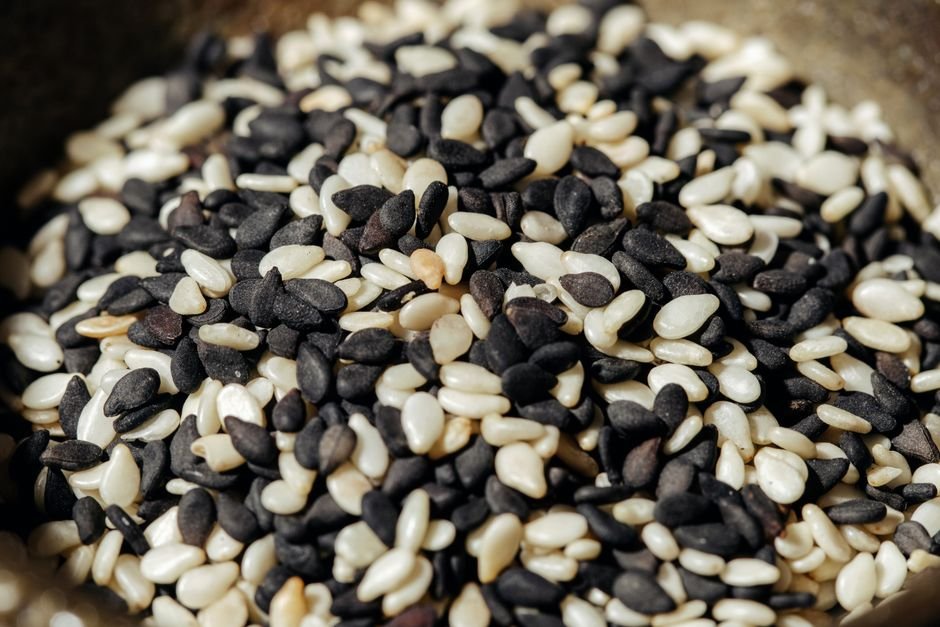
Full Nutrition Facts for 1 Ounce (28g) of Sesame Seeds
A single ounce of sesame seeds provides substantial fat, protein, and minerals that make them a nutrient-dense food. Below is the complete breakdown based on raw, whole sesame seeds:
| Nutrient | Amount | % Daily Value* |
|---|---|---|
| Calories | 161 | — |
| Total Fat | 15g | 19% |
| Saturated Fat | 2.1g | 11% |
| Cholesterol | 0mg | 0% |
| Sodium | 11mg | 0% |
| Total Carbohydrate | 7g | 3% |
| Dietary Fiber | 3.3g | 13% |
| Total Sugars | 0.3g | — |
| Protein | 5.1g | 10% |
| Calcium | 989mg | 76% |
| Iron | 4.1mg | 23% |
| Magnesium | 111mg | 26% |
*Percent Daily Values are based on a 2,000-calorie diet. Source: USDA FoodData Central.
Key insight: Sesame seeds are an exceptional plant-based source of calcium—just one ounce delivers 76% of your daily value, making them a standout choice for anyone avoiding dairy or seeking alternative mineral sources. Their fiber-to-carb ratio (3.3g fiber in only 7g carbs) makes them blood-sugar-friendly despite their high calorie density.

Etekcity Food Scale
0.1g accuracy — the perfect companion for exact portions.
White vs. Black Sesame Seeds: Nutrition Comparison
White Sesame Seeds
- Hulled (outer shell removed), lighter color and milder, slightly nutty flavor
- Slightly higher in fat and calories; more commonly used in tahini and global cuisines
- Less bitter, more palatable for those new to sesame
Black Sesame Seeds
- Unhulled (shell intact), darker color with earthier, more robust flavor
- Retain more minerals and antioxidants, particularly in the seed coat
- Slightly higher fiber content due to the hull; traditional in Asian cooking
Takeaway: Both varieties are nutritionally dense and deliver nearly identical calorie counts—about 160 calories per ounce. Black seeds offer a modest edge in mineral bioavailability and antioxidants because the hull is intact. Choose white for milder flavor and broader culinary versatility, or black for maximum mineral retention and traditional appeal. The difference in actual calories is negligible.
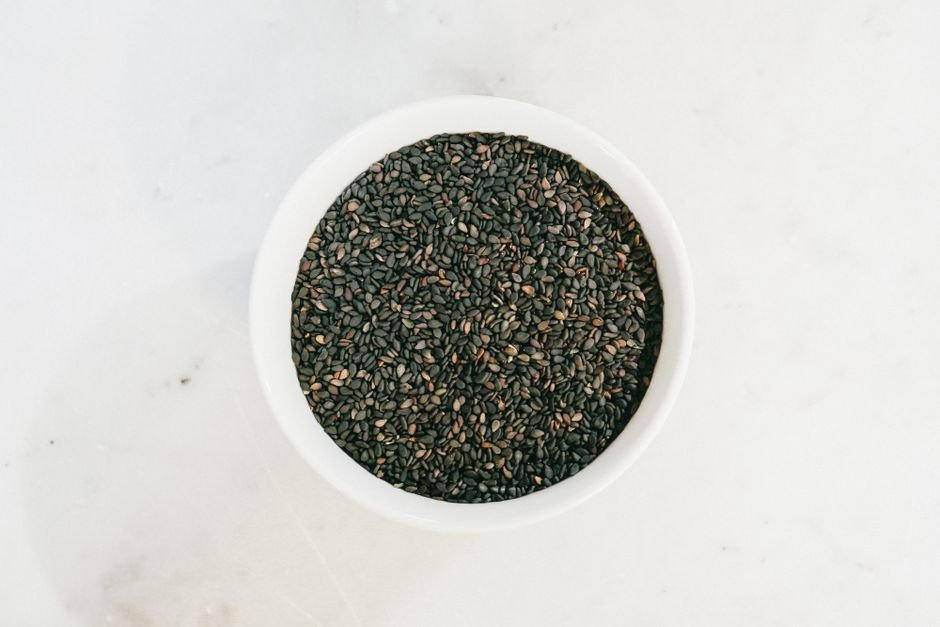
Is Sesame Seeds Good for Weight Loss?
Sesame seeds can fit into a weight-loss diet, but portion control is critical. At 161 calories per ounce, they’re easy to overeat—a single handful can quickly add 80–100 calories. The upside: their combination of fiber, protein, and healthy fats promotes satiety, meaning small amounts help you feel fuller longer. Use sesame seeds as a garnish or ingredient rather than an unlimited snack.
Tips to Eat Sesame Seeds Without Gaining Weight:
- Measure portions: Pre-portion seeds into small containers (1–2 tablespoons) to avoid mindless eating from bulk bags.
- Use as a garnish: Sprinkle 1–2 teaspoons over salads, grain bowls, or soups to add crunch and nutrition without excess calories.
- Pair with protein: Combine sesame seeds with leafy greens, legumes, or grilled vegetables to build satisfying, balanced meals.
- Track tahini intake: If using sesame seed paste (tahini), remember it’s even more calorie-dense (95 calories per tablespoon)—measure carefully.
The key is treating sesame seeds as a nutrient-dense ingredient to flavor and enhance meals, not a standalone snack to consume by the handful.
How Portion Size Affects Calories
Small differences in serving size create noticeable calorie swings. Because sesame seeds are so energy-dense, portion awareness directly impacts your daily intake. A single tablespoon difference adds roughly 50 calories—equivalent to a brisk 10-minute walk to burn off.
Example:
- Small portion (1 tablespoon, 9g): 52 calories. Good for garnishing a single bowl or salad.
- Large portion (¼ cup, 36g): 206 calories. Equivalent to a light snack; risks excess intake if not intentional.
Using a kitchen scale or measuring spoon ensures you stay within your target serving size and prevent unintended calorie surplus.
Best Way to Measure Sesame Seeds Accurately
Accurate measurement is essential for tracking nutrition and avoiding calorie creep. Sesame seeds vary in density depending on how tightly they’re packed, so volume alone can be misleading. A cup measured loosely differs significantly from one packed down.
Options:
- Kitchen scale (most accurate): Weigh seeds in grams. One ounce = 28g. This eliminates guesswork and works for any recipe.
- Measuring spoons: Use a standard tablespoon (one level tablespoon = 9g ≈ 52 calories). Leveled off, not heaped.
- Visual estimation: Know that your thumb tip equals roughly 1 teaspoon (3g ≈ 17 calories). This works for quick garnishing when precision isn’t critical.
Calculate Your Exact Calorie Intake
If you’re planning meals around specific calorie targets—whether for weight loss, muscle gain, or athletic performance—manually calculating nutrient intake from sesame seeds and every other ingredient becomes tedious and error-prone. A more efficient approach uses a reliable nutrition calculator to instantly assess your daily macro and micronutrient totals.
Our site offers a free AI-powered nutrients calculator that lets you search any food, input your typical portions, and see your complete nutrition profile in seconds. Simply visit https://nutrientscalculator.com/ to start tracking sesame seeds and build custom meal plans without the math.
- Instantly calculate calories, macros, and micronutrients for any meal or day
- Track trends over time to optimize your nutrition for your specific goals
- Identify nutrient gaps so you know exactly what you’re missing
Common Mistakes When Eating Sesame Seeds
Even nutritious foods can become problematic when used carelessly. Here are the most common pitfalls when incorporating sesame seeds into your diet:
❌ Eating directly from the bag without measuring. It’s nearly impossible to stop at one handful; seeds taste buttery and moreish. Always measure a portion into a bowl first.
❌ Forgetting that tahini is the same food. Sesame seed paste has identical nutrition to whole seeds but feels lighter and less satisfying per calorie. A 2-tablespoon serving of tahini packs 190 calories—many people eat this unconsciously with a spoon.
❌ Not accounting for roasted seeds’ added calories from oil. Commercially roasted sesame seeds often contain added oil. Always check labels; some brands add 10–20 extra calories per ounce compared to raw seeds.
❌ Assuming “sesame seed oil” is the same as sesame seeds. Oil is 100% fat (120 calories per tablespoon), far more concentrated than whole seeds. One tablespoon of sesame oil ≠ one tablespoon of seeds.
Awareness of these mistakes helps you use sesame seeds intentionally rather than letting them become a hidden calorie source.
FAQ
How many calories are in 100g of sesame seeds?
One hundred grams of raw sesame seeds contains approximately 573 calories. This is equivalent to 3.5 ounces or slightly more than half a cup, depending on how densely packed they are.
Is sesame seeds fattening?
Sesame seeds are calorie-dense but not “fattening” if consumed in measured portions as part of a balanced diet. Their healthy fats, fiber, and protein support satiety and metabolic health. The issue arises only when eaten in excess without awareness of portions.
Are sesame seeds high in oxalates?
Yes, sesame seeds contain moderate-to-high oxalate levels (about 105mg per ounce). Those with a history of kidney stones or oxalate sensitivity should consult a healthcare provider about safe intake limits.
Can you eat sesame seeds raw?
Absolutely. Raw sesame seeds are safe and nutritious. Roasting them enhances flavor but doesn’t significantly change their calorie or macro content. Both raw and roasted are equally valid nutritional choices; pick based on taste preference.
Conclusion
Sesame seeds pack remarkable nutrition into a small package: 161 calories per ounce, plus exceptional calcium (76% DV), fiber, protein, and heart-healthy polyunsaturated fats. Their low sodium and zero cholesterol make them suitable for nearly any diet, from vegan to paleo to cardiac-conscious eating patterns. Whether sprinkled on salads, blended into tahini, or used in Asian stir-fries, they deliver genuine nutritional value beyond mere flavor.
The key to using sesame seeds wisely is portion awareness and intentional inclusion in meals. Measure before eating, use them as garnishes or recipe ingredients rather than standalone snacks, and leverage a nutrition calculator to track your overall intake accurately. With these practices, sesame seeds become a valuable, satisfying addition to a healthy, sustainable diet.
