
Flour tortillas are a staple in Mexican cuisine and widely consumed across North America as a versatile base for burritos, wraps, fajitas, and countless other dishes. They’re popular among people of all dietary preferences—from athletes building muscle to those managing weight or blood sugar. Because they’re so convenient and neutral-flavored, it’s easy to underestimate how many calories and carbohydrates end up in your meal when tortillas are the foundation.
If you eat tortillas regularly, knowing their exact calorie and macro content is essential for meal planning. This guide answers the core question: How many calories are in a flour tortilla? We’ll cover standard serving sizes, complete nutrition facts, how preparation affects calories, and practical strategies for including tortillas in a balanced diet.
Calories in Flour Tortilla (Quick Answer)
A standard flour tortilla (8-inch diameter) contains around 140–170 calories, depending on thickness and fat content.
- 8-inch flour tortilla: 140–150 calories
- 10-inch flour tortilla: 170–190 calories
- Low-fat flour tortilla: 120–130 calories
Calorie values vary significantly based on brand, thickness, added fats, and whether the tortilla is freshly made or packaged. Always check the nutrition label on your specific brand.
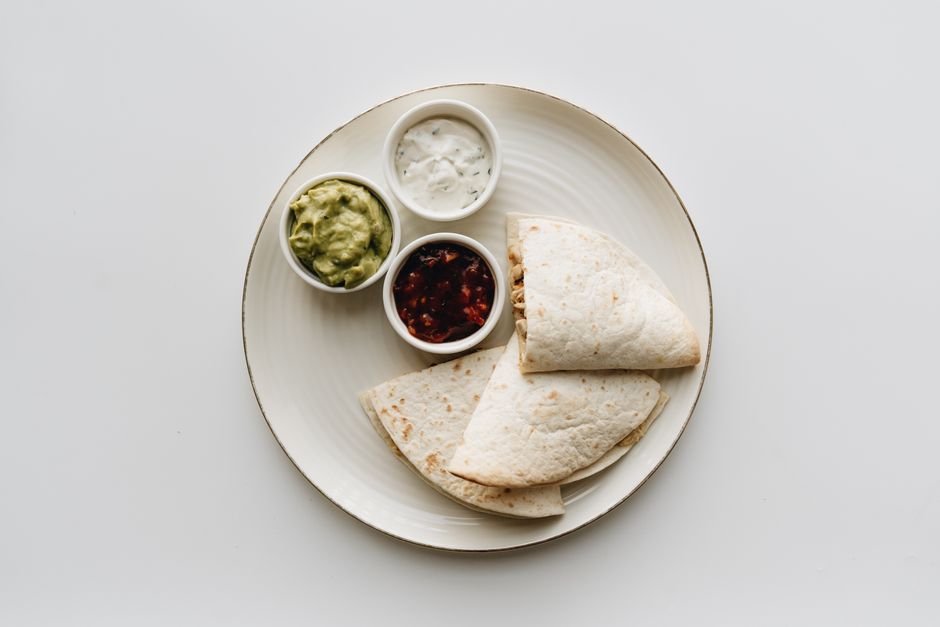
Full Nutrition Facts for One 8-inch Flour Tortilla
Here are the complete nutrition facts for a standard 8-inch flour tortilla (approximately 49g), typical of what you’ll find in most grocery store packages:
| Nutrient | Amount | % Daily Value |
|---|---|---|
| Calories | 149 | 7% |
| Total Fat | 4.0 g | 5% |
| Saturated Fat | 1.0 g | 5% |
| Cholesterol | 0 mg | 0% |
| Sodium | 346 mg | 15% |
| Total Carbohydrate | 26 g | 9% |
| Dietary Fiber | 1.6 g | 6% |
| Total Sugars | 0.5 g | — |
| Protein | 4.0 g | 8% |
| Iron | 1.9 mg | 11% |
| Folate | 48 mcg | 12% |
| Thiamine (Vitamin B1) | 0.16 mg | 13% |
*Percent Daily Values are based on a 2,000-calorie diet. Source: USDA FoodData Central.
Key insight: A single flour tortilla delivers about 26g of carbohydrates with minimal fiber (1.6g), making it fast-digesting and unlikely to keep you full for long on its own. The sodium content (346mg per tortilla) is moderately high—two tortillas put you at over 14% of the daily limit. Protein is modest at 4g, so pairing tortillas with protein-rich fillings (beans, meat, cheese) is important for balanced nutrition.
Etekcity Food Scale
0.1g accuracy — the perfect companion for exact portions.
Flour Tortilla vs. Corn Tortilla: What’s the Difference?
Flour Tortilla
- Higher in calories: 8-inch tortilla = 140–150 cal
- More carbohydrates (26g) and protein (4g) per standard tortilla
- Softer, more pliable texture; requires added fat (lard or shortening) to achieve flexibility
Corn Tortilla
- Lower in calories: 6-inch tortilla = 50–55 cal
- Fewer carbohydrates (11g) but also less protein (1.4g per small tortilla)
- Firmer, more brittle; made primarily from nixtamalized corn, minimal fat added
Practical takeaway: If calorie control is your goal, corn tortillas are the leaner choice—you’d need about three small corn tortillas to match one flour tortilla’s calories. However, flour tortillas offer more protein and a more substantial base. Neither is inherently “bad”; the choice depends on your meal structure and calorie budget. For wraps and burritos, one larger flour tortilla often works better than layering multiple corn tortillas.
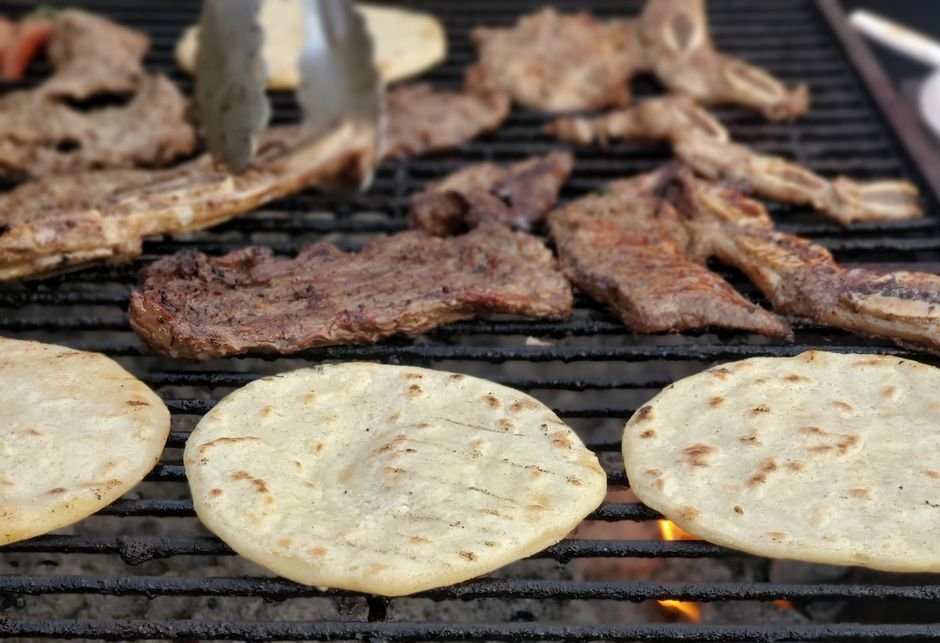
Is Flour Tortilla Good for Weight Loss?
Flour tortillas can fit into a weight-loss diet, but they’re calorie-dense carbohydrates without much fiber or protein, so they won’t keep you satisfied long. A single tortilla (140–150 cal) is reasonable in isolation, but most people eat two or more at a meal, quickly consuming 300+ calories. The key is pairing them with protein and vegetables, controlling portions, and being mindful of what goes inside.
Tips to Eat Flour Tortilla Without Gaining Weight:
- Limit to one per meal: Use one tortilla as your base and fill it generously with protein (grilled chicken, tofu, beans, eggs) and non-starchy vegetables (lettuce, peppers, onions, tomatoes).
- Choose lower-calorie brands: Some brands market “weight loss” or “low-fat” tortillas at 100–120 calories per piece. Read labels and compare.
- Replace half with lettuce: Use a large lettuce leaf alongside or instead of a second tortilla for wraps; you get volume and satisfaction with fewer calories.
- Track total intake: Don’t eat tortillas “freely.” One tortilla is 7% of a 2,000-calorie day; monitor your daily total to stay on track.
Flour tortillas work best in a weight-loss plan when they’re part of a high-protein, high-fiber meal rather than consumed alone or with high-calorie fillings like cheese and sour cream.
How Portion Size Affects Calories
Tortilla calories scale directly with size. A larger tortilla means proportionally more flour, fat, and calories. Restaurant and homemade tortillas are often bigger and thicker than packaged grocery-store versions, pushing calories higher. Tracking by weight (grams) is more reliable than counting “one tortilla” because sizes vary.
Example:
- Small (6-inch) flour tortilla (~30g): 90–110 calories
- Large (10-inch) flour tortilla (~70g): 200–240 calories
The takeaway: If you’re meal-prepping or buying packaged tortillas, weigh a few to confirm the actual grams per tortilla, then multiply by the calorie density (roughly 3 calories per gram for flour tortillas).
Best Way to Measure Flour Tortilla Accurately
Eyeballing tortilla portions is notoriously unreliable because thickness varies and visual size is deceptive. The most accurate method is weighing your tortilla on a digital kitchen scale, then cross-referencing the nutrition label or USDA data. If you buy packaged tortillas, the label already states calories per tortilla, but homemade or bakery tortillas require weighing.
Options:
- Digital kitchen scale: Weigh the tortilla to the nearest gram, then check the nutrition label or a database (e.g., USDA) for calories per gram. Most flour tortillas average 3 cal/g.
- Nutrition label on package: Pre-packaged tortillas clearly state calories per tortilla. Use this as your baseline if you consistently buy the same brand.
- USDA FoodData Central lookup: Search “flour tortilla” on USDA FoodData Central, input the weight in grams, and get exact calorie and macro breakdowns. This is the gold standard for accuracy.
Calculate Your Exact Calorie Intake
If you’re eating tortillas as part of your regular diet—especially in multiple meals—it’s easy to lose track of cumulative calorie intake. One tortilla feels light, but two tortillas plus fillings can quickly add 400–600 calories to a meal, which can derail weight-loss or health goals if you’re not monitoring.
Rather than guess, use the site’s free AI nutrients calculator to log your exact tortilla meals. Input the weight, fillings, and preparation method, and get precise calories, macros, and micronutrient breakdowns instantly. This takes the guesswork out of meal planning.
- Log entire meals (tortilla + filling) in seconds
- Track macros (carbs, protein, fat) to match your dietary goals
- Get instant feedback on whether your meal fits your daily targets
Try it free: Use the AI Nutrients Calculator
Common Mistakes When Eating Flour Tortilla
Even health-conscious eaters make predictable mistakes with tortillas. Here are the most common:
❌ Eating two or three tortillas per meal without accounting for the extra 280–450 calories. Many people consider one tortilla “light” and unconsciously double or triple their intake.
❌ Ignoring fillings while focusing only on tortilla calories. A tortilla itself is moderate, but add sour cream (100 cal/2 tbsp), cheese (110 cal/1 oz), and mayo (90 cal/1 tbsp), and you’ve doubled your meal’s calorie count without tasting much difference.
❌ Choosing high-sodium, commercially made tortillas without comparing brands. Some tortillas contain 400–500mg sodium per piece; buying lower-sodium versions can save 100+ mg per meal.
❌ Assuming large, restaurant-style tortillas are “just one tortilla.” A 12-inch burrito tortilla can contain 300+ calories and 50g carbs—equivalent to two or three standard grocery-store tortillas.
Being aware of these pitfalls helps you eat tortillas intentionally rather than passively consuming excess calories.
FAQ
How many calories are in 100g of flour tortilla?
A 100g serving of flour tortilla contains approximately 300 calories. This is roughly equivalent to two standard 8-inch tortillas (49g each). Most packaged tortillas are labeled per individual tortilla, not by weight, so weighing helps translate label info to this reference serving.
Is flour tortilla fattening?
Tortillas themselves aren’t “fattening,” but they are calorie-dense carbohydrates with minimal protein or fiber, so they don’t promote fullness. If you eat them without portion control or pair them with high-calorie fillings, they contribute to weight gain. One tortilla in a balanced meal is fine; multiple tortillas or oversized versions without oversight are where problems emerge.
Do flour tortillas have gluten?
Yes, flour tortillas are made from wheat flour and contain gluten. People with celiac disease or gluten sensitivity should avoid them or choose certified gluten-free versions, which are widely available.
How do I choose a lower-calorie tortilla?
Look for brands labeled “low-fat,” “reduced-calorie,” or “thin” tortillas (100–120 cal per tortilla vs. standard 140–160 cal). Also check sodium content; brands vary widely from 300–500mg per tortilla. Compare the nutrition label directly rather than assuming smaller packages are lower-calorie.
Conclusion
A standard 8-inch flour tortilla contains 140–150 calories, 26g carbohydrates, and 4g protein, making it a moderate-calorie base for wraps, burritos, and other dishes. The main nutritional concern is portion control—most people eat multiple tortillas per meal without realizing the cumulative calorie impact. Sodium content is also worth noting, as a single tortilla provides 15% of the daily limit. Paired with protein-rich fillings and non-starchy vegetables, tortillas fit well into balanced eating; consumed alone or with calorie-dense toppings, they quickly become a calorie surplus.
If tortillas are a regular part of your diet, using accurate measurement tools and a reliable nutrients calculator removes the guesswork from meal planning. Weigh your tortillas, log your fillings, and track your intake—this simple habit ensures you stay aligned with your health goals while still enjoying the foods you love.
