Part of our guide: Calories in Alcohol: Beer, Wine, Spirits and Cocktails Compared
Key takeaways
- Alcohol and weight loss don’t mix well, but they’re not incompatible. Drinks have to fit inside your calorie budget like anything else.
- Alcohol works against fat loss in four ways: extra calories, a temporary pause in fat burning, bigger appetite and poorer sleep.
- The lightest choices are spirits with zero-calorie mixers, light beer and measured glasses of dry wine.
- Deciding your limit in advance, and eating a proper meal first, prevents most of the damage.
Many people working on their weight wonder whether they have to give up alcohol completely. The honest answer about alcohol and weight loss is that you don’t have to, but drinking makes the job harder, often more than the drink’s calories suggest. Here’s how alcohol affects your progress, and how to drink smarter if you choose to drink.
Effect 1: The calories add up fast
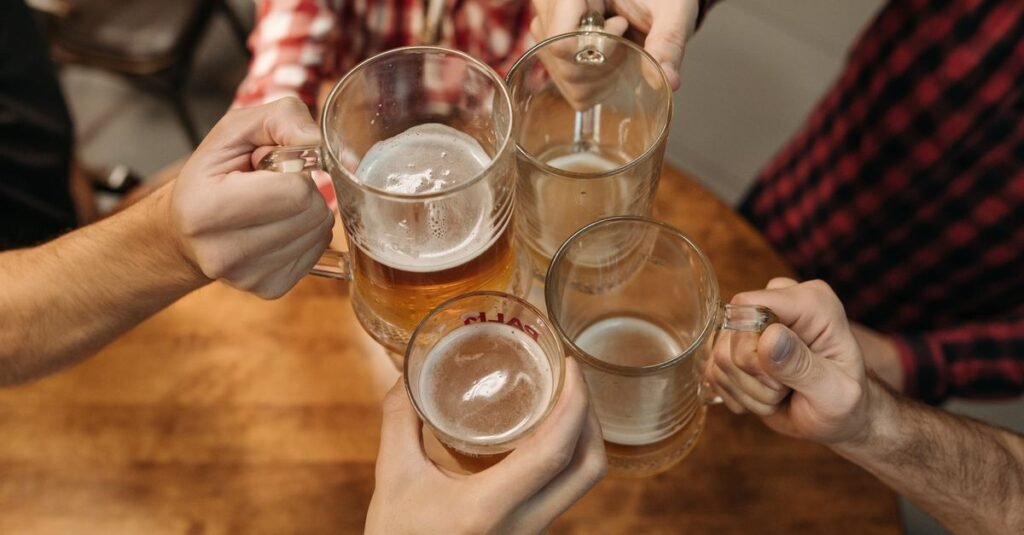
Alcohol supplies about 7 calories per gram, and a US standard drink contains 14 g, so about 98 calories come from the alcohol alone (NIAAA). Add carbs and mixers and, from USDA data:
- A 12 oz regular beer is about 153 calories; a 16 oz pint about 205.
- A 5 oz glass of wine is about 120–125; a 9 oz restaurant pour about 220.
- A piña colada (4.5 oz) is about 245.
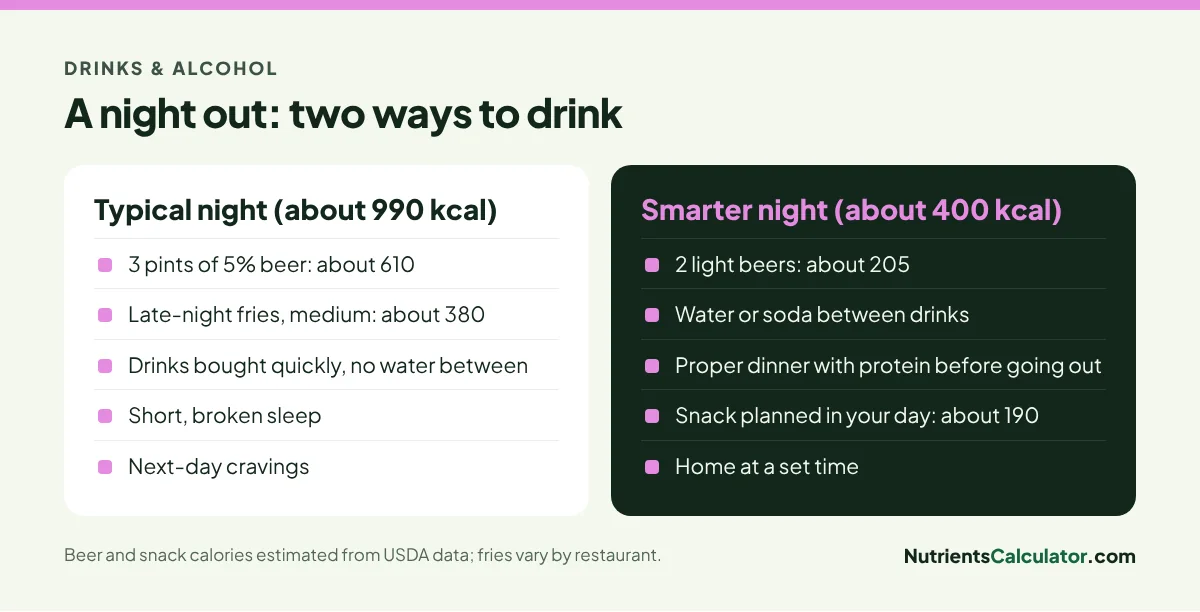
Three pints on a Friday is roughly 610 calories, which could be most of the week’s planned deficit gone in one evening. Our pillar guide on calories in alcohol has the full comparison.
Etekcity Food Scale
0.1g accuracy — the perfect companion for exact portions.
Effect 2: Your body burns alcohol first
Your body can’t store alcohol, so it treats it as a priority fuel and burns it before fat and carbohydrate. While it’s doing that, fat burning slows down. One drink won’t undo your progress, but regular drinking means regular pauses in fat use, which slows fat loss on those days.
Effect 3: It makes you eat more

Alcohol doesn’t make you feel full, and research shows the opposite: in lab studies, people tend to eat more at meals when they drink alcohol beforehand, and they don’t compensate by eating less later (Yeomans, 2010). Lowered inhibitions add to it: the late-night fries, the extra slice of pizza, the snack bowl at the bar. Often the food that comes with drinking matters more than the drinks themselves.
Effect 4: It disrupts sleep
Alcohol can help you fall asleep but tends to make sleep lighter and more broken in the second half of the night. Poor sleep is linked to bigger appetites, more cravings for calorie-dense foods and less motivation to move the next day.
What the guidelines say
The 2025–2030 Dietary Guidelines for Americans now simply advise drinking less alcohol for better health, without a specific daily limit (HCPLive summary). For weight loss, less is better too.
How to drink smarter while losing weight

- Decide your number before you start, and tell someone if it helps.
- Choose lower-calorie drinks. Spirits with soda water, diet tonic or fresh lime; light beer; a measured 5 oz glass of dry wine. See the lowest-calorie alcoholic drinks.
- Count in standard drinks, not glasses. A pint of 7% IPA is almost two (what is a standard drink?).
- Eat a proper meal with protein first. You’ll drink more slowly and snack less.
- Alternate with water or a zero-alcohol drink. It halves the pace. Non-alcoholic beer and wine are now widely available (non-alcoholic beer and wine).
- Plan the food. If you know you’ll want something late, budget for it instead of improvising.
- Keep drinking days separate from big-meal days where you can.
- Log your drinks. People routinely underestimate pours.
Alcohol and weight loss: fitting drinks into a calorie target
If you drink, plan for it the way you’d plan a dessert:
- Budget weekly, not daily. If your weekly deficit is 3,500 calories (500 a day), two glasses of wine on Saturday (about 250) is a modest dent. Six pints is not.
- Trade, don’t stack. Swap the drink for a snack or dessert you’d otherwise have, rather than having both.
- Keep protein high on drinking days so meals stay filling.
Our alcohol calculator turns any drink, size and ABV into calories and standard drinks, which makes budgeting easier.
The scale the next morning
It’s common to weigh a pound or two more the day after a night out. Most of that is water and food in your gut from salty snacks and extra carbs, not fat. Ignore the single reading and compare weekly averages, as explained in daily weight fluctuations.
When cutting back makes the biggest difference
If you drink most days, have several drinks at a time, or find drinking regularly leads to late-night eating, cutting back is likely to be one of the most effective changes you can make, often more effective than changing your diet. If you find it hard to cut back, talk to your doctor; support is available.
The bottom line
Alcohol and weight loss can coexist, but alcohol adds calories quickly, pauses fat burning, increases appetite and disrupts sleep. If you drink, choose lighter drinks, count standard drinks, eat first, alternate with water and plan drinks into your weekly calorie budget. Drinking less often and less at a time will make your progress noticeably easier. For the full picture of building a deficit, see how to create a calorie deficit.
Frequently asked questions
Can I drink alcohol and still lose weight?
Yes, if your total calories stay in a deficit. Occasional, moderate drinks can fit, but alcohol adds calories without fullness and tends to increase how much you eat, so many people find it easier to lose weight when they drink less.
Does alcohol stop fat burning?
Temporarily. Your body can't store alcohol, so it burns it first, which pauses fat burning for a while after drinking. It doesn't make fat loss impossible, but it does slow it on the days you drink.
What is the best alcohol for weight loss?
Lower-calorie options include spirits with soda water or a diet mixer (about 97 calories per shot), light beer (about 100) and a measured 5 oz glass of dry wine (about 120–125). Sugary cocktails and large pours are the hardest to fit in.
Why do I weigh more the day after drinking?
Mostly water and food in your gut. Salty snacks, extra carbs and alcohol's effect on fluid balance can add a temporary pound or two that fades within a few days.
Sources
- Yeomans MR. Alcohol, appetite and energy balance: is alcohol intake a risk factor for obesity? Physiol Behav, 2010
- NIAAA: What is a standard drink?
- HCPLive: 2025–2030 Dietary Guidelines and alcohol intake recommendations
- USDA FoodData Central
This article is for general information and isn’t medical advice. Talk to your doctor or a registered dietitian about your own needs, especially if you have a health condition, are pregnant or take medication.