
Almonds are among the world’s most popular tree nuts, widely consumed as snacks, ingredients in baked goods, and staples in plant-based diets. They’re beloved by fitness enthusiasts aiming to build muscle, health-conscious eaters pursuing weight loss, and anyone managing blood sugar levels due to their low glycemic index. Whether eaten raw, roasted, or as almond butter, almonds pack dense nutrition into a small handful.
But how many calories are actually in almonds? And do they fit your nutritional goals? This guide provides exact calorie counts, complete macronutrient breakdowns, and practical tips for incorporating almonds without overdoing calories.
Calories in Almonds (Quick Answer)
A standard 1-ounce (28g) serving of almonds contains approximately 164 calories, making them calorie-dense but nutrient-rich.
- 1 ounce (28g) raw almonds: 164 calories, 6g protein, 6g carbs, 14g fat
- 1 ounce (28g) dry roasted almonds: 167 calories, 6g protein, 6g carbs, 15g fat
- 2 tablespoons (32g) raw almond butter: 190 calories, 7g protein, 7g carbs, 16g fat
Calorie content varies slightly by roast level and whether the almonds are blanched or with skin intact; raw and dry-roasted varieties are comparable.
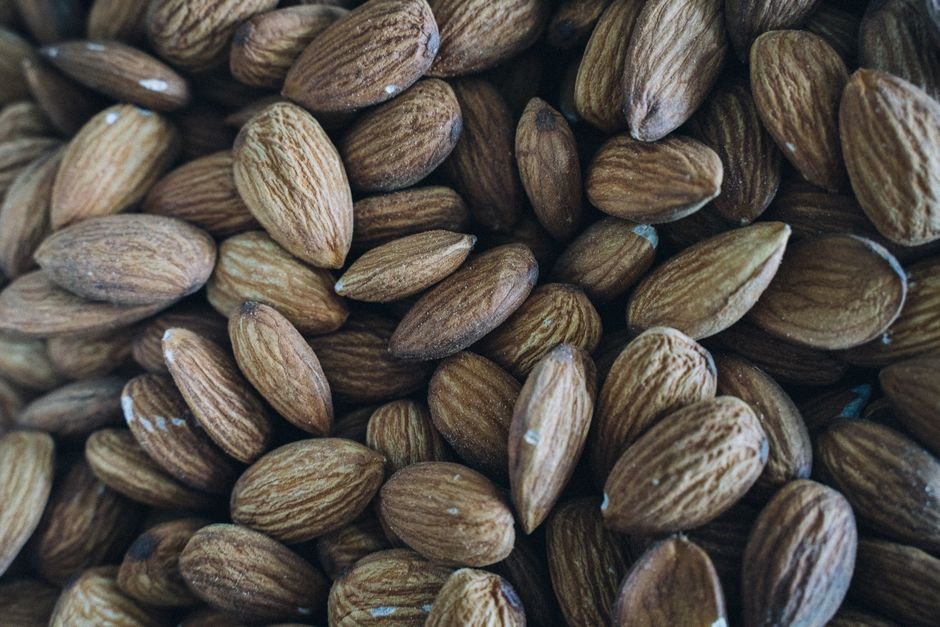
Full Nutrition Facts for 1 Ounce (28g) of Raw Almonds
One ounce of raw almonds delivers a balanced micronutrient profile alongside substantial protein and healthy fats. Here’s the complete breakdown:
| Nutrient | Amount | % Daily Value |
|---|---|---|
| Calories | 164 | — |
| Total Fat | 14.2g | 18% |
| Saturated Fat | 1.1g | 6% |
| Cholesterol | 0mg | 0% |
| Sodium | 0.3mg | 0% |
| Total Carbohydrate | 6.1g | 2% |
| Dietary Fiber | 3.5g | 14% |
| Total Sugars | 1.2g | — |
| Protein | 6.0g | 12% |
| Vitamin E | 7.3mg | 49% |
| Magnesium | 76mg | 18% |
| Calcium | 264mg | 20% |
*Percent Daily Values are based on a 2,000-calorie diet. Source: USDA FoodData Central.
Key insight: Almonds are exceptional sources of vitamin E (an antioxidant) and magnesium (essential for muscle and nerve function), yet remain naturally very low in sodium and cholesterol-free. The 3.5g of dietary fiber per ounce helps slow digestion and promotes satiety, making almonds useful for appetite control despite their caloric density.

Etekcity Food Scale
0.1g accuracy — the perfect companion for exact portions.
Raw Almonds vs. Roasted Almonds: Which Should You Choose?
Raw Almonds
- 164 calories per ounce with 14g fat and maximum micronutrient retention
- Contain phytic acid, which may reduce mineral absorption but also has antioxidant properties
- Slightly nuttier, less intensely flavored taste preferred by some
Dry-Roasted Almonds
- 167 calories per ounce; roasting slightly concentrates calories as water evaporates
- Easier to digest and phytic acid content reduced through heat treatment
- Richer flavor and crunchier texture make portion control psychologically easier for many people
Practical takeaway: From a calorie and macronutrient perspective, raw and roasted almonds are nearly identical. Choose based on digestive comfort and flavor preference. Roasted almonds’ more intense taste may help you feel satisfied with smaller portions.
Is Almond Good for Weight Loss?
Yes, almonds can support weight loss when portions are controlled. Their combination of protein (6g per ounce), fiber (3.5g), and healthy fats creates lasting satiety, reducing overall calorie intake. Studies show people who eat almonds as snacks consume fewer total calories than those eating high-carb alternatives. The key is limiting servings to one ounce (about 23 almonds) at a time, since it’s easy to overeat from a bag.
Tips to Eat Almonds Without Gaining Weight:
- Pre-portion into bags: Divide almonds into 1-ounce portions (28g) before snacking to prevent mindless overeating
- Pair with hydration: Eat almonds with water or unsweetened tea; the fiber expands in your stomach, signaling fullness faster
- Avoid flavored varieties: Honey-roasted or heavily salted almonds add 20-50+ extra calories per ounce; stick to plain raw or dry-roasted
- Substitute, don’t add: Eat almonds as a planned snack replacement (not bonus calories) to maintain a calorie deficit
When eaten mindfully, almonds work beautifully in weight-loss diets. The danger lies in eating directly from large containers, where one serving quickly becomes three.
How Portion Size Affects Calories
Almonds are calorie-dense, so portion size dramatically affects your total intake. A single handful looks reasonable but can easily exceed 2 ounces and 330+ calories. Most people underestimate almond portions by 30-50%, so using a kitchen scale or pre-measured bags ensures accuracy.
Example:
- Small portion (0.5 ounce / 14g): 82 calories, 3g protein, 3g fiber — good for a post-workout snack or appetite control
- Large handful (2 ounces / 56g): 328 calories, 12g protein, 7g fiber — suitable as a full meal replacement or part of a substantial snack
The difference between a single ounce and two ounces is 164 calories — equivalent to a small apple or slice of whole-wheat bread. Precision matters.
Best Way to Measure Almonds Accurately
Visual estimation of almonds is notoriously inaccurate because they’re small and easy to undercount. For consistent tracking, use one of these reliable measurement methods to ensure you’re eating the portion size you think you are.
Options:
- Kitchen scale (most accurate): Place almonds on a digital food scale and measure to the nearest gram; 28g = 1 standard ounce
- Measuring cup: Use a ¼ cup dry measuring cup, which holds approximately 1 ounce (23-24 whole almonds)
- Pre-portioned containers: Buy single-serving 1-ounce bags or divide a bulk purchase into labeled containers beforehand
Calculate Your Exact Calorie Intake
If you regularly eat almonds, knowing their precise calorie contribution to your daily diet matters, especially if you’re tracking macronutrients for fitness or weight management. The challenge is accounting for variations in almond size, moisture content, and your exact serving size.
Our site’s free AI nutrients calculator handles this instantly. Enter “almonds” and your portion, and it calculates total calories, protein, fiber, and every micronutrient—giving you accuracy without the guesswork. Perfect for meal planning or verifying your typical snack portions.
- Instantly calculate calories, macros, and micronutrients for any almond portion size
- Compare raw versus roasted varieties side-by-side
- Build custom meal plans with almond macros already included
Try the free AI nutrients calculator here.
Common Mistakes When Eating Almonds
Almonds’ reputation as a “healthy” snack sometimes leads people to eat them carelessly. Here are four frequent errors that add unnecessary calories:
❌ Eating directly from the bag without measuring: This is the #1 reason almond intake exceeds targets. You’ll eat 2-3 ounces without realizing it, adding 330-500 calories.
❌ Assuming almond butter has the same calories as whole almonds: While similar, almond butter is more calorie-dense per tablespoon (95 calories per tablespoon vs. 55 per ounce of whole almonds) because it’s ground and oil can separate; a generous spread quickly exceeds your intended portion.
❌ Choosing honey-roasted or other flavored varieties without checking labels: These can contain 30-50 extra calories per ounce plus added sugars (5-8g), negating almonds’ low-sugar benefit.
❌ Pairing almonds with other high-calorie foods without adjusting meals: Eating almonds with cheese, crackers, or chocolate assumes they’re “free” snacking; they must be part of your daily calorie total.
Awareness of these pitfalls makes it far easier to enjoy almonds as part of a sustainable eating plan.
FAQ
How many calories are in 100g of almonds?
100g of raw almonds contains approximately 579 calories. This is useful as a reference for bulk purchases or recipes. Most people consume 28g (1 ounce) at a time, which is 164 calories.
Are almonds fattening?
Almonds themselves are not fattening when eaten in controlled portions. Their fat is primarily unsaturated (heart-healthy) and they’re protein- and fiber-rich, which supports satiety. Weight gain occurs only when portions go unmeasured, making it easy to consume 400+ calories without realizing it. One ounce daily is unlikely to cause weight gain; eating half a cup mindlessly might.
Can I eat almonds every day?
Yes, eating almonds daily is safe and beneficial for most people. One ounce (28g) per day fits easily into any calorie budget, provides 6g protein and significant vitamin E and magnesium, and poses no toxicity risk. Those with tree nut allergies must avoid them entirely.
Do roasted almonds have fewer calories than raw almonds?
Roasting causes a slight increase in calories per ounce (167 vs. 164) due to water loss, but the difference is negligible for practical purposes. Choose based on taste and digestibility rather than calorie content.
Conclusion
Almonds are calorie-dense but nutrient-rich, delivering 164 calories per ounce alongside 6g protein, 3.5g fiber, and exceptional amounts of vitamin E and magnesium. They support weight loss and muscle gain when portions stay controlled, making them ideal for anyone pursuing fitness or health goals. The key is measuring accurately—using a food scale or pre-portioned bags—rather than eating from the container.
Whether you choose raw or roasted, almonds fit seamlessly into balanced diets. To eliminate guesswork about your exact calorie and macronutrient intake, use a reliable nutrients calculator to log your actual portions and track how almonds contribute to your daily nutrition targets.
