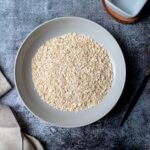
Calories in bread flour: 75 calories per 1 medium or regular slice (28 g)
- 2.6 g protein
- 14 g carbs
- 1 g fat
- 0.6 g fiber
Source: USDA FoodData Central · 267 kcal per 100 g
One medium or regular slice of bread flour-based bread (28 g) has 75 kcal, with 2.6 g protein, 14 g carbohydrate and 1 g fat. The USDA record for this food is “Bread, NS as to major flour,” so the numbers describe a bread made with bread flour rather than the flour itself.
What stands out is the sodium: the record lists 450 mg per 100 g, and the lead slice carries 126 mg of it. Carbohydrate supplies most of the calories, at 74% of the total, while protein supplies 14% and fat 12%.
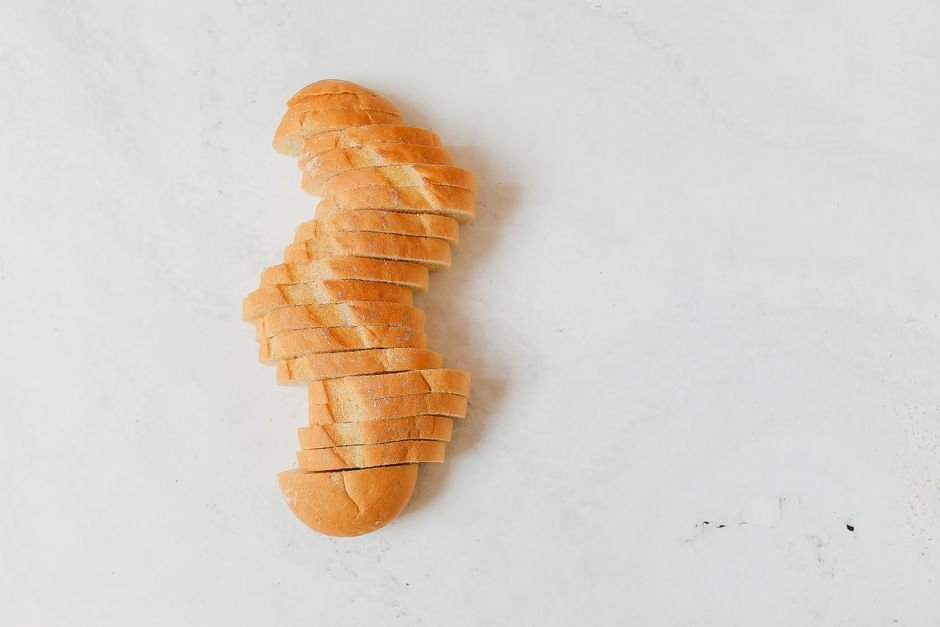
Calories in Bread Flour by Serving Size
Calories in bread flour for each common serving, with protein, carbs and fat:
| Serving | Calories | Protein | Carbs | Fat |
|---|---|---|---|---|
| 1 medium or regular slice (28 g) | 75 | 2.6 g | 14 g | 1 g |
| 1 small or thin/very thin slice (24 g) | 64 | 2.3 g | 12 g | 0.9 g |
| 1 large or thick slice (43 g) | 115 | 4.1 g | 21 g | 1.5 g |
| 1 slice, crust not eaten (13 g) | 35 | 1.2 g | 6.4 g | 0.5 g |
| 1 slice, snack-size (10 g) | 27 | 0.9 g | 4.9 g | 0.4 g |
| 100 g | 267 | 9.4 g | 49 g | 3.6 g |
Bread Flour Nutrition Facts
Calories in bread flour and the full nutrition facts per 1 medium or regular slice (28 g):
| Nutrient | Amount | % Daily Value* |
|---|---|---|
| Calories | 75 kcal | |
| Protein | 2.6 g | 5% |
| Total Fat | 1 g | 1% |
| Saturated Fat | 0.2 g | 1% |
| Cholesterol | 0 mg | 0% |
| Sodium | 126 mg | 5% |
| Total Carbohydrate | 14 g | 5% |
| Dietary Fiber | 0.6 g | 2% |
| Total Sugars | 1.5 g | |
| Calcium | 59 mg | 5% |
| Iron | 0.9 mg | 5% |
| Potassium | 33 mg | 1% |
| Magnesium | 7.6 mg | 2% |
| Zinc | 0.2 mg | 2% |
| Phosphorus | 32 mg | 3% |
| Selenium | 6.5 mcg | 12% |
| Vitamin E | 0.1 mg | 0% |
| Vitamin K | 0.1 mcg | 0% |
| Thiamin (B1) | 0.1 mg | 12% |
| Riboflavin (B2) | 0.1 mg | 5% |
| Niacin (B3) | 1.3 mg | 8% |
| Vitamin B6 | 0 mg | 2% |
| Folate (DFE) | 48 mcg | 12% |
Where the calories come from: 74% carbs · 14% protein · 12% fat
*Percent Daily Values are based on a 2,000-calorie diet (FDA reference values). Source: USDA FoodData Central — Bread, NS as to major flour (FDC ID 2707591, Survey (FNDDS), published 10/31/2024). Values for other servings are calculated from the per-100 g data.
How Many Calories Are in a Slice of Bread Made With Bread Flour?
The calories depend mostly on slice size, since the USDA record gives several slice sizes. A small or thin slice (24 g) has 64 kcal, a medium or regular slice (28 g) has 75 kcal, and a large or thick slice (43 g) has 115 kcal. A slice with the crust removed (13 g) has 35 kcal, and a snack-size slice (10 g) has 27 kcal.
Because the record is per 100 g at 267 kcal, you can scale any slice weight from that figure. The sizes listed above are the ones the USDA record provides, so they are the safest numbers to use when you check a label or a bakery slice.
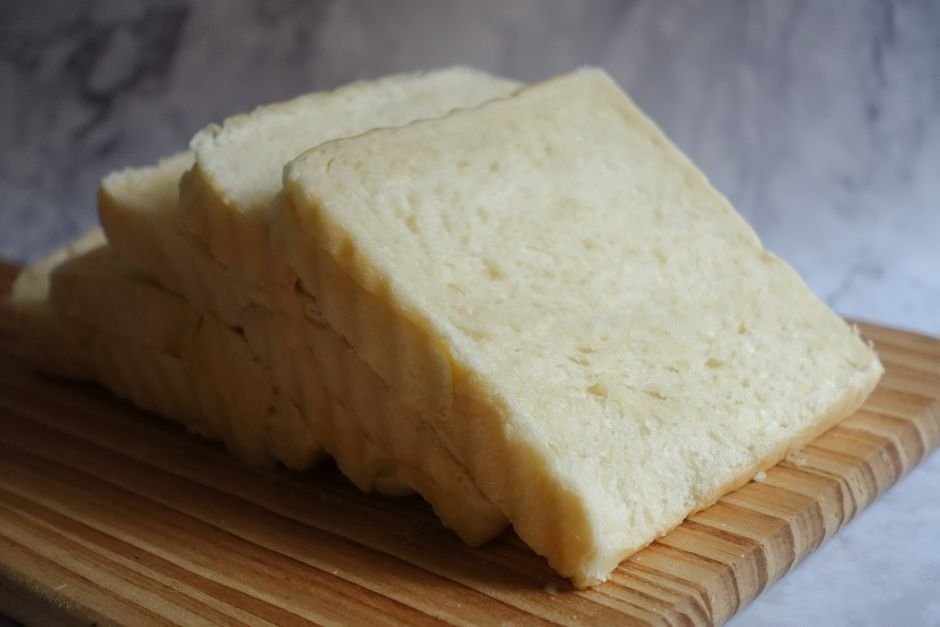
Does Removing the Crust Make a Real Difference?
Yes, based on the record. A 13 g slice with the crust not eaten has 35 kcal, 1.2 g protein, 6.4 g carbohydrate and 0.5 g fat. That is roughly half the calories of the 28 g regular slice, and the difference is mostly the weight of the crumb that was removed.
Crust is not a separate food in this record, so the numbers simply reflect less bread eaten. If you cut the crust off a large slice, the remaining weight is what you are counting.
Why Sodium Is the Number to Watch
Bread flour bread carries 450 mg of sodium per 100 g in this record. The regular slice provides 126 mg, which is 5% of the Daily Value listed on the nutrition data. Two or three slices in a sandwich can add up quickly alongside cheese, deli meat or condiments.
For general guidance, the Dietary Guidelines for Americans advise limiting sodium. If you track sodium, the slice weight matters more than the calories here, because a thick slice carries about 1.5 times the sodium of a regular one.
What Is in It Besides Carbohydrate?
The record also lists 2.3 g of fiber per 100 g, so a regular slice has 0.6 g.
- Folate (DFE): 171 mcg per 100 g, 48 mcg in a regular slice (12% DV)
- Selenium: 23 mcg per 100 g, 6.5 mcg in a regular slice (12% DV)
- Thiamin (B1): 0.5 mg per 100 g, 0.1 mg in a regular slice (12% DV)
- Calcium: 211 mg per 100 g, 59 mg in a regular slice (5% DV)
These are the nutrients the record lists for this bread. Bread is not a significant source of vitamin A, vitamin C, vitamin D or vitamin B12 in this data, all of which are zero.
How Bread Flour Compares
Per 100 g, next to similar foods in our database:
| Food (100 g) | Calories | Protein | Carbs | Fat |
|---|---|---|---|---|
| Bread Flour | 267 | 9.4 g | 49 g | 3.6 g |
| Pancakes | 265 | 0 g | 70 g | 0.1 g |
| Sourdough Starter | 272 | 11 g | 52 g | 2.4 g |
| Sorghum Syrup | 290 | 0 g | 75 g | 0 g |
| Blueberry Muffin | 293 | 3.5 g | 61 g | 3.3 g |
| Rice Bran | 316 | 13 g | 50 g | 21 g |
Bread Flour FAQ
How many calories are in two slices of bread flour bread?
Two medium or regular slices (28 g each, 56 g total) would be about 150 kcal, double the 75 kcal of one slice.
Is bread flour bread higher in protein than regular bread?
This page only uses the USDA record for bread made with bread flour, so I can't compare it to other breads with precise figures. The record gives 9.4 g protein per 100 g, and a regular slice provides 2.6 g.
How much carbohydrate is in a regular slice?
A medium or regular slice (28 g) has 14 g of carbohydrate, of which 1.5 g is listed as total sugars and 0.6 g as dietary fiber.
The Bottom Line
A regular 28 g slice of bread flour bread has 75 kcal, 2.6 g protein and 14 g carbohydrate, and it carries 126 mg sodium. Slice weight is the biggest factor, so weigh or check the size when you count.