
Cheddar cheese is one of the most widely consumed cheeses in the world, a staple in American, British, and Canadian kitchens. Whether shredded on tacos, sliced for sandwiches, or paired with crackers, cheddar appears in thousands of everyday meals. It’s prized for its versatility and rich flavor, but like all cheese, it’s calorie-dense and worth understanding nutritionally—especially for those tracking intake for weight loss, muscle building, or general health management.
The question isn’t whether cheddar is nutritious (it does contain protein and calcium), but rather how to fit it into your daily calorie and macro goals. This guide covers exactly how many calories are in common serving sizes, a complete breakdown of nutrition facts, and practical strategies for enjoying cheddar without overdoing your intake.
Calories in Cheddar Cheese (Quick Answer)
Cheddar cheese is calorie-dense due to its high fat content, so portion control matters significantly.
- 1 oz (28g, one slice): 110–120 calories
- 1 cup shredded (113g): 455–465 calories
- 1 tbsp (6g, grated): 23–25 calories
Calorie counts vary slightly by brand, age (sharp vs. mild), and moisture content, so check your specific package label for exact values.
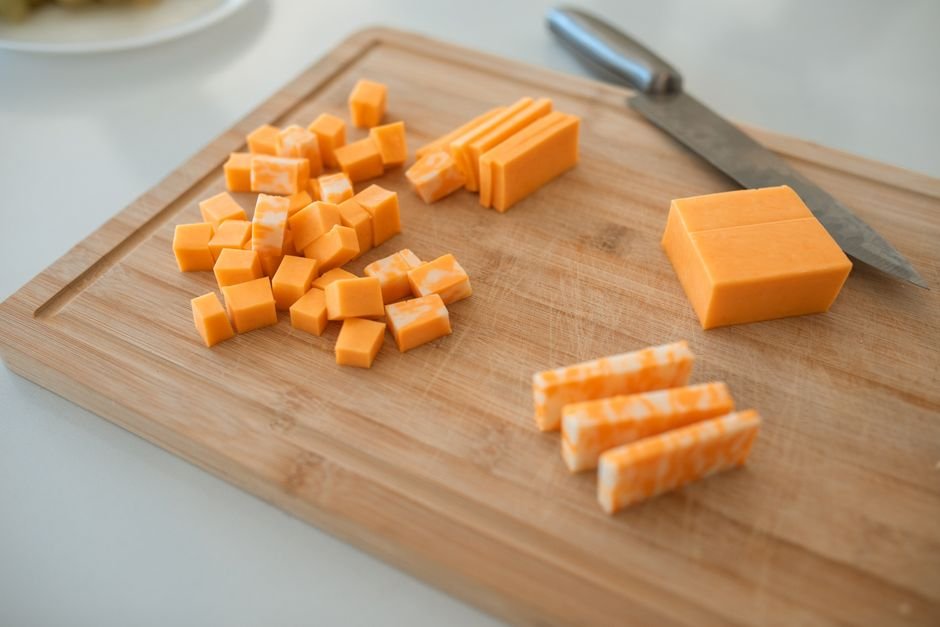
Full Nutrition Facts for 1 oz (28g) of Cheddar Cheese
A standard 1-ounce serving of cheddar cheese (roughly one slice or about 3/4 cup shredded) provides the following nutritional profile:
| Nutrient | Amount | % Daily Value |
|---|---|---|
| Calories | 115 | — |
| Total Fat | 9.4g | 12% |
| Saturated Fat | 6.0g | 30% |
| Cholesterol | 29mg | 10% |
| Sodium | 189mg | 8% |
| Total Carbohydrate | 0.7g | <1% |
| Dietary Fiber | 0g | 0% |
| Total Sugars | 0.2g | — |
| Protein | 7.1g | 14% |
| Calcium | 204mg | 20% |
| Phosphorus | 145mg | 12% |
| Vitamin B12 | 0.24 µg | 10% |
*Percent Daily Values are based on a 2,000-calorie diet. Source: USDA FoodData Central.
Key insight: Cheddar is a low-carb, high-fat food with significant protein—7g per ounce makes it useful for muscle maintenance and satiety, but the 6g of saturated fat per ounce means even a modest serving uses up 30% of the recommended daily saturated fat limit for a 2,000-calorie diet.
Etekcity Food Scale
0.1g accuracy — the perfect companion for exact portions.
Sharp Aged Cheddar vs. Mild Cheddar
Both sharp and mild cheddars contain virtually identical calories and macros because they come from the same base ingredients. The difference is aging time and flavor intensity, not nutrition.
Sharp Aged Cheddar
- Aged 6+ months, developing complex, tangy flavor
- Slightly lower moisture content over time; marginally fewer calories per ounce (113–115 cal)
- More satisfying in smaller portions due to flavor intensity
Mild Cheddar
- Aged 2–3 months, buttery and approachable flavor
- Marginally higher moisture; roughly 115–120 calories per ounce
- Often easier to melt, popular in everyday cooking and sandwiches
Practical takeaway: If you’re portion-conscious, choose sharp cheddar—its bolder flavor lets you use less cheese and still feel satisfied. Mild cheddar is more subtle, so you may unconsciously eat more to get the same flavor impact.
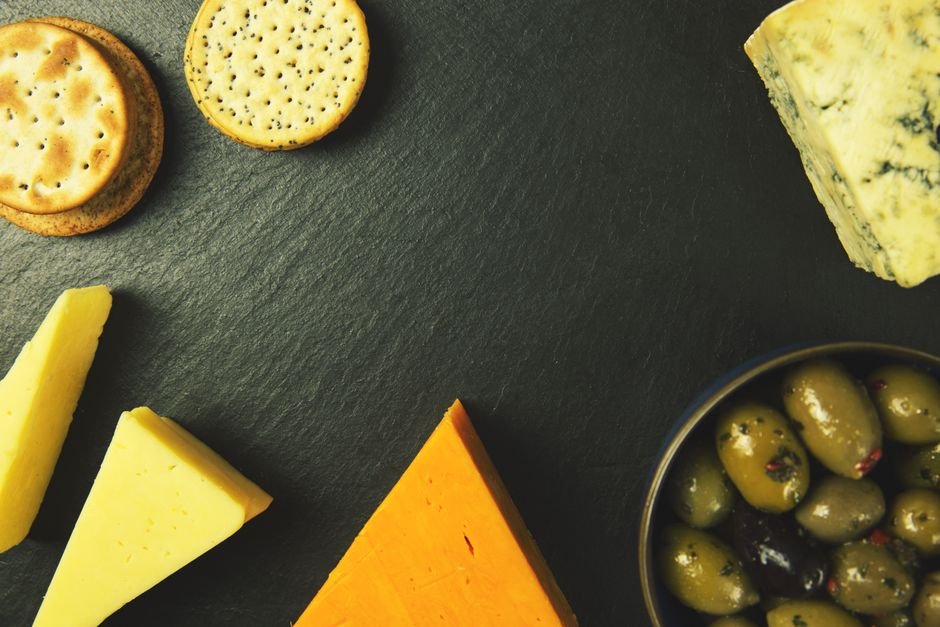
Is Cheddar Cheese Good for Weight Loss?
Cheddar can fit into a weight-loss diet, but only with disciplined portion control. At 115 calories and 9g fat per ounce, a small 2-ounce serving adds 230 calories—substantial on a calorie-restricted plan. The upside: cheese is satiating due to its protein and fat, meaning a small amount can reduce overall hunger. The key is treating it as a flavoring or accent rather than a bulk ingredient.
Tips to Eat Cheddar Without Gaining Weight
- Pre-portion: Cut or shred your cheese into single servings and store them separately, making it harder to grab “just a little more.”
- Measure with a scale or knife: A 1-ounce serving looks smaller than you’d expect. Use a kitchen scale once to calibrate your eye.
- Layer it with vegetables: Add cheddar to salads, roasted vegetables, or egg dishes where the cheese enhances lower-calorie foods rather than replacing them.
- Choose sharp over mild: Intense flavor satisfies with less volume, reducing total intake.
Cheddar works in weight loss when it’s part of a whole meal strategy—paired with fiber, protein, and vegetables—rather than eaten casually as a snack.
How Portion Size Affects Calories
Cheese portions expand calories quickly because a single ounce is small and easy to underestimate. Doubling your portion roughly doubles your calorie intake, and unlike foods with significant water or fiber content, there’s little satiation buffer.
Example:
- Small (1 oz / 28g): 115 calories, fits easily on a sandwich or into one scrambled egg dish
- Large (3 oz / 85g, typical “cheesy” side): 345 calories, often the amount added to casual nachos or a cheese board snack
Triple the weight means triple the calories—and most people don’t consciously choose a “large” portion; they just serve until the dish looks good.
Best Way to Measure Cheddar Cheese Accurately
Visual estimation of cheese portions fails because a 1-ounce serving is much smaller than most people realize. A kitchen scale removes guesswork and builds accurate habits quickly. If you eat cheese regularly, invest five minutes in calibrating your eye with a scale—measure out 1-ounce portions a few times so you recognize the visual size.
Options:
- Digital kitchen scale: Most accurate. Aim for 28g for a standard 1-ounce serving.
- By slice: Most pre-sliced cheddar is packaged as 3/4 oz to 1 oz per slice—check your brand’s label and count slices.
- By volume (rough): 1/4 cup shredded ≈ 1 oz; use a measuring cup, but know this is less precise than a scale because shredding density varies.
Calculate Your Exact Calorie Intake
If you eat cheese multiple times a week, small errors in portion size compound quickly over a month. Eating 2 extra ounces of cheddar weekly (just 16 grams more per serving than intended) adds roughly 1,840 excess calories over four weeks—equivalent to half a pound of body weight.
For precision nutrition tracking, our free AI nutrients calculator breaks down exact macros and calories for your portion sizes and daily intake patterns. Simply enter your cheddar serving size and it computes total calories, protein, fat, and carbs in seconds.
- Track calories and macros for any portion size in real time
- See how cheddar fits into your daily carb, protein, and fat goals
- Build weekly meal plans without guesswork
Common Mistakes When Eating Cheddar Cheese
Most people underestimate how quickly cheese adds calories and make repeated, avoidable errors that sabotage their nutrition goals.
❌ Assuming “a little cheese” won’t matter: Two extra tablespoons of shredded cheddar (12g) on a daily salad adds 28 extra calories per day—roughly 3 pounds per year—without obvious awareness. Small daily portions compound.
❌ Not accounting for cheese in mixed dishes: A restaurant mac-and-cheese, pizza slice, or quesadilla often contains 2–4 ounces of cheese hidden in sauce and filling. Many people log only the bread or pasta, forgetting the major calorie contributor is the cheese itself.
❌ Buying pre-shredded cheese without reading the label: Pre-shredded varieties often contain anti-caking agents and cellulose (wood-derived fiber), changing texture and sometimes affecting portion accuracy. Whole blocks are purer and easier to portion.
❌ Eating cheese directly from the block or bag: Eating mindlessly while standing at the fridge or couch leads to consuming 2–3 ounces without conscious decision. Always place cheese on a plate or bowl before eating.
Breaking these habits—measuring, logging, and plating cheese intentionally—eliminates hidden calorie drift.
FAQ
How many calories are in 100g of cheddar cheese?
100 grams of cheddar cheese contains approximately 403–410 calories. This is useful for batch cooking or recipes calling for weight-based measurements.
Is cheddar cheese fattening?
Cheddar is high in calories and saturated fat, so yes, it can contribute to weight gain if eaten in excess. However, in controlled portions (1–1.5 oz per serving) as part of a balanced diet, it can fit into any calorie level without necessarily causing weight gain. The food itself isn’t the problem; overconsumption is.
Can I eat cheddar cheese on a keto diet?
Yes, cheddar is excellent for keto. It’s zero-carb, high-fat, and provides protein, making it one of the most keto-friendly cheeses. A standard 1-ounce serving contains only 0.7g carbs.
Does sharp cheddar have fewer calories than mild?
No, both sharp and mild cheddar have nearly identical calorie and macronutrient profiles (around 110–120 calories per ounce). The difference is flavor intensity and aging time, not nutritional content. Choose based on taste preference, not calories.
Conclusion
Cheddar cheese is a nutrient-dense food that packs significant protein, calcium, and B vitamins into a small serving, but its high calorie density and saturated fat content demand intentional portioning. At 115 calories and 9 grams of fat per ounce, it’s easy to exceed your daily target through unconscious snacking or underestimated portions in cooked dishes. Understanding the true size of a 1-ounce serving and measuring consistently is the foundation of eating cheddar without weight creep.
Cheddar belongs in a healthy diet—it’s nutritious, satiating, and versatile. The key is treating it as a flavoring or complement to meals rather than a bulk ingredient. Use a reliable nutrients calculator to log your portions accurately, measure with a kitchen scale when establishing your baseline, and choose sharp varieties for maximum flavor with minimal volume. With these practices, you can enjoy cheddar while staying within your calorie and macro targets.
