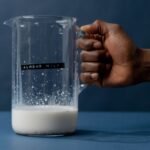
Calories in goat milk: 168 calories per 1 cup (244 g)
- 8.7 g protein
- 11 g carbs
- 10 g fat
Source: USDA FoodData Central · 69 kcal per 100 g
One cup (244 g) of goat milk has 168 calories in the USDA record, with 8.7 g of protein, 10 g of fat and 11 g of carbohydrate. Per 100 g, goat milk comes to 69 calories, so the cup figure is what most people will pour.
The standout numbers are the fat and the calcium. Fat supplies 54% of the calories in goat milk, and a single cup provides 327 mg of calcium, which is 25% of the Daily Value. The record also lists 0 g of fiber and 11 g of total sugars per cup, all of it naturally occurring milk sugar.
Calories in Goat Milk by Serving Size
Calories in goat milk for each common serving, with protein, carbs and fat:
| Serving | Calories | Protein | Carbs | Fat |
|---|---|---|---|---|
| 1 cup (244 g) | 168 | 8.7 g | 11 g | 10 g |
| 1 fl oz (31 g) | 21 | 1.1 g | 1.4 g | 1.3 g |
| Guideline amount per fl oz of beverage (2.5 g) | 2 | 0.1 g | 0.1 g | 0.1 g |
| Guideline amount per cup of hot cereal (61 g) | 42 | 2.2 g | 2.7 g | 2.5 g |
| 100 g | 69 | 3.6 g | 4.5 g | 4.1 g |
| 1 oz | 20 | 1 g | 1.3 g | 1.2 g |
Goat Milk Nutrition Facts
Calories in goat milk and the full nutrition facts per 1 cup (244 g):
| Nutrient | Amount | % Daily Value* |
|---|---|---|
| Calories | 168 kcal | |
| Protein | 8.7 g | 17% |
| Total Fat | 10 g | 13% |
| Saturated Fat | 6.5 g | 33% |
| Cholesterol | 27 mg | 9% |
| Sodium | 122 mg | 5% |
| Total Carbohydrate | 11 g | 4% |
| Dietary Fiber | 0 g | 0% |
| Total Sugars | 11 g | |
| Vitamin D | 3.2 mcg | 16% |
| Calcium | 327 mg | 25% |
| Iron | 0.1 mg | 1% |
| Potassium | 498 mg | 11% |
| Magnesium | 34 mg | 8% |
| Zinc | 0.7 mg | 7% |
| Phosphorus | 271 mg | 22% |
| Selenium | 3.4 mcg | 6% |
| Vitamin A (RAE) | 139 mcg | 15% |
| Vitamin C | 3.2 mg | 4% |
| Vitamin E | 0.2 mg | 1% |
| Vitamin K | 0.7 mcg | 1% |
| Thiamin (B1) | 0.1 mg | 10% |
| Riboflavin (B2) | 0.3 mg | 26% |
| Niacin (B3) | 0.7 mg | 4% |
| Vitamin B6 | 0.1 mg | 7% |
| Folate (DFE) | 2.4 mcg | 1% |
| Vitamin B12 | 0.2 mcg | 7% |
Where the calories come from: 54% fat · 26% carbs · 21% protein
*Percent Daily Values are based on a 2,000-calorie diet (FDA reference values). Source: USDA FoodData Central — Goat milk (FDC ID 2705395, Survey (FNDDS), published 10/31/2024). Values for other servings are calculated from the per-100 g data.
Goat Milk Calories by Serving Size
Calories scale with the amount you pour. A 1 fl oz (31 g) splash is 21 calories, and 1 oz (28 g) is 20 calories. The full cup is 168 calories, and the 100 g reference is 69 calories. If you measure by weight instead of volume, use the 100 g figure as your base.
The record lists goat milk as a plain fluid, so these numbers apply to milk as it is served, not to flavored or sweetened versions.

How Goat Milk Compares Nutritionally Within the Record
Goat milk is similar in calorie and protein density to what most people think of as a dairy glass, but the record shows some clear differences.
Goat milk also has 0.7 mg of zinc, 498 mg of potassium and 122 mg of sodium per cup. For riboflavin, one cup gives 0.3 mg, which is 26% of the Daily Value, the highest percentage on the list of Daily Values in this record.
Who Should Watch Saturated Fat and Sodium
Saturated fat is the nutrient most worth tracking here. One cup provides 6.5 g, which is 33% of the Daily Value. People who are following a limit on saturated fat should count milk toward that total, especially if they drink several cups a day.
Sodium is moderate at 122 mg per cup (5% of the Daily Value). It is not a concern for most people, but it adds up for anyone limiting sodium for medical reasons.
Does Goat Milk Have Any Fiber or Added Sugar?
No fiber. The record shows 0 g of dietary fiber per cup and per 100 g. The 11 g of total sugars per cup comes from lactose, the natural sugar in milk. The record does not list added sugars, and plain goat milk is not sweetened.
Flavored goat milk or sweetened drinks would have different sugar numbers, so check the label before assuming the figures here apply.
How Goat Milk Compares
Per 100 g, next to similar foods in our database:
| Food (100 g) | Calories | Protein | Carbs | Fat |
|---|---|---|---|---|
| Goat Milk | 69 | 3.6 g | 4.5 g | 4.1 g |
| Cow Milk 1% | 69 | 3.1 g | 12 g | 0.9 g |
| Cottage Cheese Dry | 72 | 10 g | 6.7 g | 0.3 g |
| Cottage Cheese Low Sodium | 72 | 12 g | 2.7 g | 1 g |
| Cream Cheese Non-Dairy | 75 | 0.6 g | 12 g | 2.6 g |
| Lactose-Free Milk | 61 | 3.3 g | 4.6 g | 3.2 g |
Goat Milk FAQ
Is goat milk higher in calories than cow milk?
This page only covers the USDA goat milk record, which lists 69 calories per 100 g and 168 calories per cup. This page does not include cow milk data, so compare the two using their own nutrition labels or USDA entries.
How much calcium is in a cup of goat milk?
One cup (244 g) provides 327 mg of calcium, which is 25% of the Daily Value. Per 100 g the record shows 134 mg.
Does goat milk contain vitamin D?
Yes. The record lists 3.2 mcg of vitamin D per cup, which is 16% of the Daily Value. The record does not state whether this is from fortification, so check the label of your product.
How much protein is in one cup?
One cup of goat milk has 8.7 g of protein, which is 17% of the Daily Value. Protein makes up 21% of its calories.
The Bottom Line
It is also a good source of calcium (25% of the Daily Value per cup) and riboflavin (26%).