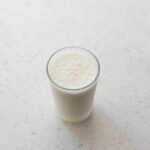
Calories in lactose-free milk: 149 calories per 1 cup (244 g)
- 8 g protein
- 11 g carbs
- 7.8 g fat
Source: USDA FoodData Central · 61 kcal per 100 g
One cup (244 g) of lactose-free milk has 149 calories in the USDA record for whole lactose-free milk. That cup also supplies 8 g of protein, 11 g of carbohydrate, and 7.8 g of fat, with 12 g of total sugars.
What stands out is the sugar. Lactose-free milk has the same carbohydrate source as regular milk, but the lactose is broken down into simpler sugars, so the 12 g of total sugars in a cup is almost all naturally occurring milk sugar. The record lists 0 g of fiber and 0 g of vitamin C, so the nutrition comes mainly from protein, fat, calcium, and B vitamins.

Calories in Lactose-Free Milk by Serving Size
Calories in lactose-free milk for each common serving, with protein, carbs and fat:
| Serving | Calories | Protein | Carbs | Fat |
|---|---|---|---|---|
| 1 cup (244 g) | 149 | 8 g | 11 g | 7.8 g |
| 1 fl oz (31 g) | 19 | 1 g | 1.4 g | 1 g |
| Guideline amount per fl oz of beverage (2.5 g) | 2 | 0.1 g | 0.1 g | 0.1 g |
| Guideline amount per cup of hot cereal (61 g) | 37 | 2 g | 2.8 g | 2 g |
| 100 g | 61 | 3.3 g | 4.6 g | 3.2 g |
| 1 oz | 17 | 0.9 g | 1.3 g | 0.9 g |
Lactose-Free Milk Nutrition Facts
Calories in lactose-free milk and the full nutrition facts per 1 cup (244 g):
| Nutrient | Amount | % Daily Value* |
|---|---|---|
| Calories | 149 kcal | |
| Protein | 8 g | 16% |
| Total Fat | 7.8 g | 10% |
| Saturated Fat | 4.5 g | 23% |
| Cholesterol | 29 mg | 10% |
| Sodium | 93 mg | 4% |
| Total Carbohydrate | 11 g | 4% |
| Dietary Fiber | 0 g | 0% |
| Total Sugars | 12 g | |
| Vitamin D | 2.7 mcg | 13% |
| Calcium | 300 mg | 23% |
| Potassium | 366 mg | 8% |
| Magnesium | 29 mg | 7% |
| Zinc | 1 mg | 9% |
| Phosphorus | 246 mg | 20% |
| Selenium | 4.6 mcg | 8% |
| Vitamin A (RAE) | 78 mcg | 9% |
| Vitamin E | 0.1 mg | 1% |
| Vitamin K | 0.7 mcg | 1% |
| Thiamin (B1) | 0.1 mg | 11% |
| Riboflavin (B2) | 0.3 mg | 26% |
| Niacin (B3) | 0.3 mg | 2% |
| Vitamin B6 | 0.1 mg | 9% |
| Vitamin B12 | 1.3 mcg | 55% |
Where the calories come from: 48% fat · 31% carbs · 22% protein
*Percent Daily Values are based on a 2,000-calorie diet (FDA reference values). Source: USDA FoodData Central — Milk, lactose free, whole (FDC ID 2705392, Survey (FNDDS), published 10/31/2024). Values for other servings are calculated from the per-100 g data.
How Many Calories Are in Lactose-Free Milk per Cup Vs. per Ounce?
The lead serving is a cup at 244 g and 149 calories. A single fluid ounce (31 g) is 19 calories, and 100 g is 61 calories. If you pour your own glass, weigh it or use the ounce figure rather than guessing, because a cup of milk and a splash in coffee are very different amounts.
- 1 fl oz (31 g): 19 calories, 1 g protein, 1.4 g carbohydrate, 1 g fat
- 1 cup (244 g): 149 calories, 8 g protein, 11 g carbohydrate, 7.8 g fat
The macro split for this food is 22% protein, 31% carbohydrate, and 48% fat by calories.

Lactose-Free Whole Milk Nutrition: What Stands Out
Per cup, the record shows 300 mg of calcium (23% DV), 246 mg of phosphorus (20% DV), and 2.7 mcg of vitamin D (13% DV). Vitamin B12 is 1.3 mcg per cup, which is 55% DV, and riboflavin is 0.3 mg, or 26% DV.
The saturated fat is 4.5 g per cup, which is 23% DV. Sodium is 93 mg per cup, or 4% DV.
Does Lactose-Free Milk Have More Sugar Than Regular Milk?
The USDA record for this product shows 4.8 g of total sugars per 100 g. That is the value to compare against regular milk on the label you buy, since a lactose-free product is labeled for its own sugar content. Lactose-free milk is not sugar-free. Its sugar is still a milk sugar, just split into glucose and galactose during processing.
If you are counting carbohydrates, use the 11 g per cup figure from this record. The 4.6 g of total carbohydrate per 100 g and 1.4 g per fluid ounce give you the same answer at a smaller amount.
Using Lactose-Free Milk in Coffee, Cereal, and Cooking
Cereal and coffee are where the calories add up without much notice. The USDA record includes a guideline amount of hot cereal, 61 g per cup, which contains 37 calories with the milk counted at the same rate as this record. Because the number of calories in the milk depends on how much you pour, measuring the milk is more accurate than measuring the cereal alone.
For coffee, a small splash contributes only a few calories, while a latte made with a full cup can add close to 150 calories. The milk itself is the variable to watch.
How Lactose-Free Milk Compares
Per 100 g, next to similar foods in our database:
| Food (100 g) | Calories | Protein | Carbs | Fat |
|---|---|---|---|---|
| Lactose-Free Milk | 61 | 3.3 g | 4.6 g | 3.2 g |
| Cow Milk 1% | 69 | 3.1 g | 12 g | 0.9 g |
| Goat Milk | 69 | 3.6 g | 4.5 g | 4.1 g |
| Yogurt Skyr | 50 | 4.2 g | 8.1 g | 0.1 g |
| Cottage Cheese Dry | 72 | 10 g | 6.7 g | 0.3 g |
| Cottage Cheese Low Sodium | 72 | 12 g | 2.7 g | 1 g |
Lactose-Free Milk FAQ
Is lactose-free milk lower in calories than regular milk?
This record lists 61 calories per 100 g and 149 calories per cup for lactose-free whole milk. Compare that to the nutrition label of the regular milk you usually buy, since the difference depends on the fat level of each product.
How much vitamin B12 is in a cup of lactose-free milk?
One cup (244 g) has 1.3 mcg of vitamin B12, which is 55% of the Daily Value. That is one of the larger percentages in this record.
Does lactose-free milk have fiber?
No. The USDA record lists 0 g of dietary fiber per cup and per 100 g.
The Bottom Line
A cup of lactose-free whole milk has 149 calories, 8 g of protein, and 12 g of total sugars, with strong amounts of calcium, phosphorus, and vitamin B12. Measure your pour if you are tracking calories or saturated fat.