
Kale has become one of the most celebrated superfoods of the past decade, dominating health food stores, smoothie bars, and the plates of fitness enthusiasts worldwide. This leafy green is a staple in Mediterranean and Northern European cuisines, but its popularity exploded with the wellness movement as a go-to food for weight loss, disease prevention, and nutrient density.
If you’re considering adding kale to your diet—whether for weight management, muscle building, or disease prevention—you’ll want to know exactly what you’re eating. How many calories are in kale? What’s the nutritional breakdown, and how does cooking method affect its value? This article covers the complete calorie and nutrition profile of kale, plus practical tips for measuring and incorporating it effectively into your diet.
Calories in Kale (Quick Answer)
A standard serving of raw kale contains very few calories, making it one of the lowest-calorie vegetables available.
- 1 cup raw kale (67g): 33 calories
- 1 cup cooked kale (130g): 42 calories
- 100g raw kale: 49 calories
Calorie content can vary slightly depending on the kale variety (curly, lacinato, or dinosaur), freshness, and whether leaves are chopped or whole. Most variation comes from water content and leaf density.
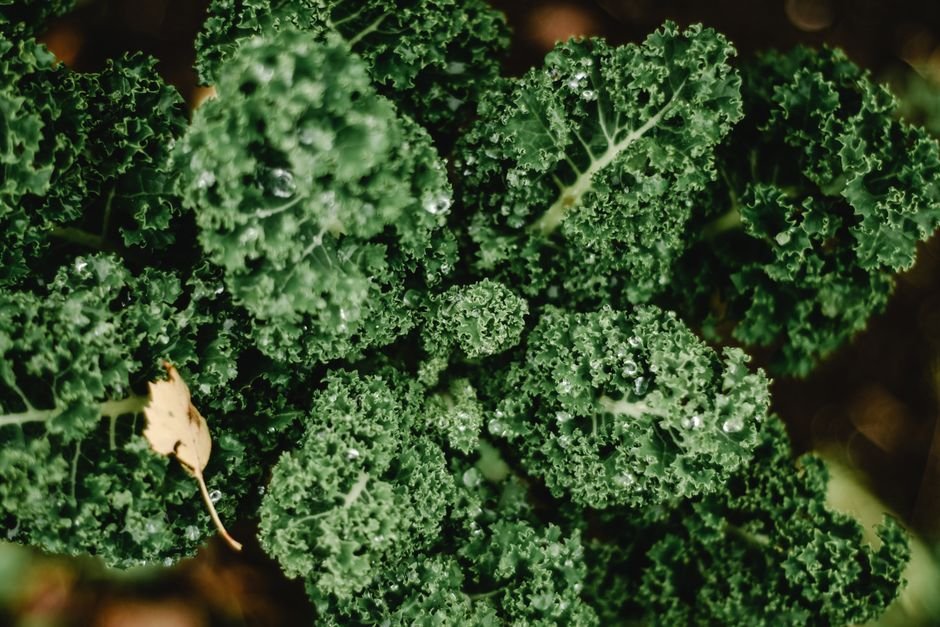
Full Nutrition Facts for 1 Cup Raw Kale (67g)
Raw kale is extraordinarily nutrient-dense relative to its calorie count. A single cup provides substantial amounts of vitamins, minerals, and phytonutrients essential for cellular function and disease prevention.
| Nutrient | Amount | % Daily Value |
|---|---|---|
| Calories | 33 | — |
| Total Fat | 0.7g | 1% |
| Saturated Fat | 0.1g | <1% |
| Cholesterol | 0mg | 0% |
| Sodium | 52mg | 2% |
| Total Carbohydrate | 6.7g | 2% |
| Dietary Fiber | 1.3g | 5% |
| Total Sugars | 0.5g | — |
| Protein | 3.3g | 7% |
| Vitamin A | 885mcg | 98% |
| Vitamin C | 53.6mg | 89% |
| Vitamin K | 888mcg | 740% |
*Percent Daily Values are based on a 2,000-calorie diet. Source: USDA FoodData Central.
Key insight: Kale’s standout feature is its extraordinary vitamin K content—one cup of raw kale delivers nearly 10 times the daily requirement. This fat-soluble vitamin is critical for blood clotting and bone metabolism. The combination of high vitamin K, vitamin C, and beta-carotene (converted to vitamin A) makes kale a potent antioxidant powerhouse at virtually zero caloric cost, which is why it’s such a favorite for weight loss and disease prevention.

Etekcity Food Scale
0.1g accuracy — the perfect companion for exact portions.
Raw vs. Cooked Kale: Calorie and Nutrient Differences
Raw Kale
- Lower calorie density (33 calories per cup) with intact cell walls that require more digestive effort
- Retains all heat-sensitive vitamin C and folate, plus maximum bioavailable vitamin K
- Contains natural compounds (glucosinolates) that may have protective effects, though these are partially broken down by digestive enzymes
Cooked Kale
- Slightly higher calorie concentration due to water loss (42 calories per cup after cooking), though still negligible
- Reduces oxalic acid content, which can improve calcium absorption and mineral bioavailability
- Softens fiber, making it easier to digest and potentially improving nutrient absorption, though some water-soluble vitamins (C, folate) are lost to cooking water
Practical takeaway: Raw kale is superior for weight loss if you struggle with hunger—its toughness and fiber require more chewing and digestion time. For maximum nutrient absorption, especially of minerals like iron and calcium, light steaming (2–3 minutes) is optimal, reducing oxalates while preserving most vitamins. Both raw and cooked kale are nutritionally superior choices; the best option is whichever one you’ll actually eat consistently.
Is Kale Good for Weight Loss?
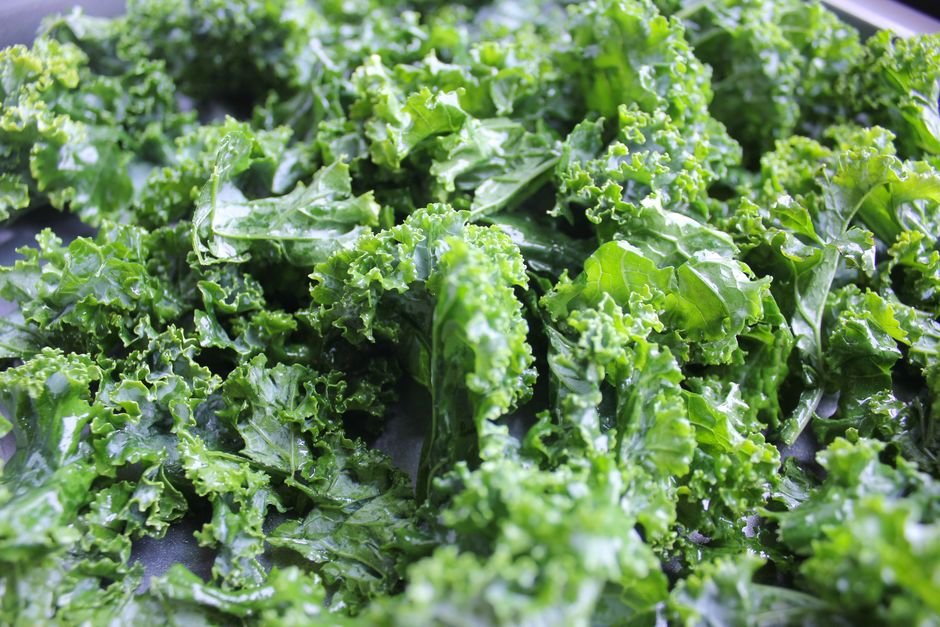
Kale is an excellent choice for weight loss for several reasons: it’s extremely low in calories (33 per cup), very high in fiber and protein relative to its calories, and incredibly satiating. The combination of bulk, fiber, and micronutrients means you feel full on very few calories. Studies show that eating leafy greens is strongly associated with weight loss and weight maintenance. There’s no “kale diet,” but incorporating kale as a base for meals—salads, smoothies, sautéed sides—naturally displaces higher-calorie foods without hunger or deprivation.
Tips to Eat Kale Without Gaining Weight
- Watch your dressing: Raw kale salads are only 33 calories, but a 2-tablespoon serving of ranch dressing adds 150+ calories. Use vinaigrette, olive oil (1 teaspoon = 40 calories), or lemon juice instead.
- Avoid high-calorie preparation: Don’t deep-fry kale chips (very high in oil and salt). Air-fry with minimal oil or roast at high heat with just a light mist of spray oil for a crunchy snack around 100 calories per serving.
- Be mindful of add-ins: Smoothies with kale can quickly become 400+ calories when combined with full-fat yogurt, nut butters, and dried fruit. Use unsweetened plant milk, frozen berries, and protein powder to keep portions protein-rich and calorie-controlled.
- Eat it first: Start meals with raw kale salad or a side of steamed kale. Its fiber and volume fill you up, reducing total meal calories before you consume other foods.
Kale itself contains essentially zero empty calories and no compounds that promote fat storage. The only way kale contributes to weight gain is through added fats (oils, dressings, cheese) or high-calorie preparation methods.
How Portion Size Affects Calories
Because kale is so low in calories, portion size has a relatively modest absolute impact, but it’s worth understanding for consistent meal planning. A single cup of raw kale is filling and provides substantial nutrition for just 33 calories. Doubling the portion to two cups (134 calories) still costs less than most snacks, making it easy to eat large amounts without consequence.
Example
- Small portion (1/2 cup raw): 16 calories, 1.7g fiber, 1.6g protein—good as a salad base
- Large portion (3 cups raw): 99 calories, 3.9g fiber, 9.9g protein—a complete low-calorie meal side
Even eating a very large bowl of kale is unlikely to exceed 150–200 calories, making it one of the few foods you can eat in unlimited quantities without meaningful caloric impact.
Best Way to Measure Kale Accurately
Measuring kale can be tricky because leaves vary in density depending on how they’re packed, whether they’re chopped, and their water content. For consistency, the most accurate methods are by weight (a kitchen scale) or by standardized cup volume (one 8-oz measuring cup). Raw leaves are lighter and fluffier than cooked kale, so a packed cup of raw kale weighs about 67g, while the same cup packed with cooked kale weighs around 130g.
Options
- Kitchen scale (most accurate): Measure raw kale at 67g per serving or cooked at 130g per serving. This eliminates guesswork and is ideal if you’re tracking nutrition precisely.
- Measuring cup: Use a standard 1-cup (8 oz) liquid measuring cup filled with raw or cooked kale, pressed down gently. Don’t pack too tightly or too loosely.
- Visual reference: One serving of raw kale ≈ a loosely packed baseball-sized handful. One serving of cooked kale ≈ a tennis ball-sized portion on your plate.
Calculate Your Exact Calorie Intake
If you’re eating kale daily as part of a weight loss or nutrition plan, knowing your total daily calorie intake is essential. A single cup of kale adds only 33 calories, but understanding how it fits into your overall diet—combined with proteins, fats, and other foods—ensures you stay on target with your health goals.
Instead of manually calculating each meal, use a free AI nutrients calculator to log kale and all your meals instantly. Our site offers a fast, reliable free nutrients calculator that breaks down calories, macros, and micronutrients for every food you eat, making it easy to stay consistent with your nutrition plan.
- Instant macros: See exactly how much protein, carbs, and fat you’re consuming with each serving of kale and other foods.
- Micronutrient tracking: Monitor vitamins and minerals—especially important for kale, which is exceptionally high in vitamin K and vitamin C.
- Meal planning: Plan balanced meals by seeing real-time calorie totals and ensuring your diet meets your goals without guesswork.
Common Mistakes When Eating Kale
Even though kale is a nutritional powerhouse, a few common pitfalls can undermine its benefits or reduce your satisfaction. Here are the mistakes most people make:
❌ Eating kale raw in large quantities without chewing thoroughly. Raw kale’s fibrous texture is tough to break down, and poor chewing can cause bloating and incomplete nutrient absorption. Massage raw kale with a little lemon juice or salt to soften it before eating, or cook it lightly.
❌ Drowning kale in high-calorie dressings. A simple green salad of raw kale (33 calories) becomes a 200+ calorie dish when paired with ranch, Caesar, or creamy dressings. Use lemon juice, balsamic vinegar, or a 1:3 ratio of olive oil to vinegar for flavor with minimal calorie impact.
❌ Assuming all kale preparation is equal. Fried kale chips, kale in creamy pasta, or kale with cheese can contain 150–300 calories per serving, negating kale’s low-calorie advantage. Roasting with minimal oil, steaming, or eating raw preserves its nutritional benefits.
❌ Ignoring kale’s vitamin K content if taking blood thinners. If you take warfarin (Coumadin) or similar anticoagulants, consuming large amounts of kale can interfere with medication effectiveness. Consistency matters—if you eat kale, eat the same amount daily and inform your doctor.
The solution to most of these is simple: prepare kale in its simplest form (raw with vinegar, steamed, or lightly roasted) and let its natural flavor and texture shine.
FAQ
How many calories are in 100g of kale?
Raw kale contains 49 calories per 100g. Cooked kale contains approximately 32 calories per 100g. The difference is due to water loss during cooking, which concentrates remaining nutrients but lowers the absolute calorie content slightly.
Is kale fattening?
No. Kale itself is not fattening—it’s one of the lowest-calorie vegetables at 33 calories per cup raw. Weight gain from kale only occurs if it’s prepared with high-calorie additions like oil, cheese, or cream dressings. Plain kale cannot cause fat storage.
Can you eat too much kale?
Eating kale in very large daily quantities (over 1–2 pounds raw) may interfere with iodine absorption and thyroid function due to its goitrogen compounds, though these are reduced by cooking. For most people eating normal portions (1–3 cups daily), this is not a concern. Those with existing thyroid conditions should consult a doctor.
Does cooking kale reduce its calories?
Cooking kale slightly reduces calorie density per cup due to water loss (1 cup cooked = 42 calories vs. 33 raw), but it also makes nutrients more bioavailable and reduces compounds that inhibit mineral absorption. The caloric difference is negligible; choose the preparation you’ll eat most consistently.
Conclusion
Kale is one of the most nutrient-dense, lowest-calorie foods available. At just 33 calories per raw cup, it delivers nearly 1,000% of your daily vitamin K requirement, plus exceptional amounts of vitamin C, vitamin A, and fiber. Whether your goal is weight loss, disease prevention, or overall health, kale deserves a regular place on your plate. It has no drawbacks for most people and is virtually impossible to overeat in its whole-food form.
The key to getting maximum benefit from kale is consistency and preparation. Choose raw kale for weight loss and satiety, light steaming for mineral absorption, or simple roasting for a crunchy side. Avoid high-calorie dressings and frying methods that negate its advantages. For complete clarity on how kale and all your other foods fit into your daily nutrition, use a **reliable nutrients calculator** to track your meals and ensure you’re meeting your goals without guesswork.
