
Mozzarella is one of the world’s most popular cheeses, consumed by millions daily on pizza, in pasta dishes, salads, and as a standalone snack. Whether you’re enjoying fresh mozzarella in a caprese salad, low-moisture mozzarella on a pizza, or mozzarella sticks as a quick bite, understanding its caloric content matters for weight management, muscle building, and overall nutritional balance.
But how many calories are actually in mozzarella? This guide breaks down the exact calorie counts for different types and serving sizes, provides complete nutrition facts, and helps you fit mozzarella into your diet without losing track of your health goals.
Calories in Mozzarella (Quick Answer)
Mozzarella calories vary significantly depending on the type and moisture content:
- Fresh mozzarella (whole milk), 1 oz (28g): 85 calories
- Low-moisture mozzarella (shredded), 1 oz (28g): 80 calories
- Part-skim mozzarella, 1 oz (28g): 72 calories
Values vary by brand, fat content, and whether the mozzarella is packed in water or oil. Always check the label for your specific product.
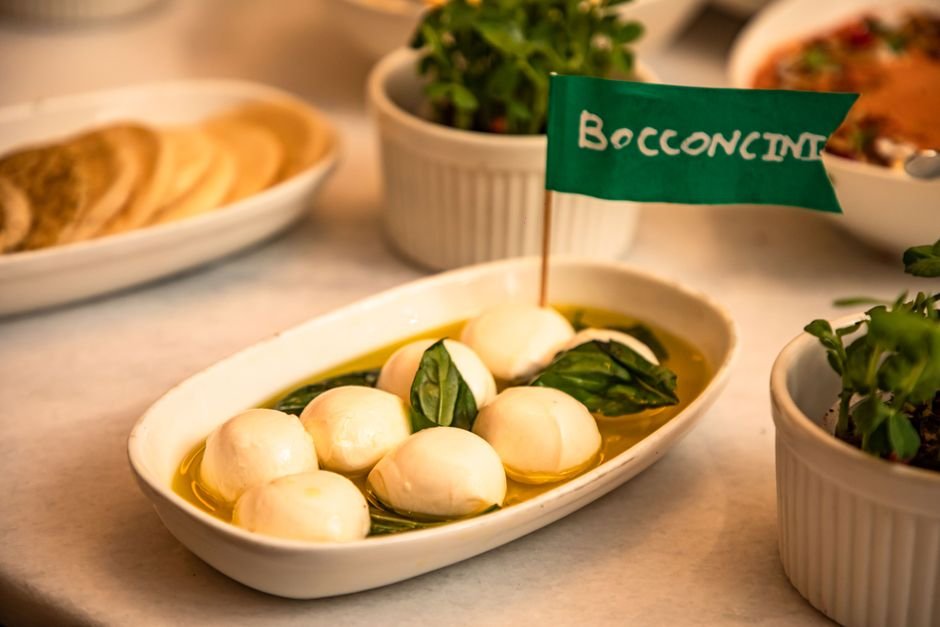
Full Nutrition Facts for 1 oz (28g) of Fresh Whole Milk Mozzarella
Here’s the complete nutritional breakdown for a standard serving of fresh mozzarella cheese:
| Nutrient | Amount | % Daily Value |
|---|---|---|
| Calories | 85 | — |
| Total Fat | 6.3g | 8% |
| Saturated Fat | 3.7g | 19% |
| Cholesterol | 25mg | 8% |
| Sodium | 178mg | 8% |
| Total Carbohydrate | 1.1g | <1% |
| Dietary Fiber | 0g | 0% |
| Total Sugars | 0.7g | — |
| Protein | 6.3g | 13% |
| Calcium | 207mg | 16% |
| Phosphorus | 131mg | 10% |
| Selenium | 14.1mcg | 26% |
*Percent Daily Values are based on a 2,000-calorie diet. Source: USDA FoodData Central.
Key insight: Mozzarella delivers 6.3g of protein per ounce while remaining relatively low in sodium compared to other aged cheeses. Its calcium content (16% daily value per ounce) makes it a solid choice for bone health, though nearly 40% of its calories come from saturated fat, so portion awareness is important for those monitoring saturated fat intake.
Etekcity Food Scale
0.1g accuracy — the perfect companion for exact portions.
Fresh Mozzarella vs. Low-Moisture Mozzarella: What’s the Difference?
Fresh Mozzarella (Packed in Water or Whey)
- Higher moisture content (around 50%), giving it a soft, delicate texture
- 85 calories per 1 oz serving, with a slightly tangier, milky flavor
- Best used immediately or within 2–3 days; typically made daily and sold fresh
Low-Moisture Mozzarella (Shredded or Block)
- Reduced water content (around 45–50%) allows longer storage and better melting on pizza
- 80 calories per 1 oz serving with a firmer, more elastic texture
- Can be stored for weeks when sealed; the standard choice for pizzerias and home baking
Practical takeaway: Fresh mozzarella works best for raw applications like caprese salads or burrata; low-moisture mozzarella melts more consistently on pizza and pasta bakes. Calorically, they’re nearly identical, so choose based on intended use rather than calorie count. If you’re topping a pizza with 2 oz of mozzarella, you’re adding roughly 160 calories regardless of type.
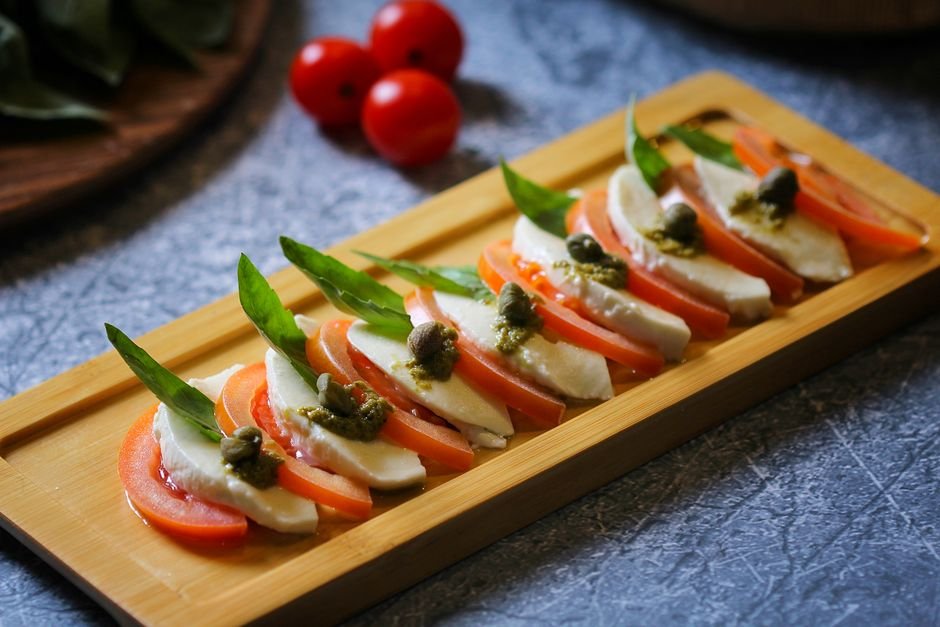
Is Mozzarella Good for Weight Loss?
Mozzarella can fit into a weight-loss diet, but portion control is essential. One ounce delivers satisfying protein and calcium at only 80–85 calories, making it useful for adding flavor and satiety to meals without excess calories. However, mozzarella is calorie-dense relative to its volume—it’s easy to consume 3–4 oz without realizing, which adds 240–340 calories. The key is treating mozzarella as a flavoring or supplement, not a primary protein source at large servings.
Tips to Eat Mozzarella Without Gaining Weight:
- Pre-portion: Cut mozzarella into measured pieces (1–1.5 oz) instead of eating straight from the package.
- Pair with vegetables: Add fresh mozzarella to salads with plenty of greens and vinaigrette to increase volume and satiety without adding significant calories.
- Choose part-skim: Part-skim mozzarella has 72 calories per ounce versus 85 for whole milk, saving 3 calories per ounce and usually costing less.
- Limit frequency: Use mozzarella 3–4 times per week as a topping rather than daily to keep overall fat and calorie intake in check.
When used strategically, mozzarella’s protein content (6.3g per ounce) can enhance satiety and help preserve lean muscle during a calorie deficit.
How Portion Size Affects Calories
Mozzarella’s calorie contribution scales directly with serving size. A small addition can go unnoticed; a large handful can tip your entire day. Understanding common portions helps you make intentional choices rather than accidentally overestimating.
Example:
- 1 oz (28g) mozzarella: 85 calories — roughly one mozzarella ball or 1/4 cup shredded
- 4 oz (113g) mozzarella: 340 calories — approximately one small mozzarella log or 1 cup shredded
A typical pizza slice with cheese might contain 2–3 oz of mozzarella (160–255 calories from cheese alone), while a caprese salad with 2 oz of fresh mozzarella adds 170 calories. Awareness of these realistic portions prevents underestimation.
Best Way to Measure Mozzarella Accurately
Eyeballing mozzarella is notoriously inaccurate—a handful of shredded cheese often weighs 2–3 oz when it feels small. Using a food scale or consistent measuring tools ensures you know exactly what you’re consuming.
Options:
- Food scale: Weigh mozzarella to the nearest gram. Most affordable digital scales cost $10–15 and are the gold standard for accuracy.
- Volume measurements: 1 oz of shredded mozzarella ≈ 1/4 cup. Use measuring cups for quick reference, though this works best for shredded varieties.
- Visual reference: One 1 oz ball of fresh mozzarella is roughly the size of a large marble or small walnut. Use this for quick estimates when a scale isn’t available.
Calculate Your Exact Calorie Intake
If mozzarella is a regular part of your diet, you may want to track exactly how it contributes to your daily calorie and macronutrient totals. Manually calculating across multiple foods can be tedious and error-prone, especially when recipes combine mozzarella with other ingredients.
Our free AI nutrients calculator instantly calculates the complete nutritional breakdown of any meal containing mozzarella. Simply enter the amount of mozzarella you’re using, along with other ingredients, and get instant results for calories, protein, fat, carbs, and key micronutrients. Use the calculator here to take the guesswork out of your nutrition tracking.
- Get precise calorie and macro breakdowns in seconds without manual math
- Track multiple servings or recipes to stay aligned with your daily goals
- Discover how swapping fresh mozzarella for part-skim or low-moisture varieties impacts your totals
Common Mistakes When Eating Mozzarella
Even health-conscious eaters often miscalculate mozzarella’s impact. Here are the biggest pitfalls to avoid:
❌ Underestimating shredded mozzarella: A typical handful of shredded cheese weighs 2–3 oz, not the 1 oz most people assume. Always use a scale or measuring cup rather than eyeballing.
❌ Treating mozzarella sticks as a “light” snack: Four mozzarella sticks contain roughly 280–320 calories and 15–18g of fat (often from deep-frying). They’re a treat, not a protein snack.
❌ Forgetting oil when eating packed fresh mozzarella: Fresh mozzarella balls stored in olive oil can add an extra 40–80 calories per ounce from oil. Drain or account for this if tracking carefully.
❌ Combining mozzarella with other high-fat toppings: Mozzarella on a pizza with pepperoni, olives, and extra sauce creates a calorie-dense meal. Be mindful of how mozzarella layers with other fatty foods.
Being aware of these common mistakes helps you enjoy mozzarella without derailing your nutritional goals.
FAQ
How many calories are in 100g of mozzarella?
100g of fresh whole milk mozzarella contains approximately 300 calories. This is roughly 3.5 oz, a standard serving for a mozzarella ball or small log.
Is mozzarella fattening?
Mozzarella is not inherently fattening when portioned correctly. At 85 calories per ounce with 6.3g of protein, it can be part of a balanced diet. However, its calorie density and the tendency to over-serve make portion awareness critical. Using mozzarella as a flavoring or complement rather than the main component of a meal keeps it in line with weight-management goals.
Does mozzarella have carbohydrates?
Fresh mozzarella contains about 1.1g of carbohydrate per ounce, most of it from residual lactose. It’s a low-carb cheese option and fits easily into ketogenic or low-carb diets.
Is fresh mozzarella healthier than low-moisture mozzarella?
Both are nutritionally similar in terms of calories and macros (around 80–85 calories per ounce). Fresh mozzarella is softer and creamier, while low-moisture varieties melt more consistently. Choose based on intended use rather than perceived health difference. Part-skim versions of either type offer a modest calorie savings if that’s your priority.
Conclusion
Mozzarella is a protein-rich, calcium-dense cheese that fits comfortably into most diets when properly portioned. At 80–85 calories per ounce with 6.3g of protein, a single serving adds flavor and satiety without excessive calorie burden. The challenge lies not in mozzarella’s inherent properties but in portion creep—a handful of shredded cheese or a few extra ounces on pizza quickly adds up. Whether you prefer fresh or low-moisture varieties, the nutritional profile remains consistent and reasonable for balanced eating.
To stay aligned with your health goals, measure mozzarella carefully using a food scale, pre-portion larger quantities, and use it as a complement to vegetables and whole foods rather than as a main component. For detailed tracking of how mozzarella fits into your specific meals and daily intake, rely on a reliable nutrients calculator to remove the guesswork and keep you accountable.
