101 calories in 1 medium pear (178 g)
- 0.6 g protein
- 27 g carbs
- 0.2 g fat
- 5.5 g fiber
Source: USDA FoodData Central · 57 kcal per 100 g
One medium pear contains 101 calories and is mostly carbohydrate, with negligible fat and protein.
The 17 g of naturally occurring sugars in a medium pear come alongside that fiber, which slows sugar absorption.

Calories in Pear by Serving Size
| Serving | Calories | Protein | Carbs | Fat |
|---|---|---|---|---|
| 1 medium (178 g) | 101 | 0.6 g | 27 g | 0.2 g |
| 1 cup, slices (140 g) | 80 | 0.5 g | 21 g | 0.2 g |
| 1 cup, cubes (161 g) | 92 | 0.6 g | 25 g | 0.2 g |
| 1 small (148 g) | 84 | 0.5 g | 23 g | 0.2 g |
| 1 large (230 g) | 131 | 0.8 g | 35 g | 0.3 g |
| 1 NLEA serving (166 g) | 95 | 0.6 g | 25 g | 0.2 g |
| 100 g | 57 | 0.4 g | 15 g | 0.1 g |
| 1 oz | 16 | 0.1 g | 4.3 g | 0 g |
Pear Nutrition Facts
Per 1 medium (178 g):
| Nutrient | Amount | % Daily Value* |
|---|---|---|
| Calories | 101 kcal | |
| Protein | 0.6 g | 1% |
| Total Fat | 0.2 g | 0% |
| Saturated Fat | 0 g | 0% |
| Cholesterol | 0 mg | 0% |
| Sodium | 1.8 mg | 0% |
| Total Carbohydrate | 27 g | 10% |
| Dietary Fiber | 5.5 g | 20% |
| Total Sugars | 17 g | |
| Calcium | 16 mg | 1% |
| Iron | 0.3 mg | 2% |
| Potassium | 206 mg | 4% |
| Magnesium | 12 mg | 3% |
| Zinc | 0.2 mg | 2% |
| Phosphorus | 21 mg | 2% |
| Selenium | 0.2 mcg | 0% |
| Vitamin A (RAE) | 1.8 mcg | 0% |
| Vitamin C | 7.7 mg | 9% |
| Vitamin E | 0.2 mg | 1% |
| Vitamin K | 7.8 mcg | 7% |
| Thiamin (B1) | 0 mg | 2% |
| Riboflavin (B2) | 0 mg | 4% |
| Niacin (B3) | 0.3 mg | 2% |
| Vitamin B6 | 0.1 mg | 3% |
| Folate (DFE) | 12 mcg | 3% |
Where the calories come from: 96% carbs · 2% protein · 2% fat
*Percent Daily Values are based on a 2,000-calorie diet (FDA reference values). Source: USDA FoodData Central — Pears, raw (FDC ID 169118, SR Legacy, published 4/1/2019). Values for other servings are calculated from the per-100 g data.
How Much Fiber Is in a Pear?
A medium pear (178 g) has 5.5 g of dietary fiber, most of it insoluble fiber found in the skin. If you eat the skin, you get the maximum benefit; peeling removes a meaningful portion of the fiber.
This high fiber content is one reason pears are filling despite being low in calories. The fiber also means that while a pear contains 17 g of total sugars, they’re absorbed more slowly than the sugar in juice or processed foods.
Pear Calories: Size Matters More Than You Think
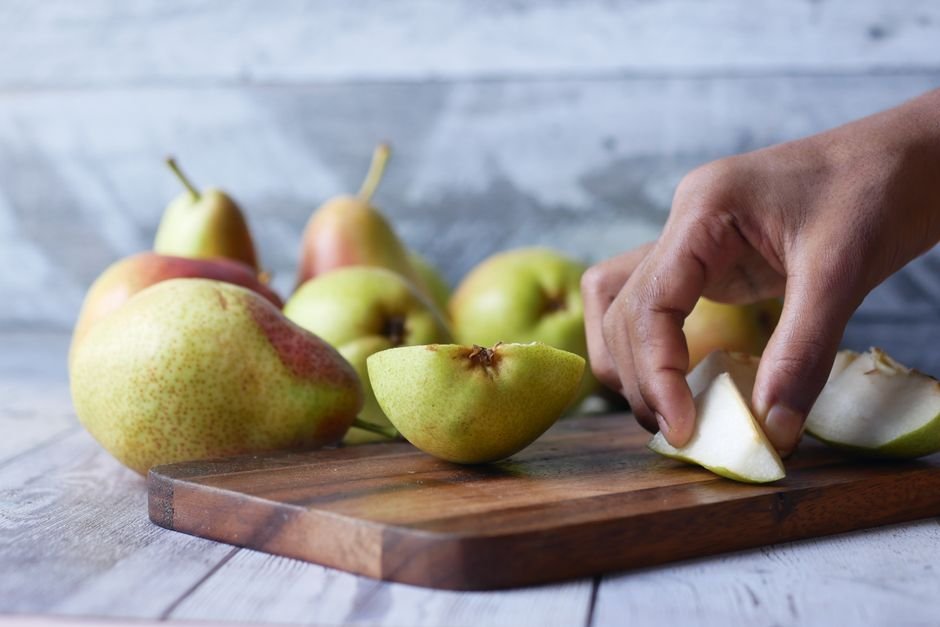
Calories in a pear vary significantly by size. A small pear (148 g) has 84 calories, a medium pear has 101 calories, and a large pear (230 g) contains 131 calories. That 47-calorie difference between small and large is substantial in the context of a single fruit.
If you’re tracking intake carefully, weigh or choose pears of consistent size rather than eyeballing them. Most grocery-store pears fall into the medium range, but farmers’ market pears vary widely.
Raw Pear Vs. Other Preparations
These numbers are for raw pears. Cooking (baking, stewing, or poaching) doesn’t change calories or macros significantly, but it can concentrate sugars if you add sugar during cooking or reduce liquid. Dried pears are much denser: a small portion of dried pear contains far more calories and sugar per gram than fresh.
Pear juice or pear nectar strips away the fiber and delivers calories almost entirely as simple sugars, making it nutritionally different from eating a whole fruit. If you want the fiber and fullness factor, eat the pear whole and raw or cooked plain.
Pears for Weight Loss and Blood Sugar
At 101 calories and 5.5 g fiber per medium pear, this fruit works well in a weight-loss context—it’s filling and low-energy-density.
People managing diabetes should account for the 27 g of carbohydrate (10% of daily value), not just the fiber. The small serving sizes and natural sugars make pears reasonable, but they’re not a free food and should be counted in carbohydrate targets.
How Pear Compares
Per 100 g, next to similar foods in our database:
| Food (100 g) | Calories | Protein | Carbs | Fat |
|---|---|---|---|---|
| Pear | 57 | 0.4 g | 15 g | 0.1 g |
| Tangerine | 53 | 0.8 g | 13 g | 0.3 g |
| Oysters | 51 | 5.7 g | 2.7 g | 1.7 g |
| Acorn Squash | 40 | 0.8 g | 10 g | 0.1 g |
| Turnip Greens | 32 | 1.5 g | 7.1 g | 0.3 g |
| Sweet Pepper | 26 | 1 g | 6 g | 0.3 g |
Pear FAQ
How many grams of sugar does a pear have?
A medium pear contains 17 g of total sugars. This includes naturally occurring fructose, glucose, and sucrose; no added sugar is present in raw pears.
Is pear skin safe to eat?
Yes. The skin is edible and contains most of the pear's fiber (about 5.5 g per medium pear if eaten whole). Peeling removes a significant amount of fiber, so skin-on is more nutritious.
Do pears have potassium?
Yes. A medium pear contains 206 mg of potassium, or 4% of the daily value. This is modest but contributes to overall electrolyte intake.
Are pears gluten-free and allergen-free?
Raw pears contain no gluten. They are not a common allergen, though oral allergy syndrome can occur in people with birch pollen allergies.
The Bottom Line
A medium pear delivers 101 calories and 5.5 g of fiber in a water-rich, fat-free fruit—making it a filling snack that slows sugar absorption. Choose pears with the skin on and pick the size that matches your portion goal, since calories range from 84 in a small pear to 131 in a large one.