26 calories in 1 oz of squid (28 g)
- 4.4 g protein
- 0.9 g carbs
- 0.4 g fat
Source: USDA FoodData Central · 92 kcal per 100 g
There are 26 calories in squid per 1 oz (boneless), with 4.4 g of protein and almost no fat or carbs. Raw squid is an exceptionally lean source of protein, deriving 72% of its calories from protein alone, and supplies significant amounts of selenium, vitamin B12, and other minerals.

Calories in Squid by Serving Size
| Serving | Calories | Protein | Carbs | Fat |
|---|---|---|---|---|
| 1 oz, boneless (28 g) | 26 | 4.4 g | 0.9 g | 0.4 g |
| 3 oz | 78 | 13 g | 2.6 g | 1.2 g |
| 100 g | 92 | 16 g | 3.1 g | 1.4 g |
Squid Nutrition Facts
Per 1 oz, boneless (28 g):
| Nutrient | Amount | % Daily Value* |
|---|---|---|
| Calories | 26 kcal | |
| Protein | 4.4 g | 9% |
| Total Fat | 0.4 g | 1% |
| Saturated Fat | 0.1 g | 1% |
| Cholesterol | 66 mg | 22% |
| Sodium | 12 mg | 1% |
| Total Carbohydrate | 0.9 g | 0% |
| Dietary Fiber | 0 g | 0% |
| Total Sugars | 0 g | |
| Calcium | 9.1 mg | 1% |
| Iron | 0.2 mg | 1% |
| Potassium | 70 mg | 1% |
| Magnesium | 9.4 mg | 2% |
| Zinc | 0.4 mg | 4% |
| Phosphorus | 63 mg | 5% |
| Selenium | 13 mcg | 23% |
| Vitamin A (RAE) | 2.8 mcg | 0% |
| Vitamin C | 1.3 mg | 1% |
| Vitamin E | 0.3 mg | 2% |
| Thiamin (B1) | 0 mg | 0% |
| Riboflavin (B2) | 0.1 mg | 9% |
| Niacin (B3) | 0.6 mg | 4% |
| Vitamin B6 | 0 mg | 1% |
| Folate (DFE) | 1.4 mcg | 0% |
| Vitamin B12 | 0.4 mcg | 15% |
Where the calories come from: 72% protein · 14% carbs · 14% fat
*Percent Daily Values are based on a 2,000-calorie diet (FDA reference values). Source: USDA FoodData Central — Mollusks, squid, mixed species, raw (FDC ID 174223, SR Legacy, published 4/1/2019). Values for other servings are calculated from the per-100 g data.
Raw vs Cooked Squid: How Preparation Changes Calories
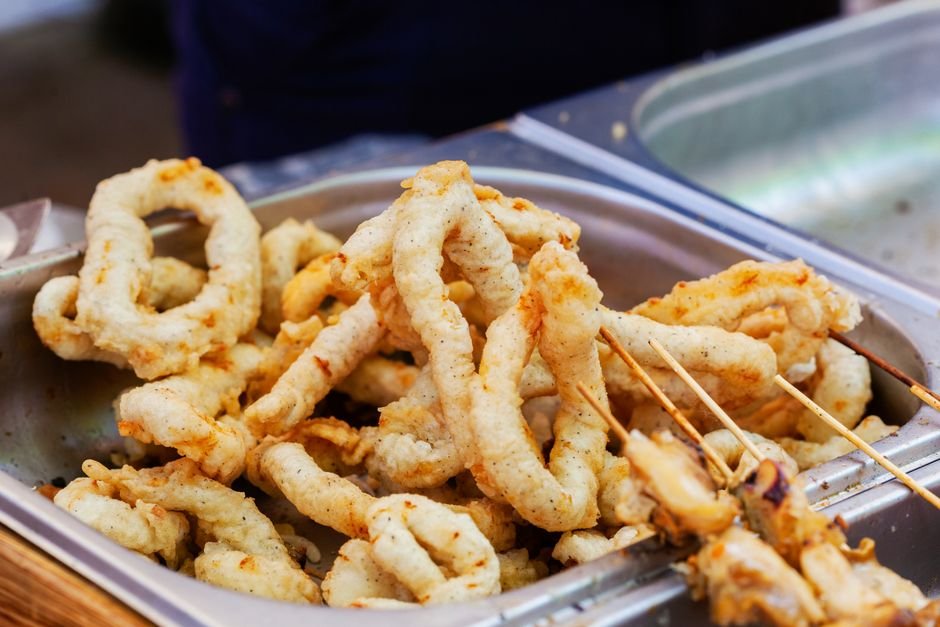
The USDA data reflects raw squid. Cooking methods matter: boiling or steaming squid (the most common preparations) adds minimal calories if no fat is used, though the texture becomes tender rather than chewy. Frying squid in oil or batter—as in calamari—dramatically increases the calorie count by adding fat and carbohydrates from breadcrumbs or flour. A typical restaurant serving of fried calamari is substantially higher in calories and fat than the raw equivalent.
Grilling or poaching squid keeps the calorie profile close to the raw data while improving digestibility. The protein content remains stable across cooking methods; what changes is whether added fats and coatings are present.
Why Squid Is Exceptional for Protein and Very Low in Calories
Squid is one of the leanest seafood options: 1 oz delivers 4.4 g of protein for just 26 calories. This protein-to-calorie ratio makes squid particularly useful if you’re tracking calories while meeting protein needs. The carbohydrate content is trivial (0.9 g per ounce), and total fat is negligible (0.4 g per ounce).
Beyond macros, raw squid contains 13 mcg of selenium per ounce—roughly 23% of the daily value—and 0.4 mcg of vitamin B12 (15% of the daily value). These are substantial amounts from a single ingredient. The zinc content (0.4 mg per ounce) and iron (0.2 mg per ounce) add further nutritional density.
Squid for Low-Carb and Keto Diets
At 0.9 g of carbohydrate per ounce and zero sugars, raw squid fits easily into very low-carbohydrate meal plans. A 3 oz serving (roughly a small portion) contains 2.6 g of carbs and 78 calories, making it compatible with ketogenic macros. The protein density is particularly valuable on low-carb diets, where meeting protein targets without relying on fatty cuts of meat is a common challenge.
Avoid breaded or battered preparations (fried calamari), which add significant carbohydrates from the coating.
How to Buy and Cook Squid Without Adding Hidden Calories
Fresh or frozen raw squid (whole or cleaned tubes and tentacles) keeps the nutritional profile transparent. Pre-breaded frozen calamari and restaurant-prepared squid hide added oils and carbohydrates. To prepare squid at home while keeping calories low, poach it in water or broth, grill it briefly over high heat, or boil it gently until tender—typically 30–45 seconds to a few minutes, depending on size.
Squid’s natural brininess means minimal seasoning is needed. A squeeze of lemon, salt, and pepper preserve the lean profile. If you do sauté squid, use a measured amount of oil and account for those added calories.
How Squid Compares
Per 100 g, next to similar foods in our database:
| Food (100 g) | Calories | Protein | Carbs | Fat |
|---|---|---|---|---|
| Squid | 92 | 16 g | 3.1 g | 1.4 g |
| Crab Meat | 95 | 7.6 g | 15 g | 0.5 g |
| Crab Imitation Surimi | 95 | 7.6 g | 15 g | 0.5 g |
| Tilefish | 96 | 18 g | 0 g | 2.3 g |
| Shrimp Cooked | 99 | 24 g | 0.2 g | 0.3 g |
| Mahi Mahi Fillet | 84 | 20 g | 0.3 g | 0.4 g |
Squid FAQ
How does the protein in squid compare to other seafood?
Squid delivers 4.4 g of protein per ounce at just 26 calories, making it one of the leanest options available. This protein-to-calorie density is comparable to other lean seafood like white fish, though squid's unique nutrient profile—especially selenium and B12—sets it apart.
Does squid contain carbs?
Raw squid contains 0.9 g of carbohydrate per ounce with zero sugars. This makes it suitable for low-carb and ketogenic diets. Breaded or fried squid (calamari) adds significant carbs from the coating.
What is the best way to cook squid to keep it low-calorie?
Poaching, boiling, or grilling squid without added fat preserves its lean calorie profile. Avoid frying in oil or battering, as these methods substantially increase the calorie content by adding fat and carbohydrates.
The Bottom Line
Raw squid is an exceptionally lean protein source with 26 calories per ounce and minimal fat and carbs, making it useful for both calorie and carb restriction. Cooking method matters: prepare squid by poaching, grilling, or boiling to keep calories low; fried calamari is substantially higher.