154 calories per serving (30 g) of pumpkin seeds (pepitas)
- 9 g protein
- 5.6 g carbs
- 12 g fat
- 8% of 2,000 kcal
Source: USDA FoodData Central (FDC 2515380)
One serving of pumpkin seeds (30 g) contains 9 g of protein and 154 calories, making them a calorie-dense option for high-protein diets. Raw pepitas are about 30% protein by weight, with substantial fat and minerals like magnesium and zinc. A handful is enough to add meaningful protein to a snack or meal, but portion size matters because calories accumulate quickly.
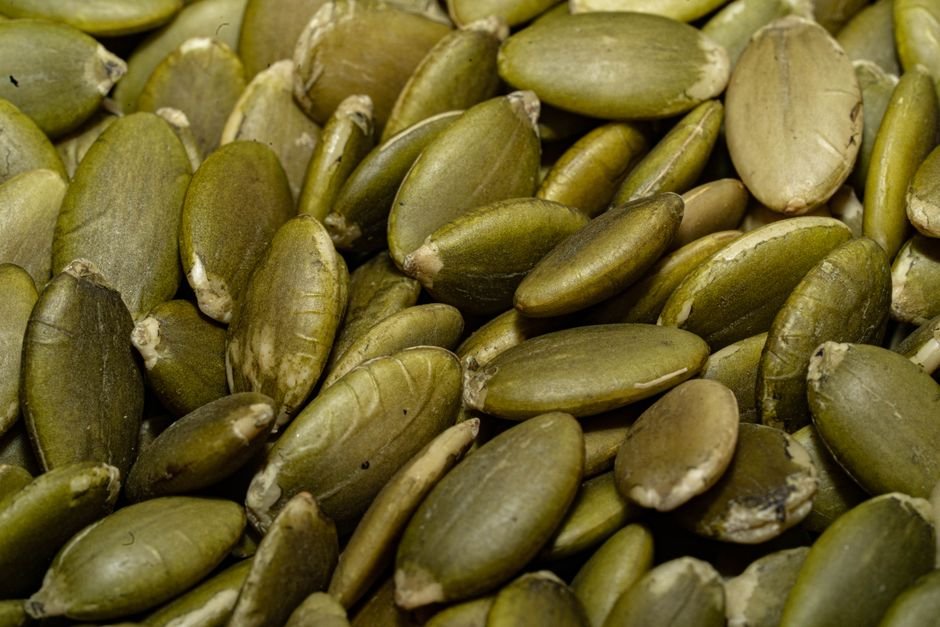
Pumpkin Seeds (Pepitas) by the Serving
| Amount | Calories | Protein | Carbs | Fat | Of 2,000 kcal |
|---|---|---|---|---|---|
| 1 serving (30 g) | 154 | 9 g | 5.6 g | 12 g | 8% |
| 2 servings (60 g) | 309 | 18 g | 11 g | 24 g | 15% |
| 3 servings (90 g) | 463 | 27 g | 17 g | 36 g | 23% |
| 4 servings (120 g) | 618 | 36 g | 22 g | 48 g | 31% |
| 100 g | 515 | 30 g | 19 g | 40 g | 26% |
How Much Protein per Serving
A single serving of pumpkin seeds (30 g or roughly 3 tablespoons) delivers 9 g of protein. If you eat 2 servings (60 g), you get 18 g; 3 servings (90 g) gives 27 g; and 4 servings (120 g) yields 36 g. Because pumpkin seeds are dense and calorie-heavy, the protein-to-calorie ratio is steep: you are paying 154 calories per 9 g of protein.
For context, that is higher in calories per gram of protein than leaner sources, but pumpkin seeds also deliver minerals that many high-protein diets overlook. If your high-protein plan includes fat and calories as well as protein grams, pumpkin seeds fit well; if you are cutting calories hard, they are better as an occasional sprinkle than a staple.
Portion Size and Calorie Impact
Pumpkin seeds are easy to overeat because they are small, portable, and taste good—and a little goes a long way on calories. One serving (30 g) is 154 calories, roughly an ounce by weight. Two servings (60 g) climbs to 309 calories; three servings (90 g) reaches 463 calories; four servings (120 g) hits 618 calories. At that point, pumpkin seeds alone consume nearly a third of a 2,000-calorie day.
The practical approach: keep portions to one or two servings at a time. Measure by weight if possible, or use a small handful as a rough guide—but a loose handful often underestimates. Mixing pumpkin seeds into yogurt, oatmeal, or a salad makes them feel more filling and helps you stick to the amount you intended, rather than eating straight from the bag.
Why High-Protein Diets Love Pumpkin Seeds
Pumpkin seeds have two features that appeal to protein-focused eaters: they are shelf-stable and nutrient-dense. You do not need to cook them, and they keep well in a pantry or bag. One serving (30 g) is portable and requires no prep.
The mineral profile is the real draw. Magnesium (150 mg per serving, 36% of the daily value) supports muscle recovery; zinc (1.9 mg, 17% DV) bolsters immune function and protein synthesis; iron (2.5 mg, 14% DV) helps oxygen transport. Phosphorus (345 mg, 28% DV) works with calcium for bone health. These are the kinds of nutrients often short in high-protein diets that rely on lean meat or powder, so pumpkin seeds fill a gap without much extra effort.
Practical Tips for Eating Pumpkin Seeds
- Combine with lower-calorie protein. Pair one serving (30 g) of pumpkin seeds with Greek yogurt, cottage cheese, or hard-boiled eggs to boost protein without doubling the calories.
- Use as a topping, not a meal. Sprinkle a serving over a salad, soup, or grain bowl rather than eating a handful on its own. It adds crunch, nutrients, and satiety while keeping the portion honest.
- Watch raw versus roasted. The USDA data is for raw pumpkin seeds. Roasted and salted versions may add sodium and oil; check the label if sodium intake matters to your diet.
- Account for every handful. Because pumpkin seeds are calorie-dense and easy to eat by hand, it is simple to consume 2 or 3 servings without noticing. Pre-portion into small containers or bags if you tend to graze.
FAQ
Are pumpkin seeds a complete protein?
Pumpkin seeds provide 9 g of protein per serving (30 g), but they are not a complete protein—they lack sufficient lysine, one of the nine essential amino acids. Pair them with legumes, grains, eggs, or dairy to round out your amino acid profile.
How do pumpkin seeds fit into a 2,000-calorie day?
One serving (30 g) is 154 calories, or 8% of a 2,000-calorie budget. Two servings (60 g) are 309 calories (15%). Most people on a high-protein diet can comfortably fit 1–2 servings without crowding out other foods.
Do raw and roasted pumpkin seeds have different nutritional profiles?
The USDA data provided is for raw seeds. Roasting does not significantly alter protein or fat, but roasted and salted versions will add sodium. Roasting may slightly reduce some heat-sensitive vitamins, though the minerals (magnesium, zinc, iron) remain stable.
What is a good portion size to carry as a snack?
One serving (30 g) is the standard portion and fits easily in a small bag or container. It supplies 9 g of protein and stays shelf-stable for weeks, making it convenient for work, travel, or post-workout snacking.
The Bottom Line
Pumpkin seeds deliver solid protein (9 g per 30 g serving) alongside minerals like magnesium and zinc, but they are calorie-dense at 154 calories per serving. Stick to one or two servings at a time and use them as a topping or mix-in rather than a straight snack if you are watching calories.