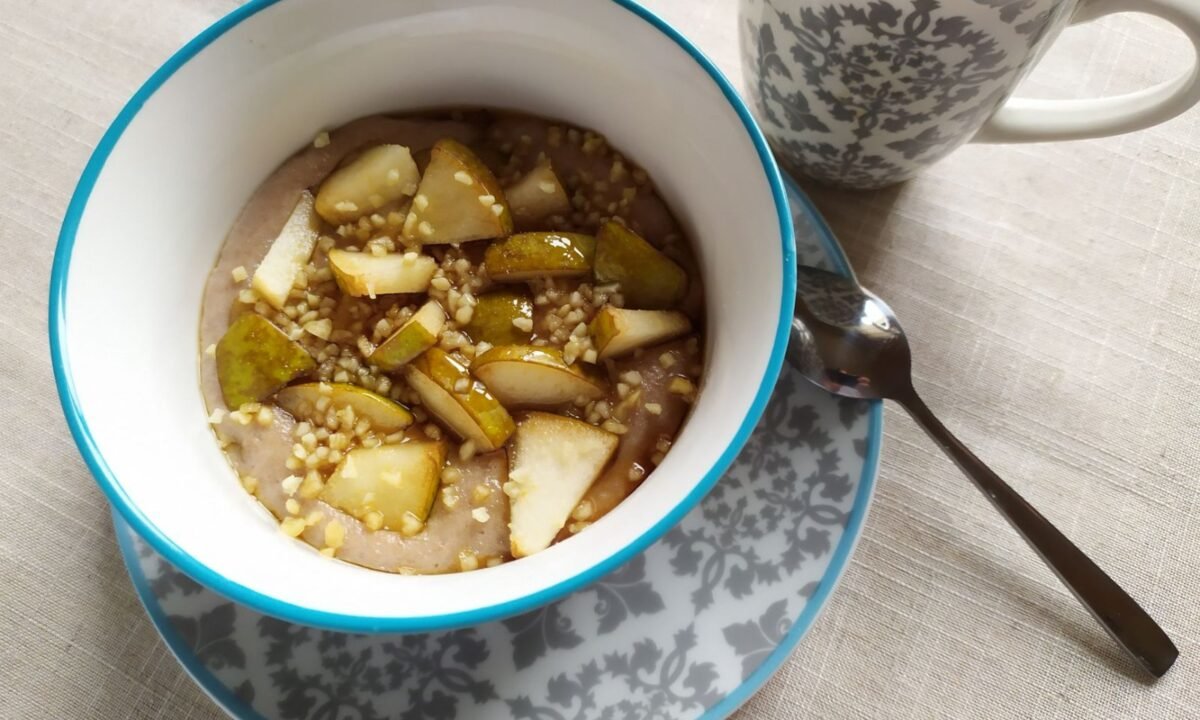
Buckwheat porridge with berries is one of the most satisfying breakfasts you can make on a weekday morning. Toasted buckwheat groats simmer into a soft, creamy bowl with a deep, earthy flavor, and a handful of berries adds brightness and natural sweetness without needing much added sugar.
Despite its name, buckwheat is not a type of wheat. It is a seed from a plant related to rhubarb, so it is naturally gluten-free. Whole buckwheat groats also bring fiber, plant protein, magnesium, and iron to the bowl, which makes this porridge a steady, filling start to the day.
This recipe uses hulled buckwheat groats, a splash of milk, a pinch of salt, and a short simmer. It takes about 20 minutes from pot to bowl, so it fits a busy morning as easily as a slow weekend one.
Full recipe below
Buckwheat Porridge with Berries
Why this buckwheat porridge recipe works
Toasting the buckwheat groats in a dry pan for two to three minutes before adding liquid is the step that makes the biggest difference. It brings out a roasted, nutty flavor that plain boiled groats lack, and it keeps the porridge from tasting flat or grassy.
Cooking the groats in a mix of water and milk gives you a creamy texture without heavy cream or butter. Groats release starch as they simmer, so the porridge thickens on its own. Stirring occasionally helps the starch distribute evenly and prevents sticking to the bottom of the pot.
Berries do double duty. Their acidity balances the earthiness of the buckwheat, and their juices soak into the porridge as you eat. Frozen berries work just as well as fresh ones, and they can go directly onto the hot porridge, where they soften and release color.
For a closer look at what you are eating, the USDA's FoodData Central database lists the nutrient profile of raw buckwheat groats, which can help you compare this breakfast with other whole-grain options.
Ingredients you need for buckwheat porridge
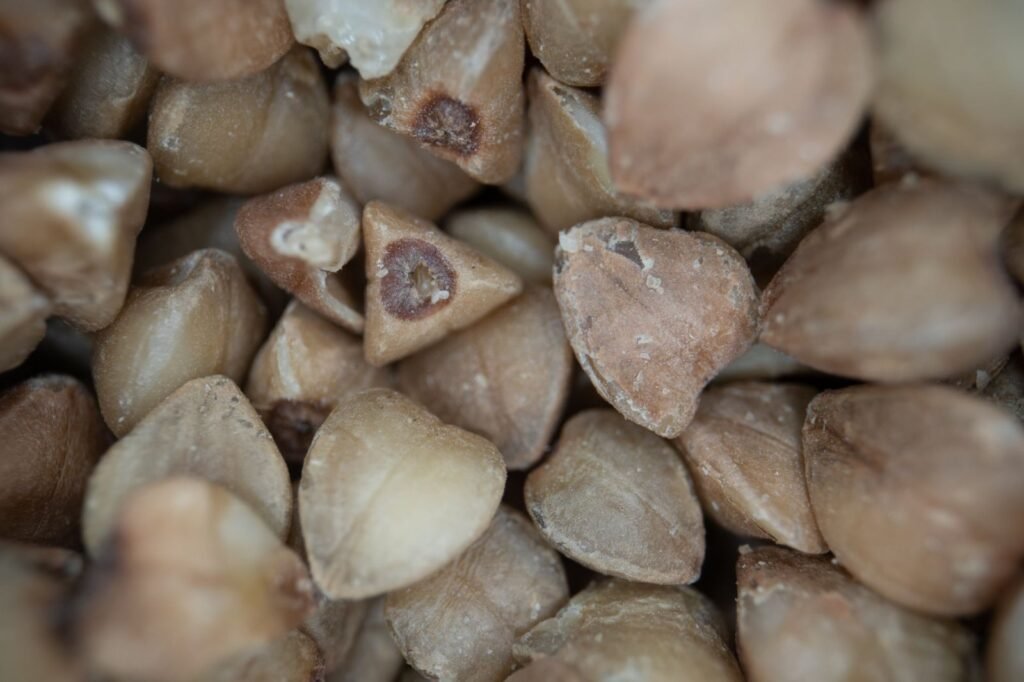
- 1 cup hulled buckwheat groats (raw, not roasted kasha, which is pre-toasted and cooks faster with a stronger flavor). Rinse well under cold water before cooking to remove any dust and bitterness.
- 2 cups water, plus more if needed to reach your preferred thickness.
- 1 cup unsweetened milk (dairy, oat, or soy). Soy milk adds the most protein; oat milk adds extra creaminess.
- 1/4 teaspoon fine sea salt, to balance the flavor.
- 1 teaspoon ground cinnamon or a 1-inch piece of vanilla bean, optional but recommended for warmth.
- 1 tablespoon maple syrup or honey, optional, added after cooking so you can adjust sweetness.
- 1 cup fresh or frozen mixed berries, such as blueberries, raspberries, or sliced strawberries. Frozen berries can go straight from the freezer onto the hot porridge.
- 2 tablespoons chopped walnuts or almonds, optional, for crunch.
- Plain Greek yogurt, optional, for a tangy, high-protein topping.
How to make buckwheat porridge step by step
- Rinse 1 cup of hulled buckwheat groats in a fine-mesh strainer under cold running water for about 30 seconds, until the water runs mostly clear. Drain well.
- Place the drained groats in a dry medium saucepan over medium heat. Toast them, stirring often, for 2 to 3 minutes, until they smell nutty and a few look slightly golden.
- Pour in 2 cups of water and 1 cup of milk, then add the salt and cinnamon if using. Stir once to combine. The liquid may bubble and sputter at first, so keep the pot partly covered.
- Bring the mixture to a gentle boil, then reduce the heat to low so it simmers steadily. Cook uncovered for 12 to 15 minutes, stirring every few minutes to keep the bottom from scorching.
- Check the texture at the 12-minute mark. The groats should be tender with a slight bite, and the liquid should be mostly absorbed. If the porridge is too thick, stir in an extra splash of milk or water.
- Remove the pan from the heat, cover, and let the porridge rest for 3 to 5 minutes. It will thicken further as it sits.
- Stir in the maple syrup or honey, if using, and taste for salt and sweetness.
- Spoon the porridge into bowls and top with the berries, nuts, and yogurt, if using. Serve warm.
Storage and reheating buckwheat porridge
Cooked buckwheat porridge keeps well in an airtight container in the refrigerator for up to 4 days. Let it cool to room temperature for no more than about 2 hours before refrigerating, and follow the guidance on the FoodSafety.gov cold food storage chart for leftovers.
To reheat, place the porridge in a small pot over low heat and add a splash of milk or water, stirring until warm and creamy again. You can also microwave it in a bowl for 1 to 2 minutes, stirring halfway through. Cooked buckwheat tends to firm up when chilled, so the added liquid is important.
Store berries separately if you plan to prep ahead. Mixed into the porridge, they will bleed color and become soft after a day. Add fresh berries just before eating.
Buckwheat porridge can also be frozen in individual portions for up to 2 months. Thaw overnight in the refrigerator and reheat with a little extra liquid.

Common mistakes to avoid with buckwheat porridge
- Skipping the rinse. Buckwheat groats can carry dust and a slightly bitter taste from processing. A quick rinse keeps the flavor clean.
- Using too much liquid at the start. Buckwheat absorbs a lot of water, but the ratio of 2 cups water and 1 cup milk to 1 cup groats works best for a creamy but spoonable texture. Adjust at the end rather than at the beginning.
- Walking away from the pot. Milk can scorch quickly on the bottom of a pan. Stir every few minutes and keep the heat at a gentle simmer.
- Overcooking into paste. Buckwheat should keep some texture. If it turns gluey, reduce the simmer time next time and check at 10 minutes.
- Adding sugar too early. Sweeteners can thicken and stick to the pot while cooking. Stir them in after the porridge is off the heat.
- Assuming all buckwheat is gluten-free. Buckwheat itself is naturally gluten-free, but some products are processed with wheat. Look for a label that says certified gluten-free if you need to avoid cross-contact.
Swaps and variations for buckwheat porridge, including a lighter option
- Lighter version: use all water instead of milk, cut the nuts, and top with a few berries and a sprinkle of cinnamon. This version has fewer calories and less saturated fat, while the fiber from the groats and berries keeps you full. You can still add a spoonful of Greek yogurt for protein.
- Higher-protein version: stir in one scoop of unflavored protein powder after cooking, or top with 1/2 cup plain Greek yogurt and 1 tablespoon of hemp seeds.
- Chocolate-berry version: stir 1 tablespoon of unsweetened cocoa powder into the milk before simmering and top with raspberries.
- Tropical version: use coconut milk for half the liquid and top with mango and toasted coconut flakes.
- Nut-free version: skip the walnuts and almonds, and use toasted pumpkin seeds for crunch.
- Savory version: cook the porridge with broth instead of milk, then top with a fried egg, sauteed greens, and a little grated cheese.
What to serve with buckwheat porridge
Buckwheat porridge is hearty enough to stand on its own, but it pairs well with a few simple sides. A cup of unsweetened coffee or tea works nicely, and a small glass of water or milk rounds out the meal.
For a more complete breakfast, add a boiled or poached egg, a few slices of smoked salmon, or a spoonful of cottage cheese. These add protein and make the bowl more filling. If you enjoy grain-based breakfasts, you might also like this quinoa breakfast bowl with savory toppings, which takes a similar approach.
If you want something lighter on the side, fresh fruit such as sliced pear or kiwi adds vitamin C and fiber. The Dietary Guidelines for Americans encourage pairing whole grains with fruits, vegetables, and lean protein, and this combination follows that pattern well.
Frequently asked questions
Is buckwheat porridge gluten-free?
Buckwheat itself is naturally gluten-free because it is a seed, not a grain from the wheat family. However, cross-contamination can happen during processing, so choose groats labeled certified gluten-free if you have celiac disease or a serious sensitivity.
Can I make buckwheat porridge ahead of time?
Yes. Buckwheat porridge keeps in the refrigerator for up to 4 days and freezes well for up to 2 months. Add fresh berries and toppings just before serving, and reheat with a splash of milk or water to restore its creamy texture.
What is the difference between buckwheat groats and kasha?
Buckwheat groats are the hulled seeds, sold raw. Kasha is toasted buckwheat groats with a stronger, more roasted flavor and a shorter cooking time. For this buckwheat porridge recipe, raw groats give a mild, creamy result, but you can use kasha and reduce the simmer time to about 8 to 10 minutes.
How much protein is in a bowl of buckwheat porridge?
A bowl made with 1 cup of cooked buckwheat, milk, and berries provides a moderate amount of plant protein. Adding Greek yogurt or a protein powder increases the total. The exact amount depends on your milk choice and toppings, so check the USDA nutrient data for each ingredient to calculate your own total.
Can I make buckwheat porridge without milk?
Yes. Cook the groats in all water for a lighter porridge, then stir in a spoonful of nut butter or a splash of plant milk after cooking for extra creaminess. Buckwheat porridge made with water is still satisfying and naturally dairy-free.
Why is my buckwheat porridge gluey?
Gluey porridge usually means the groats have been simmered too long or stirred too vigorously. Cook gently, check the texture at 10 to 12 minutes, and let the pot rest covered off the heat so the groats finish softening without breaking down.
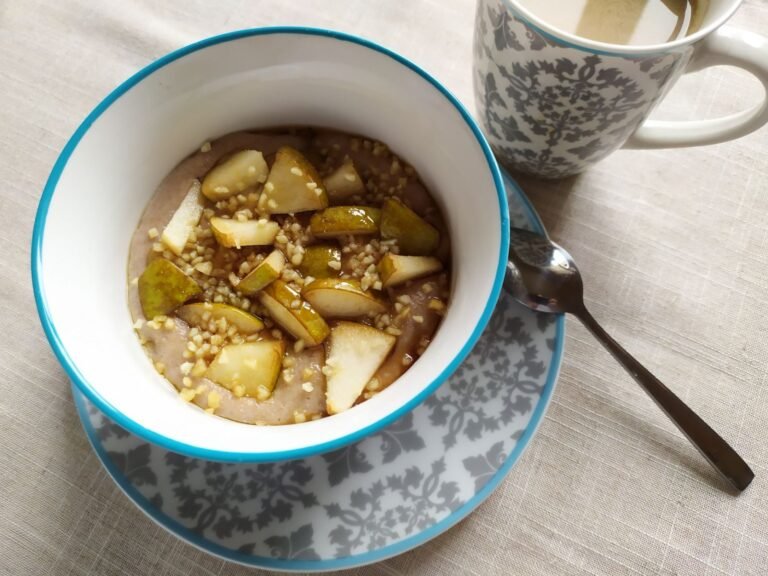
Buckwheat Porridge with Berries
A creamy, nutty buckwheat porridge made with toasted groats, milk, and fresh or frozen berries, ready in about 20 minutes.
Ingredients
Instructions
- Rinse the buckwheat groats in a fine-mesh strainer under cold water for about 30 seconds, then drain.
- Toast the groats in a dry medium saucepan over medium heat for 2 to 3 minutes, stirring often, until nutty and fragrant.
- Add the water, milk, salt, and cinnamon. Bring to a gentle boil.
- Reduce heat to low and simmer uncovered for 12 to 15 minutes, stirring every few minutes, until the groats are tender and most liquid is absorbed.
- Remove from heat, cover, and rest for 3 to 5 minutes.
- Stir in maple syrup if using, and taste for sweetness and salt.
- Spoon into bowls and top with berries and walnuts. Serve warm.
Notes
- Store cooked porridge in an airtight container in the refrigerator for up to 4 days. Reheat with a splash of milk.
- For a lighter version, use all water instead of milk and omit the walnuts.
- Raw groats are used here; kasha (toasted groats) cooks in about 8 to 10 minutes.
Nutrition per serving
- Calories
- 466
- Protein
- 12.7g
- Carbs
- 90.8g
- Fat
- 9.3g
- Saturated fat
- 1g
- Fiber
- 9.9g
- Sugar
- 21.8g
- Sodium
- 359mg
- Cholesterol
- 0mg