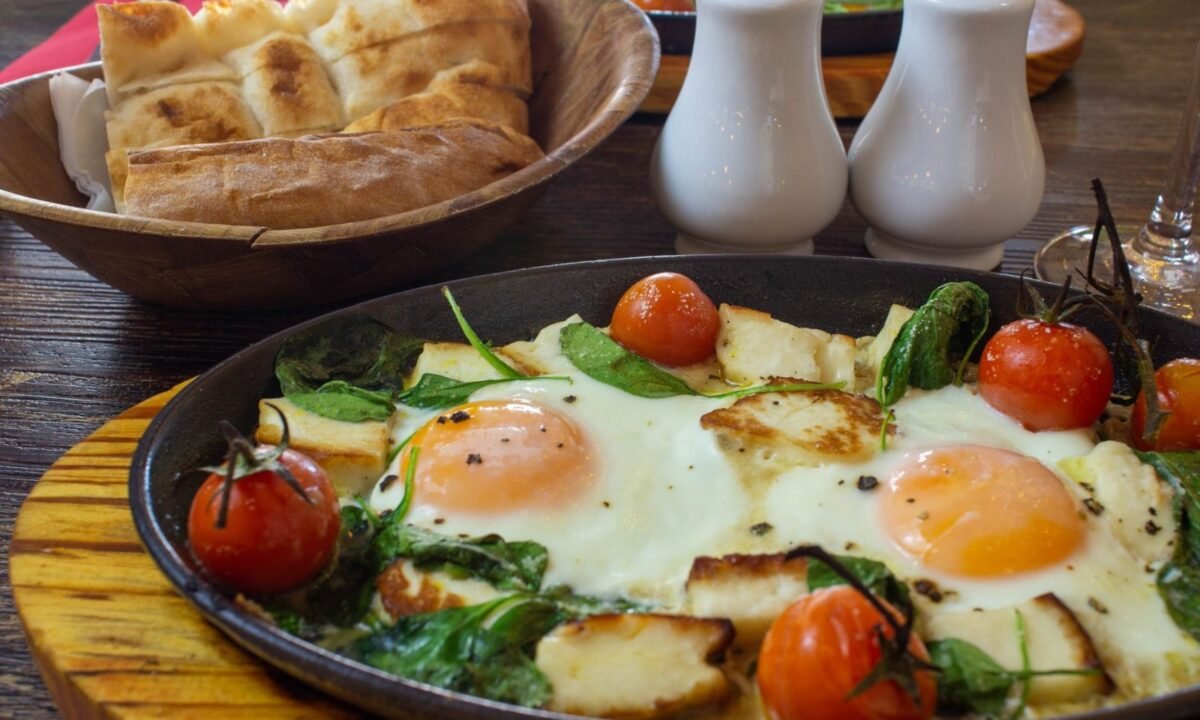
Mediterranean eggs are one of the most satisfying breakfasts you can make on a weekday. Soft, custardy scrambled eggs meet salty crumbled feta, briny Kalamata olives, sweet blistered cherry tomatoes and a handful of wilted spinach, all in one skillet in about 15 minutes. The flavors come from ingredients that are easy to keep on hand, so this is a practical choice when you want a real meal rather than a bowl of cereal.
This version serves two and uses six large eggs, which gives a good amount of protein without feeling heavy. Each serving lands at roughly 20 to 25 grams of protein depending on how much feta you add, making it a solid start to the day. If you are building your plate around protein, the egg white omelette with veggies is another high-protein option with a lighter feel.
Once you learn the method, mediterranean eggs become a flexible template. You can scale them up for a crowd, change the greens with the season, or lighten the dish with fewer yolks. The steps below walk through the technique so you can get tender curds every time.
Full recipe below
Mediterranean Eggs with Feta and Olives
Why this mediterranean eggs recipe works
The appeal of mediterranean eggs is the balance of flavors and textures. Eggs provide a mild, creamy base, while feta adds tang and salt, olives add brininess and a meaty bite, and cherry tomatoes burst into a light, slightly sweet sauce. Spinach adds color and fiber without changing the character of the dish. Because the add-ins are mostly ready to use, the whole breakfast comes together while the eggs cook.
Technique matters as much as ingredients. Cooking eggs over medium-low heat and pulling them off the stove while they still look slightly glossy keeps them soft. Adding the feta at the very end means it softens and warms without turning rubbery or disappearing into the eggs. The result is a scramble with distinct pockets of flavor rather than one uniform yellow mass.
Nutritionally, this dish fits the pattern recommended in the Dietary Guidelines for Americans, which encourage protein foods, vegetables and healthy fats across the day. You can check the exact numbers for your own ingredients with the USDA FoodData Central database, which is the source used for the nutrition estimates in this recipe card.
Ingredients for mediterranean eggs and how to choose them
- Large eggs, 6 total. Use fresh eggs at room temperature for the most even cooking. Pasture-raised or omega-3 eggs work well, but standard eggs give the same texture.
- Crumbled feta, 3 oz. Buy a block packed in brine and crumble it yourself. It is creamier and less dry than pre-crumbled feta, which often contains anti-caking starch.
- Kalamata olives, 1/3 cup pitted and roughly chopped. Pick olives packed in brine or olive oil rather than the sliced kind in a jar of vinegar, which tend to taste flat.
- Cherry tomatoes, 1 cup halved. Look for firm, bright tomatoes; they hold their shape better than overripe ones.
- Baby spinach, 2 cups loosely packed. It wilts in under a minute, so you can add it straight from the bag.
- Extra-virgin olive oil, 1 tbsp. Use a fruity oil for finishing if you have one, since the flavor carries through.
- Fresh dill or parsley, 1 tbsp chopped, plus a pinch of dried oregano. Herbs brighten the dish and balance the salt in the feta and olives.
- Salt and black pepper. Taste before salting, since feta and olives already contribute a lot of sodium.
How to make mediterranean eggs step by step
- Crack the eggs into a medium bowl, add 2 tbsp of water or milk, and whisk for about 30 seconds until the whites and yolks are fully combined and no streaks remain. Season with a pinch of salt and pepper.
- Heat 1 tbsp olive oil in a 10-inch nonstick skillet over medium heat for about 1 minute, until it shimmers but does not smoke.
- Add the halved cherry tomatoes cut side down and cook for 2 to 3 minutes, until they begin to blister and soften. Stir in the chopped olives and cook for 30 seconds to warm them through.
- Add the spinach and stir for about 30 to 60 seconds, until just wilted. Push the vegetables to the side of the pan.
- Pour the eggs into the center of the pan. Let them sit for 20 seconds, then gently pull the set edges toward the middle with a silicone spatula, tilting the pan so the runny egg flows into the gaps.
- Continue stirring slowly for 2 to 3 minutes, until the eggs are mostly set but still glossy and soft. Remove the pan from the heat; the residual heat will finish the cooking.
- Scatter the crumbled feta and herbs over the eggs and fold once or twice. Taste and adjust salt. Serve right away.
- Tip: keep the heat at medium-low for the eggs. High heat tightens the proteins, making the curds dry and rubbery. Also, if you are making a larger batch, cook it in two pans or two rounds rather than crowding the skillet, which steams the eggs instead of setting them cleanly.

Storage and reheating mediterranean eggs safely
Mediterranean eggs are best eaten fresh, while the feta is still creamy and the spinach has a little texture. If you have leftovers, cool them within two hours and refrigerate in a sealed container. The FoodSafety.gov cold food storage chart lists cooked egg dishes as safe in the refrigerator for 3 to 4 days.
To reheat, warm the eggs in a nonstick pan over low heat with a teaspoon of water, stirring gently until heated through. Use a food thermometer if you are reheating a large portion: leftovers should reach 165 degrees F, which is the FoodSafety.gov safe minimum internal temperature for reheated leftovers and eggs. Microwaving works in a pinch, but cook in 20-second bursts and stir between each, or the eggs will turn rubbery.
Do not freeze this dish. The eggs weep liquid when thawed and the feta and spinach become watery, so the texture suffers badly.
Common mistakes to avoid with mediterranean eggs
- Cooking the eggs over high heat. This makes them dry and tough. Keep the heat medium-low and pull the pan off while the eggs still look slightly wet.
- Adding the feta too early. It melts into the eggs and loses its tangy, crumbly texture. Add it in the last 30 seconds.
- Using wet vegetables without draining. Rinse and dry the spinach and pat the tomatoes dry, or the scramble will taste watery.
- Over-salting. Feta and olives are already salty. Season the eggs lightly, then taste before adding more salt.
- Skipping the food safety check. Eggs should be cooked until no visible liquid remains for a firm scramble, and the safe internal temperature for eggs is 160 degrees F for dishes that include eggs as the main ingredient.
- Using chopped olives that are too large. Large chunks can overwhelm a bite; roughly chop them so each forkful has a balanced flavor.
Swaps and variations for mediterranean eggs, including a lighter option
- Lighter option: use 3 whole eggs plus 4 egg whites, which keeps the volume and protein while reducing fat and calories. Use 2 oz feta instead of 3 oz and skip the extra oil, cooking the vegetables in a teaspoon of water or a nonstick spray.
- Vegetarian protein boost: fold in 1/2 cup of chickpeas, rinsed and warmed, for extra fiber.
- Swap spinach for kale, chopped finely and cooked for 3 to 4 minutes before adding the eggs, or for arugula stirred in at the end for a peppery finish.
- Replace feta with goat cheese or a sprinkle of nutritional yeast for a dairy-light version. Goat cheese melts more, so crumble it over the top rather than stirring.
- Add sun-dried tomatoes or roasted red peppers in place of cherry tomatoes for a deeper, sweeter flavor.
- Make it a wrap: spoon the eggs into a warm whole-wheat tortilla with a little hummus for a portable version.
What to serve with mediterranean eggs
Serve mediterranean eggs with a slice of toasted whole-grain bread, which picks up the olive oil and soft yolk nicely. A small side of cucumber and tomato salad with lemon and oregano keeps the plate fresh and adds crunch.
For a fuller breakfast, pair the eggs with a cup of fruit or a small bowl of Greek yogurt. The MyPlate guidance on building a plate with protein, vegetables, fruit and whole grains is an easy way to check that the meal is balanced. If you want a grab-and-go option later in the week, the breakfast burritos with turkey sausage are another filling choice.
A cup of coffee or unsweetened tea rounds out the meal well, and a squeeze of lemon over the finished eggs adds brightness without extra calories.

Frequently asked questions
Can I make mediterranean eggs without feta?
Yes. Goat cheese, ricotta salata or a little grated Parmesan all work. You can also skip cheese and add extra olives and herbs for flavor, though the dish will be less creamy.
How do I keep mediterranean eggs soft instead of rubbery?
Cook over medium-low heat, stir gently, and remove the pan while the eggs still look slightly glossy. Carryover heat will finish them. Adding a splash of water or milk before cooking also keeps the curds tender.
Are mediterranean eggs high in protein?
Six large eggs provide roughly 36 grams of protein total, so two servings land around 18 to 22 grams each depending on how much feta you add. Check the exact figures with the Nutrition Facts label on your specific brands.
What is the safe internal temperature for scrambled eggs?
Scrambled eggs should be cooked until firm with no runny liquid, and the USDA recommends an internal temperature of 160 degrees F for egg dishes. Use a food thermometer if you are unsure.
Can I meal prep mediterranean eggs for the week?
You can cook them and refrigerate for up to 3 to 4 days, but they taste best fresh. For meal prep, consider making a baked version in muffin tins instead, which holds up better when reheated.
Which olives work best for mediterranean eggs?
Kalamata olives are the classic choice because they are rich and fruity. Castelvetrano olives are milder and buttery, and both work well if you pit and chop them before adding.
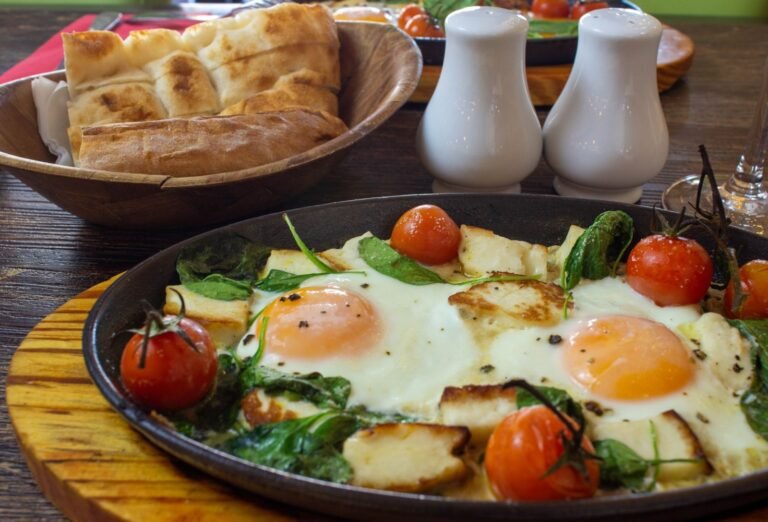
Mediterranean Eggs with Feta and Olives
A quick, protein-rich skillet scramble with creamy eggs, salty feta, Kalamata olives, blistered cherry tomatoes and wilted spinach.
Ingredients
Instructions
- Whisk the eggs with the water or milk, a pinch of salt and pepper until fully combined.
- Heat the olive oil in a 10-inch nonstick skillet over medium heat for about 1 minute.
- Add the cherry tomatoes cut side down and cook 2 to 3 minutes until blistered. Stir in the olives for 30 seconds.
- Add the spinach and stir 30 to 60 seconds until wilted. Push the vegetables to one side.
- Pour the eggs into the center and let them sit 20 seconds, then gently pull the edges toward the middle.
- Stir slowly for 2 to 3 minutes until the eggs are mostly set but still glossy. Remove from heat.
- Scatter the feta and oregano over the eggs and fold once or twice. Taste, adjust salt, and sprinkle with dill or parsley. Serve immediately.
Notes
- Keep the heat at medium-low to keep the eggs tender.
- Cook eggs to 160 degrees F if using a thermometer; leftovers should reach 165 degrees F when reheated.
- For a lighter version, use 3 whole eggs plus 4 egg whites and 2 oz feta.
Nutrition per serving
- Calories
- 473
- Protein
- 30.1g
- Carbs
- 8.6g
- Fat
- 35.5g
- Saturated fat
- 13.7g
- Fiber
- 2.2g
- Sugar
- 2.6g
- Sodium
- 983mg
- Cholesterol
- 608mg