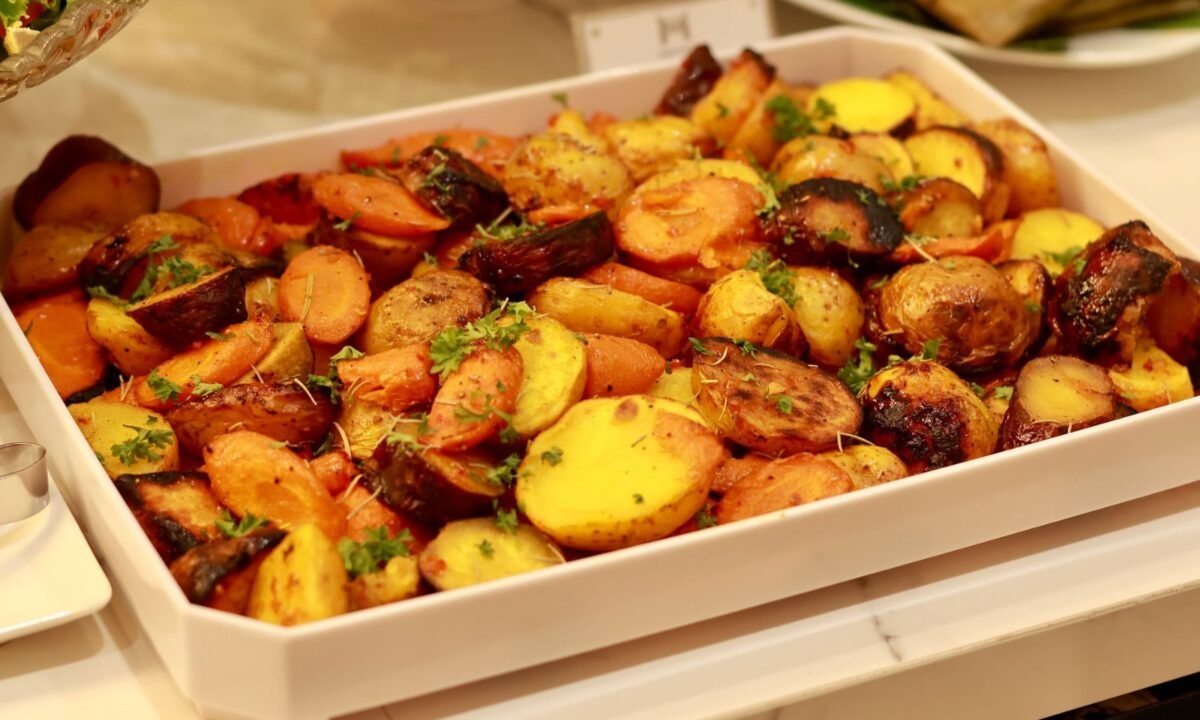
Roasted root vegetables are one of the most reliable side dishes you can make on a weeknight. A hot oven concentrates the natural sugars in carrots, parsnips, beets, and sweet potatoes, and the edges turn golden while the centers stay soft and creamy. Very little hands-on work is involved: you chop, toss with oil and seasoning, and let the oven do the rest.
This version uses a mix of carrots, parsnips, red potatoes, and a red onion, seasoned with olive oil, kosher salt, black pepper, thyme, and a little garlic. It makes six generous side servings in about 45 minutes total, and it works alongside roasted chicken, baked fish, or a grain bowl.
The method below focuses on cutting the vegetables to a uniform size, spacing them out on the pan, and roasting at 425°F so they brown instead of steaming. Those three details make the biggest difference in the final texture.
Full recipe below
Roasted Root Vegetables
Why this recipe works
The reason roasted root vegetables taste so good is the Maillard reaction and caramelization. When the surface of a vegetable reaches a high enough temperature in a dry, hot oven, its sugars and amino acids brown and build deeper, nutty flavors. Root vegetables are especially well suited to this because they contain plenty of natural sugar, and carrots and parsnips become noticeably sweeter as they cook.
This recipe is also forgiving. Denser vegetables like potatoes, carrots, and parsnips cook at roughly the same rate when cut into similar sizes, so you can roast them together on one sheet pan without juggling timing. A 425°F oven gives you a crisp exterior in about 35 to 40 minutes, and a quick toss halfway through ensures even browning.
Finally, the dish is naturally nutritious. Carrots are a strong source of beta-carotene, and sweet potatoes and parsnips add fiber and potassium. You can look up the exact values for any vegetable in the USDA FoodData Central database if you want to track them.
Ingredients you need, and how to choose them
- 1 lb carrots (about 4 medium), peeled and cut into 1-inch chunks. Choose firm carrots with no cracks; thicker ends cut into larger pieces so they cook at the same pace as the thinner tips.
- 1 lb parsnips (about 3 medium), peeled and cut into 1-inch chunks. Pick smaller parsnips, which are sweeter and less woody than oversized ones.
- 1 lb red potatoes (about 4 small), scrubbed and cut into 1-inch cubes. Red or Yukon Gold potatoes hold their shape better than starchy russets.
- 1 medium red onion, cut into 1-inch wedges. Leave the root end attached so the wedges hold together.
- 3 tbsp extra-virgin olive oil. A moderate-flavor oil works best here; save your finest bottle for finishing.
- 1 tsp kosher salt and 1/2 tsp black pepper, freshly ground. Use less salt if you plan to serve the dish with salty meat or cheese.
- 1 tbsp fresh thyme leaves, or 1 tsp dried thyme. Rosemary also works well; use about 1 tsp chopped fresh.
- 3 cloves garlic, smashed and left in the skin. Roasting in the skin keeps the garlic from burning and makes it sweet and spreadable.
- 1 tbsp balsamic vinegar or fresh lemon juice, added after roasting. This brightens the sweetness and balances the richness of the oil.
How to make roasted root vegetables step by step
- Heat the oven to 425°F and position one rack in the center. Place a large, rimmed baking sheet in the oven while it preheats so the vegetables sizzle when they land on it.
- Peel the carrots and parsnips, then cut them into 1-inch chunks. Cut the potatoes into 1-inch cubes. Keeping the pieces roughly the same size is the single most important step for even cooking.
- In a large bowl, toss the carrots, parsnips, potatoes, and onion with the olive oil, salt, pepper, and thyme until every piece is lightly coated. Add the smashed garlic cloves.
- Carefully remove the hot sheet pan and spread the vegetables in a single layer. Leave a little space between the pieces. If they are crowded, use two pans; crowding traps steam and prevents browning.
- Roast for 20 minutes, then remove the pan and flip or stir the vegetables with a spatula so the browned sides face up.
- Return the pan to the oven and roast for another 15 to 20 minutes, until the vegetables are fork-tender and the edges are deep golden brown. Test the thickest piece of potato with a fork; it should slide in with no resistance.
- Remove from the oven and drizzle with balsamic vinegar or lemon juice. Taste and add a pinch more salt if needed. Serve hot, squeezing the softened garlic from its skin onto the vegetables.

Storage and reheating your leftovers
Let the roasted vegetables cool to room temperature for no more than about 1 hour, then transfer them to an airtight container. Refrigerate promptly. The FoodSafety.gov cold food storage chart recommends refrigerating cooked foods within two hours, and leftovers keep for 3 to 5 days in the refrigerator.
To reheat, spread the vegetables on a sheet pan and warm them in a 400°F oven for 10 to 12 minutes, until heated through and crisp at the edges. Microwaving works in a pinch, but the texture softens and the edges lose their crunch. Reheat until the food is steaming hot throughout.
For longer storage, cool the vegetables completely and freeze them in a single layer before bagging. Frozen roasted vegetables keep well for about 2 to 3 months, though the potatoes will be slightly softer after thawing. Reheat from frozen on a baking sheet at 400°F for about 15 minutes.
Common mistakes to avoid
- Cutting pieces unevenly. Small bits burn while large chunks stay raw. Aim for consistent 1-inch pieces across all the vegetables.
- Overcrowding the pan. Piled-up vegetables steam instead of roasting, leaving them pale and soggy. Use two sheets if your pan cannot hold everything in a single layer.
- Starting in a cold oven or using too low a temperature. Roasting at 375°F or below takes much longer and produces less browning. Preheat fully and use 425°F.
- Adding too little oil. Vegetables need enough fat to conduct heat and crisp up. Three tablespoons for about 3 pounds of produce is a good baseline.
- Skipping the flip. Vegetables on the bottom of the pan brown before the tops do. Stir them once halfway through for even color.
- Adding delicate herbs too early. Fresh parsley or chives can scorch in a hot oven; add them after roasting instead.
Swaps and variations, including a lighter option
- Sweet potato and beet: Replace the parsnips with two medium sweet potatoes and one medium beet, peeled and cut to the same 1-inch size. Beets bleed color, so roast them on a separate pan if you want other vegetables to stay bright.
- Herb and maple: Swap the thyme for 1 tsp dried rosemary and drizzle with 1 tbsp pure maple syrup in the last 10 minutes of roasting for a sweeter finish.
- Spiced: Toss with 1 tsp smoked paprika and 1/2 tsp ground cumin before roasting. This pairs well with grilled chicken or chickpeas.
- Lighter option: Cut the olive oil to 1 1/2 tbsp and use a light spray of cooking oil to coat the pan. Replace the potatoes with extra carrots and cauliflower florets, which lowers the calories and carbohydrates while keeping plenty of roasted flavor. Balsamic and lemon finishes add flavor without any extra fat.
- Make-ahead: Chop the vegetables up to 24 hours ahead and store them in cold water in the refrigerator. Drain and dry them thoroughly before tossing with oil and roasting, or the pieces will steam.

What to serve with roasted root vegetables
These vegetables fit into almost any dinner. Serve them alongside roast chicken thighs or a whole roasted chicken, and make sure the poultry reaches a safe internal temperature of 165°F as measured with a food thermometer, following the guidance from FoodSafety.gov on safe minimum internal temperatures.
For a lighter plate, pair them with baked salmon or cod and a big green salad. If you are building a fuller meal, add a protein and a fresh side such as a broccoli salad with Greek yogurt dressing for crunch and contrast. Roasted vegetables also go well in grain bowls, over a bed of quinoa with a spoonful of yogurt sauce, or tossed into a simple cucumber tomato salad on the side for a fresh, bright plate.
For guidance on balancing your plate with vegetables, grains, and protein, the USDA MyPlate guide is a practical reference.
Frequently asked questions
What is the best temperature for roasted root vegetables?
Roast roasted root vegetables at 425°F. This high heat browns the edges and caramelizes the natural sugars while keeping the centers tender. Lower temperatures like 375°F take longer and tend to steam the vegetables rather than brown them.
How long do roasted root vegetables take to cook?
Most roasted root vegetables take 35 to 40 minutes at 425°F when cut into 1-inch pieces. Check for doneness with a fork; the thickest pieces should be fork-tender with golden, crisp edges.
Which root vegetables are best for roasting?
Carrots, parsnips, red potatoes, sweet potatoes, turnips, and beets all roast well. Choose a mix with similar density so they finish cooking at the same time, or cut denser vegetables into smaller pieces.
Can I make roasted root vegetables ahead of time?
Yes. Roast them fully, cool, and refrigerate in an airtight container for 3 to 5 days. Reheat in a 400°F oven for 10 to 12 minutes to bring back crisp edges.
Why are my roasted root vegetables soggy?
Soggy roasted root vegetables usually come from overcrowding the pan, cutting pieces too large, or not preheating the oven. Use a single layer on a hot sheet pan and a full 425°F oven for the best browning.
Roasted Root Vegetables
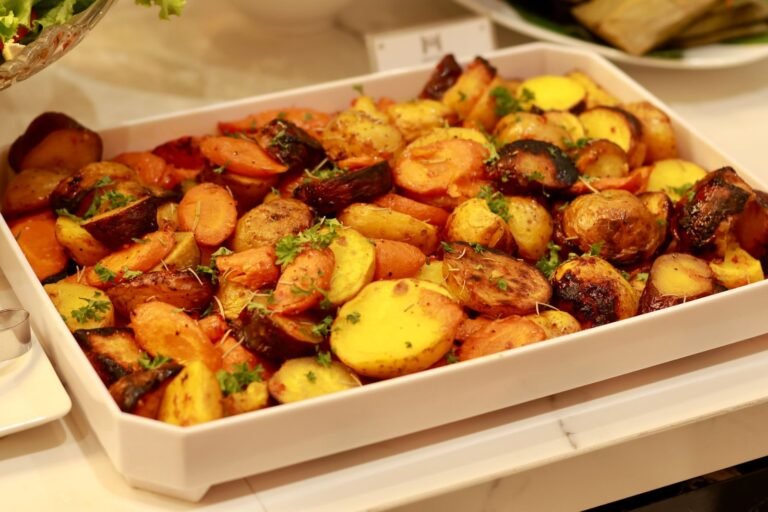
Carrots, parsnips, potatoes, and red onion roasted at high heat with olive oil, thyme, and garlic until caramelized and tender.
Ingredients
Instructions
- Heat the oven to 425°F and place a large rimmed baking sheet inside to preheat.
- Peel the carrots and parsnips and cut into 1-inch chunks. Cut the potatoes into 1-inch cubes.
- Toss the vegetables and onion with olive oil, salt, pepper, and thyme. Add the smashed garlic.
- Spread on the hot sheet pan in a single layer, leaving space between pieces.
- Roast 20 minutes, then stir or flip the vegetables.
- Roast another 15 to 20 minutes until fork-tender with deep golden edges.
- Drizzle with balsamic vinegar, adjust salt, and serve hot.
Notes
- Cut all vegetables to a similar 1-inch size for even cooking.
- Leftovers reheat at 400°F for 10 to 12 minutes.
Nutrition per serving
- Calories
- 222
- Protein
- 3.4g
- Carbs
- 36.7g
- Fat
- 7.4g
- Saturated fat
- 1g
- Fiber
- 8g
- Sugar
- 13.9g
- Sodium
- 455mg
- Cholesterol
- 0mg