Part of our guide: How to Make a Meal Plan for the Week (in About 30 Minutes)
Key takeaways
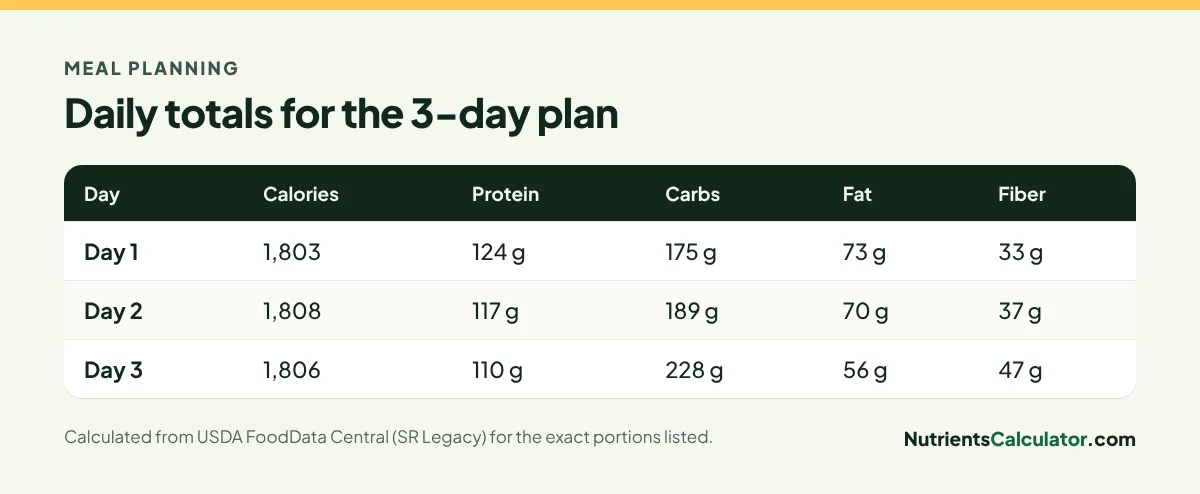
- This 1800 calorie meal plan gives you three complete days of everyday meals, each within 10 calories of 1,800.
- Every day has 110–124 g of protein and 33–47 g of fiber for fullness.
- Meals are interchangeable: swap any breakfast, lunch or dinner between days.
- Calories are calculated from USDA data for the exact portions listed.
A calorie target is easier to follow when you can see what it looks like on a plate. This 1,800-calorie meal plan turns the number into three full days of normal food: Greek yogurt bowls, chicken and rice, tuna pitas, salmon with potatoes, lentil salads and spaghetti. Every portion is listed, and every total is calculated from USDA FoodData Central, so you know the numbers add up.
Is a 1800 calorie meal plan right for you?
1,800 calories is a moderate weight-loss target for many adults: for example, a moderately active woman of average height, or a smaller or less active man. It’s too low for some people and maintenance for others. Before you start, check your own number in how many calories to lose weight, or let our calculator work it out.
Etekcity Food Scale
0.1g accuracy — the perfect companion for exact portions.
Day 1 (1,803 calories, 124 g protein)
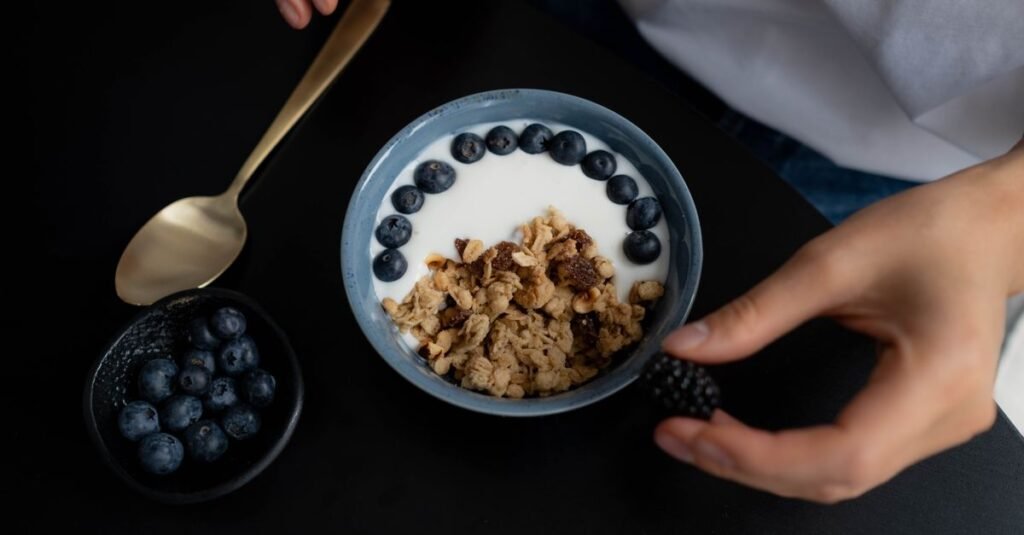
Breakfast (about 335 calories): 1 cup (8 oz) plain nonfat Greek yogurt, ½ cup blueberries, ¼ cup rolled oats, about 12 almonds.
Lunch (about 515): 4 oz roasted chicken breast, ½ cup brown rice, ½ cup black beans, ½ cup chopped tomatoes, ¼ avocado.
Snack (about 285): 1 medium apple with 2 tbsp peanut butter.
Dinner (about 545): 4 oz salmon, 1 cup boiled potatoes, 1 cup broccoli, 1 tbsp olive oil for cooking and drizzling.
Evening (about 120): 1 cup 2% milk.
Day 2 (1,808 calories, 117 g protein)

Breakfast (about 410): 2 scrambled eggs, 2 slices whole-wheat toast, ½ cup cooked spinach, 1 cup strawberries.
Lunch (about 425): 4 oz canned light tuna, 1 large whole-wheat pita, 2 tbsp hummus, ¼ avocado, 1 cup cucumber slices, ½ cup tomatoes.
Snack (about 150): ½ cup 2% cottage cheese with a peach.
Dinner (about 565): 1 roasted chicken thigh (about 4 oz cooked, skinless), 1 cup cooked quinoa, 1 cup roasted red pepper, 2 tsp olive oil.
Evening (about 255): 3 cups air-popped popcorn and 1 oz almonds.
Day 3 (1,806 calories, 110 g protein)

Breakfast (about 525): ½ cup rolled oats cooked in 1 cup 2% milk, topped with a sliced banana and 1 tbsp chia seeds; 1 hard-boiled egg on the side.
Lunch (about 460): Warm lentil salad: 1 cup cooked lentils, 2 cups baby spinach, 1 oz feta, ½ tbsp olive oil and lemon; 1 slice whole-wheat bread.
Snack (about 145): 6 oz plain nonfat Greek yogurt with ½ cup blueberries.
Dinner (about 585): 4 oz cooked 85% lean beef in ½ cup marinara over 1 cup whole-wheat spaghetti, with ½ cup broccoli.
Evening (about 95): 1 medium apple.
Why these meals work
- Protein at every meal. Each main meal has 23–47 g of protein, which helps with fullness and protects muscle during weight loss. See how much protein you need a day.
- Plenty of fiber. All three days exceed the 25–28 g most adults need, thanks to beans, lentils, oats, fruit and vegetables.
- Room for fat. About 28–36% of calories come from fat, mostly olive oil, nuts, avocado and fish.
- Nothing exotic. Every ingredient is available in a normal supermarket.
If you’re curious how the macros split, our guide to counting macros explains how to read these numbers.
Grocery list for all three days
Produce: blueberries (2 cups), strawberries (1 cup), 3 apples, 1 banana, 1 peach, 1 avocado, tomatoes (1 lb), 1 cucumber, 1 red pepper, broccoli (1 large head or 1 lb frozen), baby spinach (5 oz bag), potatoes (1 lb), lemons.
Protein: chicken breast (4 oz), 1 chicken thigh, salmon fillet (4 oz), canned light tuna (1 can), 85% lean ground beef (about 5 oz raw), eggs (3), dry lentils (½ cup) or 1 can.
Dairy: plain nonfat Greek yogurt (32 oz tub), 2% milk (½ gallon), 2% cottage cheese (small tub), feta (small block).
Pantry: rolled oats, brown rice, quinoa, whole-wheat spaghetti, whole-wheat bread, 1 large whole-wheat pita, black beans (1 can), marinara sauce, hummus, peanut butter, almonds, chia seeds, popcorn kernels, olive oil.
Easy swaps (same calories, roughly)
- Chicken breast ↔ turkey breast or firm tofu (add 1 tsp oil if using tofu at lunch).
- Salmon ↔ trout, or canned salmon for a cheaper option.
- Brown rice ↔ quinoa ↔ whole-wheat couscous.
- Apple + peanut butter ↔ a banana + 1 oz almonds.
- Greek yogurt ↔ skyr (similar protein).
Tips for following the plan
- Cook once, eat twice. Make extra chicken and rice on Day 1 for lunches later in the week. Eat cooked leftovers within 3–4 days (USDA FSIS).
- Measure the calorie-dense items: oil, nut butter, nuts and cheese.
- Keep drinks calorie-free: water, sparkling water, tea and black coffee.
- Repeat days you like. Three days on rotation is plenty for most people.
Want to build your own version? Our guide to making a meal plan shows the method, and the free planner below totals calories for you.
The bottom line
This 1,800-calorie meal plan shows that a moderate calorie target can still mean three proper meals, a snack and something in the evening. Each day delivers 110–124 g of protein and at least 33 g of fiber from ordinary groceries. Use it as written, swap meals between days, or treat it as a template for your own plan.
Frequently asked questions
Is 1,800 calories a day good for weight loss?
For many women of average height who are moderately active, and for many smaller or less active men, 1,800 calories is a moderate deficit. Whether it suits you depends on your maintenance calories; work those out first.
How much protein should a 1,800-calorie meal plan have?
Around 100–135 g is a practical range for most adults on 1,800 calories, which is 22–30% of calories. Each day in this plan provides 110–124 g.
Can I swap meals between days?
Yes. Every breakfast is about 330–525 calories, lunches 425–520, and dinners 545–585, so you can mix and match within a few dozen calories.
Do I need to weigh my food to follow this plan?
Weighing gives the most accurate result, but cups, spoons and hand portions get you close. Measure oils and nut butters, since small differences there change calories the most.
Sources
- USDA FoodData Central
- National Academies: Dietary Reference Intakes for macronutrients
- USDA FSIS: Leftovers and Food Safety
This article is for general information and isn’t medical advice. Talk to your doctor or a registered dietitian about your own needs, especially if you have a health condition, are pregnant or take medication.