
Mushrooms are one of the most nutrient-dense, low-calorie foods available, making them a staple for anyone tracking calories or managing their weight. Whether you’re sautéing them, grilling them whole, or adding them to soups, mushrooms fit seamlessly into almost any diet—from weight loss to muscle building to diabetes management. They’re eaten across cuisines worldwide, from Italian risottos to Asian stir-fries to American burgers.
But how many calories are actually in mushrooms? And does cooking method change their nutritional value? This guide covers the exact calorie counts for different mushroom varieties, their complete nutrition profile, and practical strategies for eating them without undermining your health goals.
Calories in Mushrooms (Quick Answer)
Raw white button mushrooms contain very few calories, making them an ideal food for calorie-conscious eaters.
- Raw white button mushrooms: 3 calories per mushroom (medium), 15 calories per cup (70g)
- Cooked white button mushrooms: 7 calories per cup (156g)
- Raw cremini mushrooms: 19 calories per cup (86g)
- Cooked portobello mushrooms: 35 calories per cup (156g)
Calorie counts vary slightly by variety, size, and whether they’re raw or cooked. Cooked mushrooms are denser and heavier, so they contain more calories per serving.
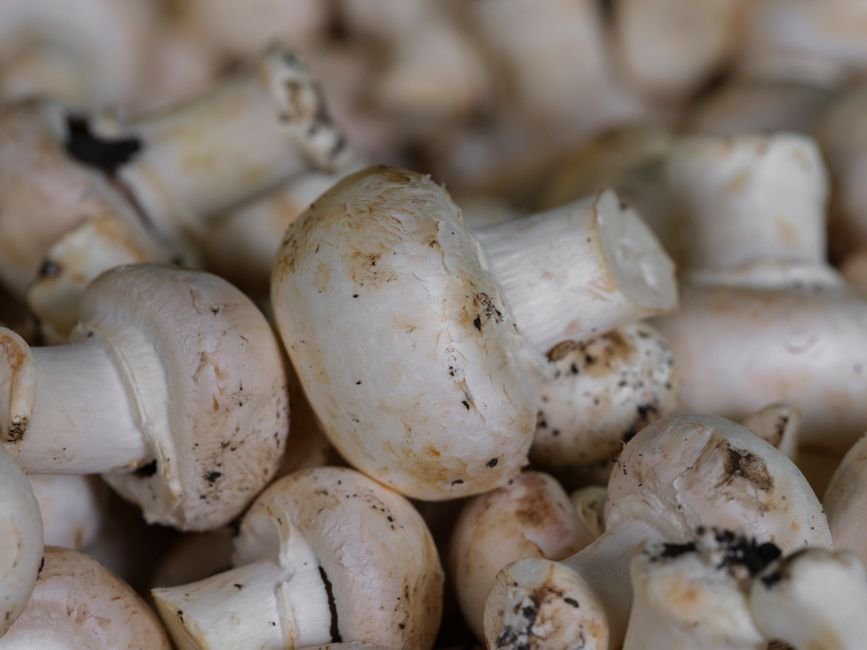
Full Nutrition Facts for 1 Cup Raw White Button Mushrooms (70g)
A serving of raw white button mushrooms is exceptionally low in calories while delivering beneficial vitamins, minerals, and compounds that support immune function and bone health.
| Nutrient | Amount | % Daily Value |
|---|---|---|
| Calories | 15 | 1% |
| Total Fat | 0.2g | <1% |
| Saturated Fat | 0.03g | <1% |
| Cholesterol | 0mg | 0% |
| Sodium | 2mg | <1% |
| Total Carbohydrate | 2.3g | 1% |
| Dietary Fiber | 0.7g | 3% |
| Total Sugars | 0.3g | |
| Protein | 2.2g | 4% |
| Vitamin D | 5 IU | 1% |
| Potassium | 305mg | 9% |
| Selenium | 9.3mcg | 13% |
*Percent Daily Values are based on a 2,000-calorie diet. Source: USDA FoodData Central.
Key insight: Mushrooms are exceptionally low in sodium while delivering meaningful potassium and selenium—nutrients most people don’t get enough of. The selenium content is particularly notable, as it acts as an antioxidant and supports thyroid function. Raw mushrooms also contain ergothioneine, a unique antioxidant found almost nowhere else in food, which may help protect brain health.

Etekcity Food Scale
0.1g accuracy — the perfect companion for exact portions.
Raw Mushrooms vs. Cooked Mushrooms
Raw Mushrooms
- More vitamin C and B vitamins intact; cooking degrades some heat-sensitive nutrients
- Lower in calories per serving (15 calories per cup vs. 7 for cooked, due to water loss in cooking making cooked versions lighter)
- Crunchy texture, often used in salads and raw vegetable platters
Cooked Mushrooms
- Enhanced bioavailability of certain nutrients like ergothioneine; cooking breaks down cell walls, making compounds more accessible
- Concentrated umami flavor; cooking removes water, intensifying taste and making them satisfy more intensely
- Softer texture that integrates better into soups, stir-fries, and pasta dishes
Practical takeaway: Both raw and cooked mushrooms offer benefits, and neither choice is “wrong.” Raw mushrooms work best in salads for crunch and to preserve heat-sensitive vitamins; cooked mushrooms are ideal for main dishes and maximize the absorption of fat-soluble compounds (pair them with a bit of oil or butter). Alternating between both preparations gives you the best of both worlds.
Is Mushroom Good for Weight Loss?
Yes, mushrooms are excellent for weight loss. At 15 calories per cup raw, they provide volume and fiber with virtually no caloric cost. The fiber and protein help create satiety, reducing overall calorie intake. They also contain compounds that may support metabolic health, and their umami flavor makes them satisfying even in small quantities, which naturally curbs the urge to overeat.
Tips to Eat Mushrooms Without Gaining Weight:
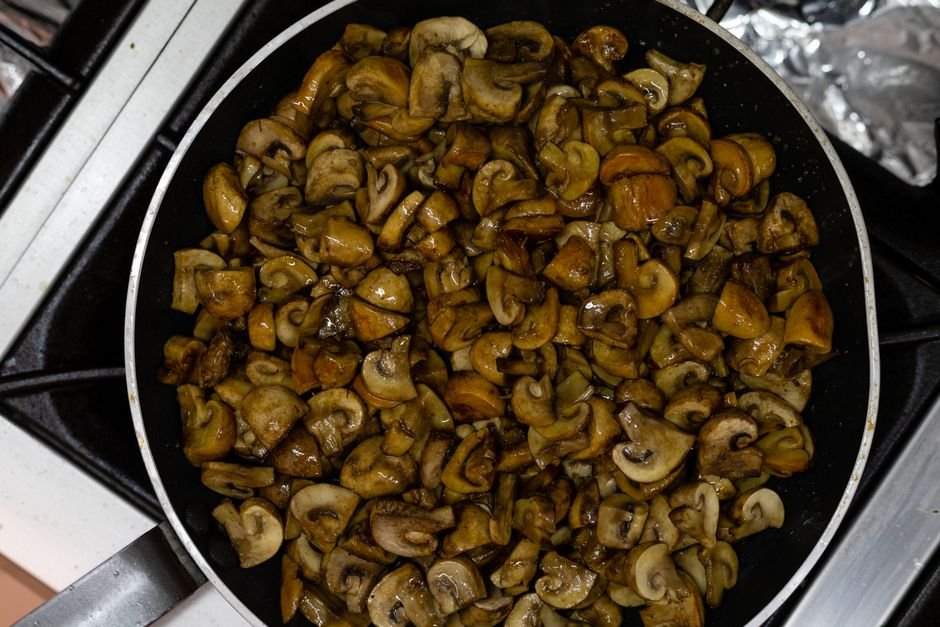
- Watch the oil: Mushrooms absorb oil readily when cooked. Use a light hand with cooking fat, or spray oil instead of pouring; aim for 1 teaspoon to 1 tablespoon per 2 cups of mushrooms.
- Skip creamy sauces: Avoid heavy cream-based mushroom dishes; instead, sauté in broth, tomato sauce, or use a squeeze of lemon and garlic.
- Pair with protein: Add mushrooms to lean meat, fish, or legume dishes to boost volume and fiber without many added calories.
- Use them as a meat substitute: In dishes like tacos or burgers, mushrooms can replace a portion of ground meat, cutting calories and fat while maintaining texture and umami satisfaction.
The key is preparation method, not the mushroom itself. Roasted, sautéed with minimal oil, grilled, or added to soups, mushrooms are one of the safest vegetables for weight loss. Even breaded and fried mushroom caps are far lighter than many alternatives if portion control is observed.
How Portion Size Affects Calories
Mushroom portions scale very linearly. One raw mushroom (medium) is roughly 3 calories, so doubling your serving doubles the calories—with negligible added fat or sugar. However, cooking method changes calorie density; cooked mushrooms are denser because water evaporates, so a cup of cooked mushrooms weighs less but is more concentrated nutritionally. Most people can eat large volumes of raw or lightly cooked mushrooms without concern.
Example:
- Small portion (1 cup raw): 15 calories, 2.2g protein, 0.7g fiber
- Large portion (3 cups raw): 45 calories, 6.6g protein, 2.1g fiber
Even tripling your portion adds only 30 calories—less than a single piece of bread—while delivering significant nutrients and satiety.
Best Way to Measure Mushrooms Accurately
Mushrooms are awkwardly shaped and vary greatly in size, making them tricky to portion by count alone. A medium mushroom isn’t standardized, and two people may have different ideas of “medium.” The most reliable approach is weight: use a kitchen scale. If you don’t have one, volume (cups) is the next best option, though you’ll get some variance. For a quick visual: one cup of raw mushroom pieces is roughly 70g and contains 15 calories.
Options:
- Kitchen scale (most accurate): Weigh to 70g for one cup raw mushrooms. Takes 10 seconds and removes guesswork.
- Measuring cup (good estimate): Fill a dry measuring cup level with mushroom pieces. Density varies slightly, but it’s reliable enough for home tracking.
- Visual estimation (quick but loose): One cup of loosely packed raw mushroom pieces is roughly 70g. Use your hand as reference: a fist-sized amount is close to 1 cup.
Calculate Your Exact Calorie Intake
If mushrooms are a regular part of your diet—sautéed in breakfast omelets, piled on burgers, or in stir-fries—tracking their calories matters only if you’re trying to hit a specific calorie goal. For most people, mushrooms are so low-calorie that they barely move the needle, but precision matters when every calorie counts in a strict deficit.
To see exactly how mushrooms and other foods fit into your daily nutrition, use the free AI nutrients calculator at https://nutrientscalculator.com/. Input any food and portion size, and get instant breakdowns of calories, macros, and micronutrients—no guessing, no generic numbers.
- Log any mushroom variety or cooking method and get exact nutrition instantly
- Track your full day’s intake to see how mushrooms fit into your goals
- Adjust portions in real time based on your daily targets
Common Mistakes When Eating Mushrooms
Even a healthy food like mushrooms can become a calorie trap if prepared carelessly. Here are the four biggest mistakes people make:
❌ Drowning mushrooms in oil or butter: A cup of sautéed mushrooms can jump from 35 calories to 200+ if cooked in excessive fat. Many restaurants use 2-3 tablespoons of butter per serving. Measure your cooking fat or use cooking spray instead.
❌ Assuming all “mushroom dishes” are low-calorie: Creamed mushrooms, mushroom risotto, and mushroom wellington are calorie-dense due to cream, cheese, and butter, not the mushrooms themselves. The mushroom is innocent; the preparation is the culprit.
❌ Overcooking mushrooms into mush: Overcooked mushrooms lose their firm texture and become soggy, making you eat more to feel satisfied. Cook them quickly over medium-high heat until tender but still have a slight firmness.
❌ Ignoring portion control on “free” foods: While mushrooms are low-calorie, eating a pound of them with olive oil and cheese can add up. Treat them as a vegetable, not a “free pass to unlimited eating.”
The solution to each is simple: weigh your oil, read ingredient lists, cook with proper technique, and measure portions. These mistakes are avoidable with a little awareness.
FAQ
How many calories are in 100g of mushrooms?
Raw white button mushrooms contain approximately 22 calories per 100g. Since a cup of raw mushrooms (70g) is 15 calories, 100g is about 21 calories. This makes mushrooms one of the lowest-calorie vegetables available.
Are mushrooms fattening?
No. Mushrooms themselves contain negligible fat (0.2g per cup raw). They only become fattening when prepared with large amounts of oil, butter, or cream. Grilled, steamed, or sautéed with minimal fat, they actively support weight loss due to their high fiber and low calories.
Do mushrooms have protein?
Yes, mushrooms contain a surprising amount of protein for a vegetable: 2.2g per cup of raw mushrooms. This makes them one of the highest-protein vegetables, especially when cooked (protein becomes more concentrated). Mushrooms are valuable in vegetarian and vegan diets for this reason.
What’s the best way to cook mushrooms to minimize calories?
Grilling, roasting at high heat with a light spray of oil, or sautéing in broth or lemon juice minimizes added fat. Avoid creaming, breading, or heavy oil-based preparations. A quick sauté in a non-stick pan with just 1 teaspoon of oil per 2 cups of mushrooms is ideal.
Conclusion
Mushrooms are a nutritional standout: virtually calorie-free, high in fiber and protein for a vegetable, rich in selenium and potassium, and containing unique compounds like ergothioneine that few other foods offer. Whether you’re managing your weight, building muscle, or simply eating well, mushrooms deserve a regular place on your plate. They’re versatile, affordable, and genuinely difficult to overeat in their natural form.
The key is preparation. Choose sautéing with minimal oil, grilling, roasting, or adding to soups and stir-fries over creamy or heavily buttered dishes. If you’re tracking calories closely, use a **reliable nutrition calculator** to log your specific preparation method—it takes seconds and ensures you’re not blindsided by hidden oil or cream.
