
Acai bowls have become a breakfast staple in health-conscious cafés and smoothie shops worldwide. Originally from the Brazilian Amazon, acai has gained popularity among fitness enthusiasts, weight-loss seekers, and anyone looking for a nutrient-dense, Instagram-worthy meal. The combination of antioxidant-rich acai with granola, nuts, and fruit makes it both visually appealing and satisfying.
But here’s the catch: acai bowls can range wildly in calories depending on what toppings you add. A simple acai base might be under 200 calories, while a fully loaded café version can exceed 600. This article will break down exactly how many calories are in an acai bowl, show you the full nutrition facts, and give you practical strategies to enjoy this popular food without derailing your health goals.
Calories in Acai Bowl (Quick Answer)
Acai bowls vary significantly in calorie content based on portion size and toppings.
- Plain acai bowl (100g acai, berries only): 180–220 calories
- Standard café acai bowl (with granola, honey, nuts): 450–550 calories
- Large deluxe acai bowl (extra granola, nut butter, coconut, dried fruit): 650–800 calories
Calories vary based on the acai-to-liquid ratio, topping choices, drizzle amounts, and brand. Always check the café menu or nutrition label for specifics.
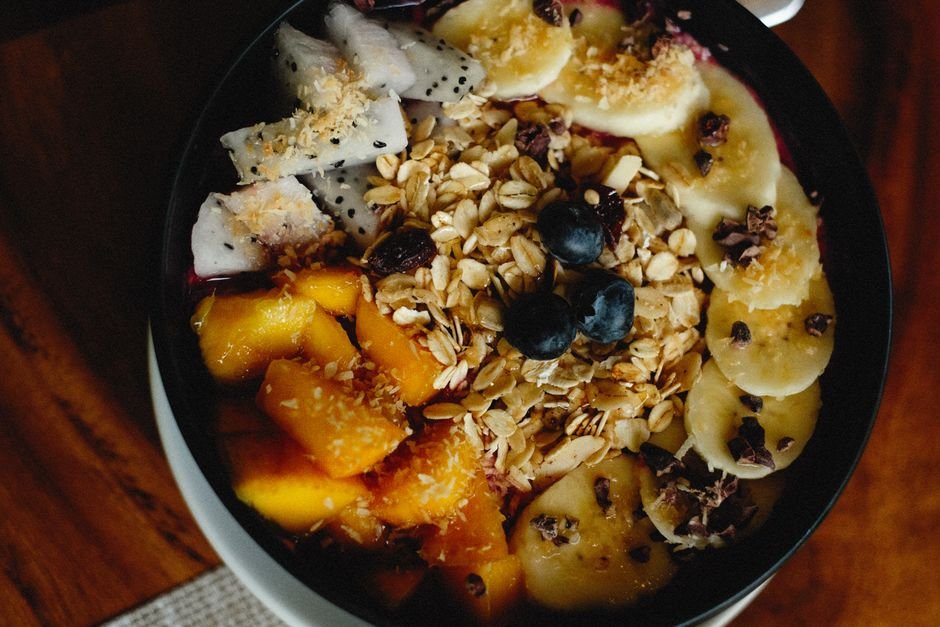
Full Nutrition Facts for a Standard 300g Acai Bowl
A typical medium acai bowl from a café includes 100g of acai puree, 100g of granola, mixed berries, honey drizzle, and sliced almonds. Here’s the complete breakdown:
| Nutrient | Amount | % Daily Value |
|---|---|---|
| Calories | 480 | 24% |
| Total Fat | 18g | 23% |
| Saturated Fat | 3.5g | 18% |
| Cholesterol | 0mg | 0% |
| Sodium | 140mg | 6% |
| Total Carbohydrate | 68g | 25% |
| Dietary Fiber | 8g | 29% |
| Total Sugars | 38g | — |
| Protein | 9g | 18% |
| Vitamin C | 12mg | 20% |
| Iron | 2.1mg | 12% |
| Potassium | 380mg | 8% |
*Percent Daily Values are based on a 2,000-calorie diet. Source: USDA FoodData Central.
Key insight: The sugar content in a typical acai bowl (38g) is often higher than expected, coming from the acai base, honey drizzle, and dried fruit toppings. While much of this is natural sugar from fruit, pairing the bowl with protein (Greek yogurt, nuts, seeds) and reducing the honey drizzle can help stabilize blood sugar and keep you fuller longer.
Etekcity Food Scale
0.1g accuracy — the perfect companion for exact portions.
Acai Bowl with Granola & Honey vs. Plain Acai with Berries
Acai Bowl with Granola, Honey & Nuts (Standard Café Version)
- Typically 480–550 calories per serving
- Contains added sugars from honey, granola, and dried fruit
- Higher in fat and calories, but more satisfying and longer-lasting energy
Plain Acai Bowl with Fresh Berries Only
- Around 180–220 calories per 100g acai serving
- Much lower sugar content, primarily from the acai and fresh fruit
- Less satiating on its own; many people feel hungry within 1–2 hours
Practical takeaway: A plain acai bowl is lower in calories but less balanced nutritionally. Add a modest amount of granola (¼ cup instead of ½ cup), choose unsweetened granola when possible, skip or reduce the honey, and include protein-rich toppings like raw almonds, Greek yogurt, or hemp seeds. This approach keeps you closer to 300–350 calories while maintaining fullness and stable energy.
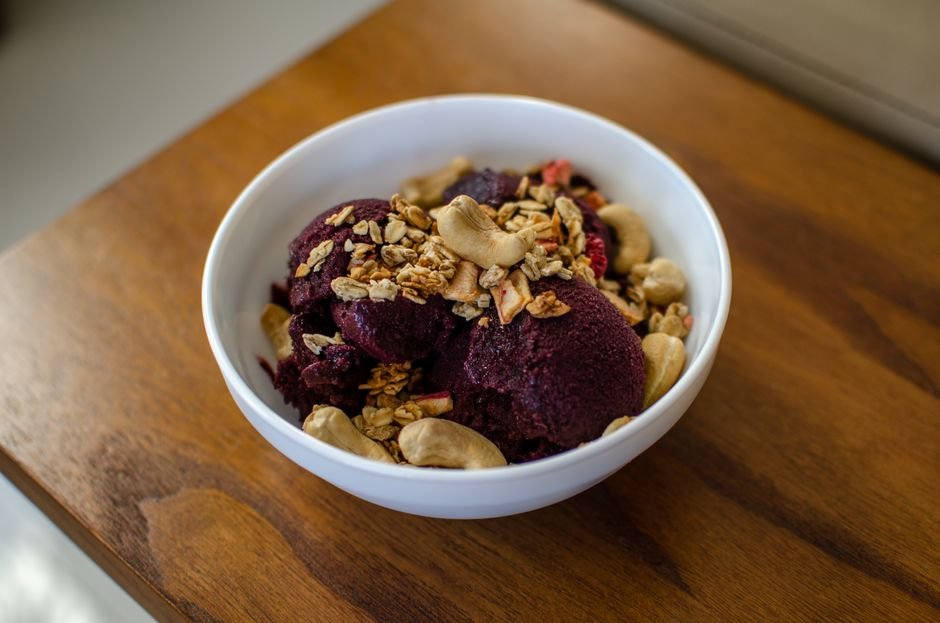
Is Acai Bowl Good for Weight Loss?
Acai bowls can fit into a weight-loss diet, but portion control and topping choices are critical. A plain acai bowl with fruit and modest toppings (under 300 calories) is nutrient-dense and can work as a breakfast. However, a fully loaded café acai bowl at 600+ calories may be too much for a single meal if you’re in a calorie deficit. The key is choosing what you add and being honest about portions.
Tips to Eat Acai Bowl Without Gaining Weight:
- Skip or minimize the honey drizzle. It adds 60–100 calories and 15–25g of sugar with minimal satiety benefit.
- Use granola sparingly. Measure out ¼ cup (about 2 tablespoons) instead of a full handful; this saves 100–150 calories.
- Add protein and fat. Mix in Greek yogurt, raw almonds, or chia seeds to increase protein and fiber, which keeps you full longer.
- Choose a smaller bowl size. Order a small or kids’ size at the café, or ask for a light acai layer and extra fruit instead.
Acai bowls work best for weight loss when treated as a balanced breakfast, not a dessert. Pair it with a black coffee or herbal tea, and don’t snack again until lunch if it includes sufficient protein and fiber.
How Portion Size Affects Calories
Acai bowl portion sizes vary dramatically between home-made and café versions. Most cafés serve 100g of acai puree, but some health-focused shops use 60g, while indulgent spots may use 150g. Topping amounts are equally inconsistent—a light sprinkle of granola versus a generous handful can mean the difference between 300 and 500 calories. Understanding these differences helps you make informed choices.
Example:
- Small bowl (60g acai + light toppings): ~250 calories — great for a light breakfast or if you’re in a strict calorie deficit
- Large bowl (150g acai + generous granola, honey, nut butter): ~700 calories — equivalent to a full lunch, better for muscle building or higher activity levels
For most people aiming for weight loss or general health, a medium bowl (100g acai, measured toppings) at 350–400 calories is the sweet spot.
Best Way to Measure Acai Bowl Accurately
If you’re tracking calories, you need to measure your acai bowl components accurately. The acai base is the foundation, but toppings add up quickly and are often under-estimated. A kitchen scale is your best friend here—visual estimates of granola, nuts, and honey can easily be off by 50–100 calories.
Options:
- Use a kitchen scale: Weigh each topping (granola, honey, nuts, seeds) for precision. Record the total weight of the bowl and cross-reference a nutrition database.
- Ask the café: Many health-focused smoothie shops provide nutrition information per serving size. Request a list of ingredients and portions.
- Use a food-tracking app: Enter “acai bowl” and the toppings separately (100g acai, 30g granola, 1 tbsp honey, etc.) to get an accurate calorie total.
Calculate Your Exact Calorie Intake
Manually calculating the calories in your acai bowl—tracking acai weight, granola portions, honey drizzles, and nut toppings—takes time and is easy to get wrong. If you’re serious about understanding the nutritional impact of your breakfast, you need a faster, more accurate method.
Try our free AI nutrients calculator, which lets you input your exact ingredients and portion sizes to get instant calorie, macro, and micronutrient breakdowns. Simply select acai, enter the weight, add your toppings, and you’ll see the complete nutrition profile in seconds.
- See total calories, protein, carbs, and fats instantly — no manual math or guessing
- Track your breakfast macros accurately — useful if you’re following a specific diet (keto, high-protein, etc.)
- Compare different acai bowl combinations — find the highest-satiety, lowest-calorie option that works for you
Use the calculator now to get your personalized nutrition breakdown.
Common Mistakes When Eating Acai Bowl
Even when you choose acai as a healthy breakfast option, small mistakes can turn it into a high-calorie, sugar-heavy meal that works against your goals. Here are the most common pitfalls:
❌ Underestimating honey. A typical honey drizzle looks small but contains 60–100 calories and 15–25g of sugar. Many people mentally count it as “just a drizzle” and skip tracking it entirely.
❌ Adding nut butter without measuring. A tablespoon of almond or peanut butter is easy to misjudge visually. Two tablespoons instead of one adds an extra 90–100 calories and 8–9g of fat.
❌ Choosing high-sugar granola varieties. Not all granola is created equal. Regular granola often has added sugars (8–12g per ¼ cup), while unsweetened versions have half that. Check labels—or better yet, measure oats with cinnamon instead.
❌ Eating an acai bowl and snacking 1–2 hours later. Without adequate protein (under 10g), many people feel hungry within 90 minutes and reach for a second snack, doubling the calorie intake.
Avoid these traps by measuring toppings, choosing lower-sugar granola, adding protein, and treating your acai bowl as a complete breakfast, not a light starter.
FAQ
How many calories are in 100g of acai bowl?
A 100g portion of pure acai puree (without toppings) contains approximately 60–80 calories. However, most acai served in bowls is a blend of acai and liquid (coconut milk or juice), which brings a standard 100g serving to around 100–120 calories. Add toppings and you’ll reach 180–220 calories for a 100g acai base alone.
Is acai bowl fattening?
An acai bowl isn’t inherently fattening—acai itself is nutrient-dense and relatively low-calorie. The issue is the toppings: honey, granola, nut butters, and dried fruit add up quickly, easily pushing a bowl to 600+ calories. A mindfully prepared acai bowl with measured toppings fits into a healthy diet; a carelessly assembled café version can be as calorie-dense as a dessert.
Can I eat an acai bowl every day?
Yes, but it depends on your calorie and sugar goals. A modest, home-made acai bowl (300–350 calories, under 25g sugar, with added protein) is fine daily. A full café version with heavy toppings (600+ calories, 40g+ sugar) should be limited to 2–3 times per week or paired with a longer fasting window before or after.
What’s the best way to add protein to an acai bowl?
Greek yogurt (½ cup = 10–15g protein, ~60 calories) is the easiest option; it also adds creaminess. Other high-protein toppings include raw almonds or walnuts (6–8g protein per ounce), hemp seeds (3g per tablespoon), chia seeds (2.5g per tablespoon), and plain protein powder (20–25g per scoop). Mix two of these for a well-rounded bowl.
Conclusion
An acai bowl can be a nutritious, satisfying breakfast—or a sugar-heavy indulgence—depending on how you build it. A standard café version with granola and honey typically ranges from 450–550 calories, with significant sugar content that can spike blood glucose without adequate protein. The acai itself is antioxidant-rich and relatively low-calorie; the problem is almost always the toppings. By measuring granola, minimizing honey, adding protein, and choosing unsweetened varieties, you can enjoy acai bowls regularly as part of a balanced diet.
The most reliable way to understand the nutritional impact of your breakfast is to measure your components and use a nutrition tracker or calculator. Whether you’re building a bowl at home or ordering from a café, being intentional about portion sizes and ingredients ensures your acai bowl supports your health goals. Use a **trusted nutrients calculator** to get accurate macros and micros in seconds, making informed food choices effortless.
