
How Much Peanut Butter Can You Eat on a 2000-calorie diet without going over your daily calorie target? Peanut butter is a calorie-dense food, so even a couple of tablespoons can add nearly 200 calories to your day. At the same time, it provides protein, healthy fats, and can be surprisingly filling when included in the right portions.
Anyone trying to stick to a 2000-calorie diet quickly learns that peanut butter is a calorie-dense trap. Two tablespoons—about the size of a golf ball—contains 190 calories and 16 grams of fat, making it easy to blow through your budget with just a few extra spoonfuls. Yet peanut butter is also genuinely filling and delivers protein and healthy fats that keep hunger at bay. The real question isn’t whether to eat it at all, but how much you can safely include without sacrificing the calorie discipline that actually drives weight loss.
This article walks you through the exact math: how many tablespoons of peanut butter fit into a 2000-calorie day, which meals make the most sense for including it, and the prep tricks that let you eat peanut butter regularly without blowing your goals. The verdict is clear: 2 to 3 tablespoons per day is the realistic sweet spot for most people, but the right choice depends on your other meals and your hunger patterns.
Quick Answer
On a 2000-calorie diet, you can eat 2 to 3 tablespoons of peanut butter per day and stay on track—that’s roughly 190 to 285 calories. This works best as a single serving (not split across meals), paired with high-fiber carbs like whole-grain bread or oatmeal to amplify satiety. However, if you’re eating a higher-protein diet overall or have less room for fat calories, stick to 2 tablespoons; if you’re more active or prioritize satiety over other goals, 3 tablespoons is reasonable.
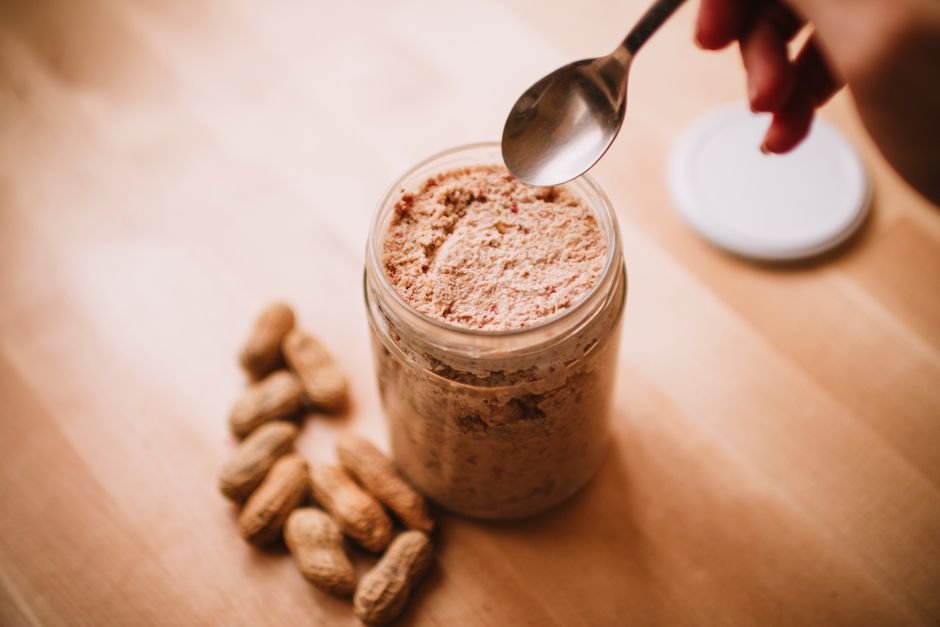
Peanut Butter Nutrition on a 2000-Calorie Budget
Peanut Butter (2 Tablespoon Standard Serving)
- Calories: 190 per serving
- Protein: 8 grams—good enough to blunt hunger for 3–4 hours
- Total Fat: 16 grams (mostly unsaturated, heart-healthy)
- Fiber: 2 grams—modest but helpful when paired with whole grains
- Carbs: 7 grams—mostly from sugar and starch, minimal added sugar in natural brands
How This Fits Into a 2000-Calorie Day
- 9.5% of daily calories (one 2-tablespoon serving) leaves 1810 calories for other meals
- 14% of daily calories (one 3-tablespoon serving) leaves 1715 calories for other meals
- Satiety trade-off: Peanut butter’s high fat and protein content makes it disproportionately filling; 190 calories of peanut butter suppresses appetite better than 190 calories of crackers or granola
- Daily fat impact: 2 tablespoons supplies 16 grams of fat—roughly one-third of a typical 50-gram daily fat allowance on a 2000-calorie diet
| Metric | 2 Tablespoons (1 serving) | 3 Tablespoons (1.5 servings) | 4 Tablespoons (stretched limit) |
|---|---|---|---|
| Calories | 190 | 285 | 380 |
| Protein (g) | 8 | 12 | 16 |
| Total Fat (g) | 16 | 24 | 32 |
| Fiber (g) | 2 | 3 | 4 |
| % of 2000-cal budget | 9.5% | 14.3% | 19% |

Etekcity Food Scale
0.1g accuracy — the perfect companion for exact portions.
Which Amount Is Right for Your 2000-Calorie Diet?
2 tablespoons (190 cal) is the baseline that works for nearly everyone. It’s filling enough to noticeably reduce afternoon hunger, doesn’t require you to cut dramatically elsewhere, and leaves plenty of room for vegetables, lean protein, and other satisfying foods. This is the serving to reach for if you’re tracking calories closely, if you have a history of portion creep, or if you’re prioritizing rapid weight loss. The protein and fat combo gives you genuine satiety for the calorie cost, making it one of the smarter mid-morning snacks or oatmeal toppings on a 2000-calorie plan.
3 tablespoons (285 cal) is viable if you’re more active or hunger-driven. If you exercise 4+ days per week, have a history of binge eating on restrictive diets, or simply find that 2 tablespoons leaves you craving more an hour later, the extra tablespoon is worth the 95 additional calories. Pair it with an apple or celery, and you’ve built a snack that keeps you satisfied until dinner without derailing your day.
4 tablespoons or more is off the table for most 2000-calorie dieters. That’s 380 calories—nearly 20% of your daily allowance in a single snack. Unless you’ve skipped another meal or you’re an athlete with different needs, going beyond 3 tablespoons creates too much calorie compression for other nutrients and meals.
Why the Numbers Don’t Tell the Whole Story
The nutrition label on your peanut butter jar assumes a level, precise serving. In reality, how much peanut butter you can eat depends on a dozen real-world variables that shift the answer significantly. A heaping tablespoon (the way most people actually scoop) can be 15–20% heavier than a level measurement, pushing you from 190 to 220+ calories in what *feels* like a standard serving. Creamy versus chunky variants differ slightly in calorie density due to air pockets and texture; natural peanut butter (where oil separates on top) is denser by weight than emulsified brands, so the same scoop can hold more calories. Even the brand matters: store-brand peanut butter sometimes runs 5–10 calories higher per tablespoon than premium natural brands due to added hydrogenated oils and sugar.
Your own hunger and activity level matter just as much. If you’re eating peanut butter on its own as a snack, 2 tablespoons satisfies most people for 3–4 hours due to the fat and protein content. But if you’re spreading it on white bread or mixing it into juice, the refined carbs spike blood sugar and wear off quickly, leaving you hungry again in 90 minutes—which means you may overeat later to compensate. Pairing peanut butter with something high in fiber (whole-grain toast, an apple, steel-cut oatmeal) extends satiety and actually lets the same portion size feel more filling. Cold weather, stress, and hormonal cycles also shift your real-world hunger, making the textbook 2-tablespoon serving too little some days and plenty other days.
The only way to know exactly how much peanut butter is in your spoon or spread is to weigh it. Our free AI nutrients calculator lets you input the exact amount you’re eating (in grams, ounces, or by weight if you use a kitchen scale) and see the real calorie and macro impact, instantly adjusting for the brand you use and any other foods in the meal.
- Scale accuracy: A digital kitchen scale ($10–20) eliminates guessing and shows you exactly how much peanut butter you’re eating; most people find they naturally eat 20–30% less once they see the real numbers
- Real-time meal tracking: Logging your peanut butter immediately after eating (rather than from memory) prevents the slow creep of extra tablespoons that happens when you estimate later
- Brand-specific data: Our calculator uses USDA and brand-specific nutrition facts, so you see the exact calorie impact of *your* peanut butter, not an average
Common Mistakes
Here’s where people go wrong when fitting peanut butter into a 2000-calorie diet:
❌ Eyeballing the serving and adding extra “just this once.” One extra tablespoon, once a week, adds nearly 1000 calories a month—equivalent to 3 pounds of body weight. Precision matters on a fixed calorie budget.
❌ Eating peanut butter without a scale or measuring spoon, trusting your intuition. Studies show people underestimate high-fat foods by 30–50%. A “casual” scoop is almost always larger than 2 tablespoons.
❌ Pairing peanut butter with refined carbs (white bread, crackers, sugary cereal) and expecting it to feel filling. The blood sugar spike from refined carbs wears off fast, negating the satiety boost from the peanut butter’s protein and fat.
❌ Assuming all peanut butter brands are nutritionally identical. Reduced-fat peanut butter often has more added sugar and isn’t actually lower in calories per serving; powdered peanut butter is much lower in calories (45–50 per 2 tbsp) but also much less satiating.
Stick to standard peanut butter, measure it, pair it with whole grains or fruit, and log it immediately—and you won’t slip.
FAQ
Can I eat peanut butter every day on a 2000-calorie diet?
Yes, if you stick to 2 tablespoons daily and account for it in your daily total. Many people find that a daily peanut butter snack helps them stick to their diet because it’s so satisfying. Just don’t use “daily habit” as an excuse to eyeball the serving instead of measuring.
Is natural peanut butter better than regular peanut butter for a 2000-calorie diet?
They’re nearly identical calorically (natural is sometimes 2–3 calories *higher* per serving due to denser texture). Natural has no added sugar or hydrogenated oils, so it’s the healthier choice, but it won’t help you lose weight faster. Pick whichever you’ll actually stick with and measure consistently.
What if I want to eat peanut butter but have no room left in my calorie budget for the day?
Skip it that day. A 2000-calorie diet is tight; trying to squeeze in an extra serving either means cutting protein, vegetables, or other nutrients, or going over. It’s smarter to wait until tomorrow and enjoy a proper 2-tablespoon serving than to compromise your whole day.
Does peanut butter protein count toward my daily protein goal on a 2000-calorie diet?
Yes, completely. Two tablespoons of peanut butter delivers 8 grams of protein—a meaningful addition if you’re targeting 100–120 grams of protein daily. Just remember to account for the calories and fat as well, not just the protein benefit.
Conclusion
On a 2000-calorie diet, the honest answer is 2 to 3 tablespoons of peanut butter per day, period. That’s 190 to 285 calories—affordable within your budget, filling enough to matter, and flexible enough to work with virtually any meal plan. Two tablespoons is the safe bet for almost everyone; three is reasonable if you’re active or hunger-prone. Anything beyond that steals calories from more nutrient-dense foods and turns peanut butter from a strategic snack into a weight-loss liability.
The key is measurement, pairing, and consistency. Use a scale or measuring spoon instead of eyeballing; pair your peanut butter with whole grains, fruit, or vegetables to extend satiety; and log it immediately so you’re not guessing later. If you’re unsure whether your serving is truly 2 tablespoons or how it stacks against the rest of your meals, use a reliable nutrients calculator to get exact numbers for what’s actually in your bowl or on your plate. One weighed serving beats a dozen guesses.
