We independently choose the products in this guide. As an Amazon Associate we earn from qualifying purchases, at no extra cost to you. How we make money.
Key takeaways
- Algae omega-3 supplements provide EPA and DHA without fish: fish get theirs from algae.
- Best overall: Nordic Naturals Algae Omega. Best value: Sports Research Vegan Omega-3.
- The body turns only a small amount of plant ALA into EPA and DHA.
- Look for EPA + DHA per serving, third-party testing and vegan softgels.
Omega-3 fats EPA and DHA support heart, brain and eye health. Most people get them from fatty fish like salmon and sardines. If you’re vegan, vegetarian or just don’t like fish, algae omega-3 supplements are the direct plant-based source. Here are the best and how to choose. For food sources, see omega-3 foods.
Why choose algae omega-3 supplements?

There are three main omega-3s. Plant foods like flax, chia and walnuts give ALA, but your body converts only a small fraction of ALA into EPA and even less into DHA. Fish oil contains EPA and DHA because fish eat algae, or eat smaller fish that do. Algae oil cuts out the middleman: it’s vegan, sustainable and free of ocean contaminants like mercury because the algae are grown in tanks.
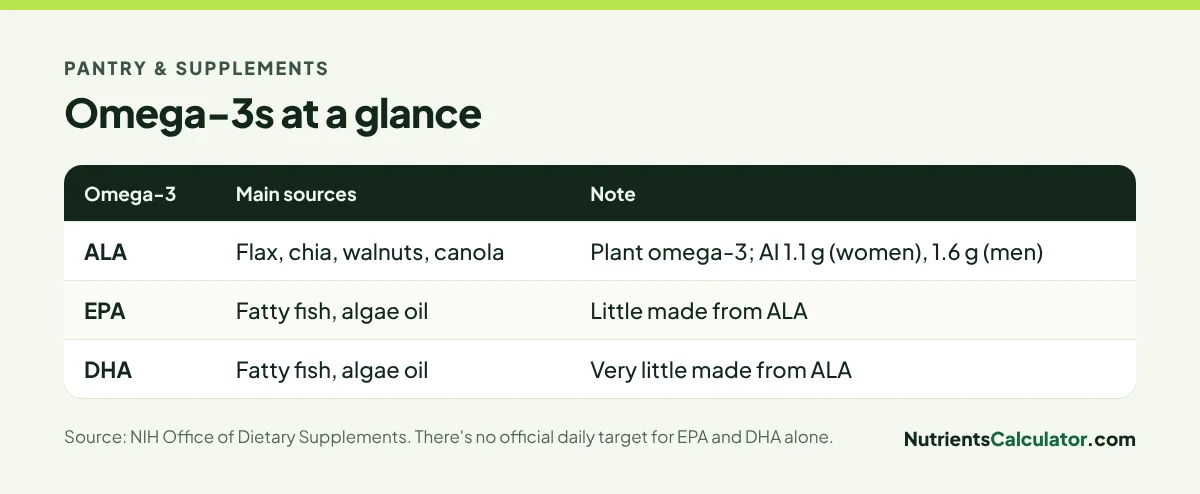
| Omega-3 | Main sources | Note |
|---|---|---|
| ALA | Flax, chia, walnuts, canola | Plant omega-3; AI 1.1 g (women), 1.6 g (men) |
| EPA | Fatty fish, algae oil | Little made from ALA |
| DHA | Fatty fish, algae oil | Very little made from ALA |

Etekcity Food Scale
0.1g accuracy — the perfect companion for exact portions.
How to choose algae omega-3 supplements
- EPA + DHA per serving: check the actual amount, not the total “algae oil”.
- Both EPA and DHA: some algae oils are mostly DHA; both is ideal.
- Vegan softgels: look for carrageenan or starch capsules, not gelatin.
- Third-party testing for purity and oxidation (freshness).
- Storage: keep in a cool, dark place; some brands suggest the fridge after opening.
The best algae omega-3 supplements
1. Nordic Naturals Algae Omega: best overall
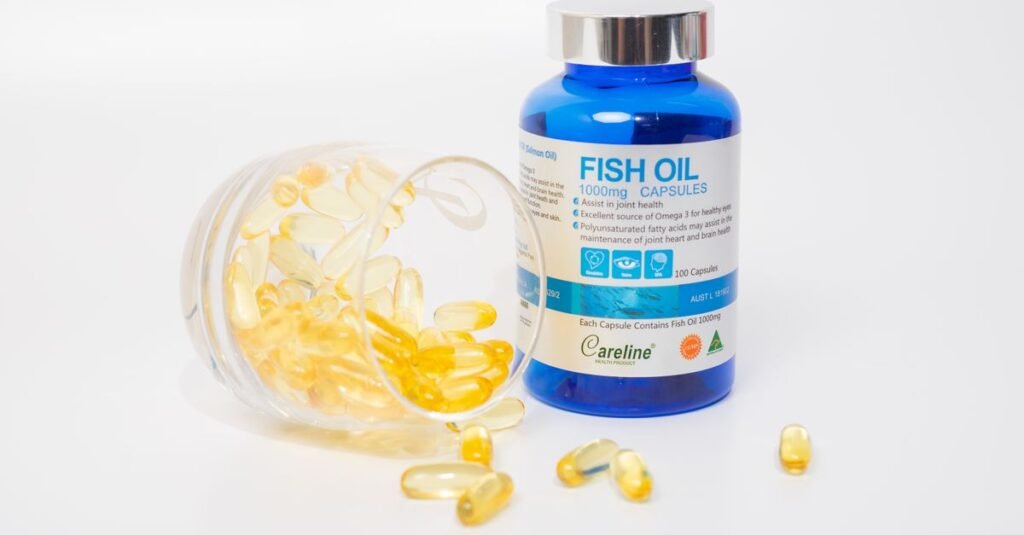
Nordic Naturals is one of the most trusted omega-3 brands. Its Algae Omega provides both EPA and DHA in vegan softgels and is third-party tested for purity.
Check price on Amazon Nordic Naturals Algae Omega
2. Sports Research Vegan Omega-3: best value
Sports Research’s algae omega-3 offers EPA and DHA in plant-based softgels at a good price, with third-party testing.
Check price on Amazon Sports Research Vegan Omega-3 Algae Oil
3. Ovega-3: best small softgels
Ovega-3 uses small, easy-to-swallow vegan softgels with EPA and DHA.
Check price on Amazon Ovega-3 Plant-Based Omega-3
4. Deva Vegan Omega-3 DHA-EPA: best budget
Deva makes supplements for vegans at low prices. Its algae omega-3 is an affordable everyday option.
Check price on Amazon Deva Vegan Omega-3 DHA EPA
5. Nordic Naturals Algae Omega liquid: best liquid
If you hate swallowing pills, a liquid algae oil can be stirred into smoothies or yogurt.
Check price on Amazon Nordic Naturals Algae Omega Liquid
Food sources of omega-3

- Fatty fish: salmon, sardines, mackerel, trout and herring. The American Heart Association suggests two servings of fish a week.
- ALA sources: ground flaxseed, chia seeds, hemp seeds, walnuts and canola oil. Women need about 1.1 g of ALA a day and men about 1.6 g; a tablespoon of ground flax covers it.
See our guide to healthy fats and canned vs fresh salmon.
Who might benefit most
- Vegans and vegetarians.
- People who rarely eat fish.
- Pregnant or breastfeeding people who don’t eat fish, since DHA matters for baby’s brain and eyes. Ask your doctor about the right dose.
How to read an algae omega-3 label
The front label might say “1,000 mg algae oil”, but what matters is the amount of EPA and DHA per serving, listed in the Supplement Facts panel. Compare products by:
- EPA + DHA per serving (in mg).
- Servings per bottle and softgels per serving.
- Cost per 250 mg or 500 mg of EPA + DHA, the fairest way to compare price.
- Capsule type: look for vegan capsules if you avoid gelatin.
Algae omega-3 supplements are usually more expensive than fish oil per milligram, but prices have come down as demand grows.
Algae oil vs fish oil vs flaxseed oil
- Algae oil: EPA and DHA, vegan, no ocean contaminants.
- Fish oil: EPA and DHA, cheaper, not vegan.
- Flaxseed oil: ALA only, so it doesn’t provide meaningful EPA or DHA.
If you eat fatty fish twice a week, you probably don’t need a supplement. If you don’t, algae oil is the most direct plant-based way to get EPA and DHA.
Food first: easy ALA sources
Even if you take an algae supplement, keep plant ALA in your diet:
- Ground flaxseed: stir into oatmeal, yogurt or smoothies.
- Chia seeds: make chia pudding or add to overnight oats.
- Walnuts: a small handful as a snack or on salads.
- Hemp seeds: sprinkle on bowls and salads.
- Canola oil for cooking.
Who should be careful
Talk to your doctor before taking algae omega-3 supplements if you take blood-thinning medicine, have a bleeding disorder or have surgery coming up. High doses are best taken under medical advice. If you’re pregnant or breastfeeding and don’t eat fish, ask your doctor about a DHA supplement.
Putting it together
A simple plan for a fish-free diet: a daily algae oil softgel with dinner, a tablespoon of ground flax or chia most days, and a handful of walnuts a few times a week. Add your B12 supplement and you’ve covered two of the nutrients vegans most often miss.
The bottom line
Algae omega-3 supplements give you EPA and DHA without fish, and they’re as effective as fish sources for raising DHA. Nordic Naturals Algae Omega is our top pick, Sports Research is the best value, and Ovega-3 has the easiest softgels. Pair a supplement with flax, chia and walnuts, and see our vegan B12 guide for the other essential vegan supplement.
Frequently asked questions
Is algae oil as good as fish oil?
Algae oil provides the same EPA and DHA as fish oil, because fish get their omega-3s from algae in the first place. Studies show algae DHA raises blood DHA levels similarly to fish sources.
Do vegans need an omega-3 supplement?
Vegans get ALA from flax, chia and walnuts, but the body converts only a small amount to EPA and DHA. Many dietitians suggest an algae supplement for vegans, especially during pregnancy.
How much algae omega-3 should I take?
There's no official target for EPA and DHA. Many supplements provide about 250 to 500 mg combined per serving, similar to eating fatty fish about twice a week. Ask your doctor about higher doses.
Are there side effects?
Algae oil is usually well tolerated. Some people notice mild stomach upset. If you take blood thinners or have surgery planned, talk to your doctor first.
When is the best time to take algae omega-3 supplements?
With a meal that contains some fat. Fat helps absorption, and taking it with food reduces the chance of an upset stomach.
Do algae omega-3 supplements taste fishy?
Much less than fish oil. Some people notice a mild sea or seaweed taste with liquids; softgels are usually taste-free.
How should I store algae oil?
Keep it in a cool, dark place and close the bottle tightly. Some brands recommend refrigerating after opening to slow oxidation.
How much EPA and DHA is in a serving of salmon?
A typical serving of farmed or wild salmon provides well over 1,000 mg of EPA and DHA combined, according to USDA data; exact amounts vary.
Can kids take algae omega-3?
There are algae DHA products made for children. Ask your pediatrician about whether your child needs one and the right dose.
Do algae omega-3 supplements need to be refrigerated?
Some brands recommend it after opening to slow oxidation. Follow the label and keep them away from heat and sunlight.
Is algae oil sustainable?
Algae for supplements is grown in controlled tanks, so it doesn't rely on wild fish stocks. That's one reason many people prefer it to fish oil.
Can I cook with algae oil supplements?
No. Supplement oils are meant to be taken as directed, not heated. Culinary algae oil is a different product made for cooking.
Do algae omega-3 supplements interact with medications?
High doses of omega-3s may add to the effect of blood thinners. Tell your doctor about all supplements you take.
Is algae omega-3 safe during pregnancy?
Many prenatal DHA supplements use algae oil. Ask your doctor or midwife about the right product and dose for you.
Sources
- NIH Office of Dietary Supplements: Omega-3 Fatty Acids Fact Sheet for Health Professionals
- American Heart Association: Fish and Omega-3 Fatty Acids
- Arterburn LM et al. Algal-oil capsules and cooked salmon: nutritionally equivalent sources of docosahexaenoic acid. J Am Diet Assoc, 2008
This article is for general information and isn’t medical advice. Talk to your doctor or a registered dietitian about your own needs, especially if you have a health condition, are pregnant or take medication.