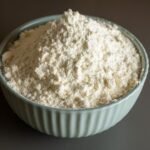
Calories in wheat berries: 163 calories per 1 biscuit (45 g)
- 3.4 g protein
- 20 g carbs
- 8.2 g fat
- 2 g fiber
Source: USDA FoodData Central · 362 kcal per 100 g
One 45 g biscuit made with wheat has 163 kcal in calories for the lead serving, according to USDA FoodData Central. The record is labeled “Biscuit, wheat,” so these numbers describe a baked biscuit, not raw or cooked wheat berries. Per 100 g, the same record comes to 362 kcal.
What stands out is the fat and sodium. Fat supplies about 44% of the calories, and the 8.2 g of fat per biscuit includes 5 g of saturated fat, which is 25% of the Daily Value. The biscuit also has 419 mg of sodium, or 18% of the Daily Value.

Calories in Wheat Berries by Serving Size
Calories in wheat berries for each common serving, with protein, carbs and fat:
| Serving | Calories | Protein | Carbs | Fat |
|---|---|---|---|---|
| 1 biscuit (45 g) | 163 | 3.4 g | 20 g | 8.2 g |
| 100 g | 362 | 7.5 g | 44 g | 18 g |
| 1 oz | 103 | 2.1 g | 12 g | 5.2 g |
Wheat Berries Nutrition Facts
Calories in wheat berries and the full nutrition facts per 1 biscuit (45 g):
| Nutrient | Amount | % Daily Value* |
|---|---|---|
| Calories | 163 kcal | |
| Protein | 3.4 g | 7% |
| Total Fat | 8.2 g | 11% |
| Saturated Fat | 5 g | 25% |
| Cholesterol | 0.9 mg | 0% |
| Sodium | 419 mg | 18% |
| Total Carbohydrate | 20 g | 7% |
| Dietary Fiber | 2 g | 7% |
| Total Sugars | 1.7 g | |
| Calcium | 32 mg | 2% |
| Iron | 1.4 mg | 8% |
| Potassium | 83 mg | 2% |
| Magnesium | 20 mg | 5% |
| Zinc | 0.4 mg | 3% |
| Phosphorus | 225 mg | 18% |
| Selenium | 6.9 mcg | 13% |
| Vitamin A (RAE) | 7.7 mcg | 1% |
| Vitamin E | 0.2 mg | 2% |
| Vitamin K | 2 mcg | 2% |
| Thiamin (B1) | 0.2 mg | 17% |
| Riboflavin (B2) | 0.1 mg | 11% |
| Niacin (B3) | 1.9 mg | 12% |
| Vitamin B6 | 0.1 mg | 3% |
| Folate (DFE) | 54 mcg | 13% |
Where the calories come from: 48% carbs · 44% fat · 8% protein
*Percent Daily Values are based on a 2,000-calorie diet (FDA reference values). Source: USDA FoodData Central — Biscuit, wheat (FDC ID 2707805, Survey (FNDDS), published 10/31/2024). Values for other servings are calculated from the per-100 g data.
How Many Carbs and Sugar Are in a Wheat Biscuit?
The lead biscuit has 20 g of total carbohydrate, with 2 g of dietary fiber and 1.7 g of total sugars. Carbohydrate makes up about 48% of the calories in this record, the largest share of the three macronutrients. Protein is 3.4 g per biscuit, about 8% of calories.
Fiber is modest at 2 g per biscuit (7% of the Daily Value). If fiber is your main reason for choosing a grain product, this record does not show a high amount for one serving.
Why Sodium and Saturated Fat Stand Out
Sodium is the nutrient to watch. At 419 mg per biscuit, one serving provides 18% of the Daily Value. The 100 g figure is 930 mg, so the sodium concentration is high across the product, not just in one serving. Checking the sodium on the package label is worth the extra step if you eat these often.
Saturated fat is 5 g per biscuit, which is 25% of the Daily Value. Total fat is 8.2 g, so most of the fat in this record is saturated.
Micronutrients Worth Noting in This Record
The biscuit record lists some B vitamins and minerals that are worth knowing. Thiamin (B1) is 0.2 mg per biscuit (17% DV), and niacin (B3) is 1.9 mg (12% DV). Riboflavin (B2) is 0.1 mg (11% DV) and folate is 54 mcg DFE (13% DV).
- Phosphorus: 225 mg per biscuit (18% DV)
- Iron: 1.4 mg per biscuit (8% DV)
- Selenium: 6.9 mcg per biscuit (13% DV)
- Calcium: 32 mg per biscuit (2% DV)
Vitamin C and vitamin D are listed as zero in this record.
Whole Wheat Berries Vs. a Baked Wheat Biscuit
Wheat berries are the whole wheat kernel, usually cooked in water before eating. This page does not use numbers for wheat berries, because the USDA record here is for a baked biscuit. A cooked grain and a baked product made with wheat can differ a lot in water content, fat, and added salt, so do not swap one set of numbers for the other.
If you want the nutrition for plain cooked wheat berries, look for a separate USDA record for that preparation and compare it with the label on your package.
How Wheat Berries Compares
Per 100 g, next to similar foods in our database:
| Food (100 g) | Calories | Protein | Carbs | Fat |
|---|---|---|---|---|
| Wheat Berries | 362 | 7.5 g | 44 g | 18 g |
| Oat Bran Dry | 364 | 17 g | 63 g | 8 g |
| Cassava Flour | 359 | 0.9 g | 87 g | 0.5 g |
| Tapioca Pearls | 358 | 0.2 g | 89 g | 0 g |
| Rice Flour White | 366 | 6 g | 80 g | 1.4 g |
| Rye Crispbread | 366 | 7.9 g | 82 g | 1.3 g |
Wheat Berries FAQ
How many calories are in 100 g of this wheat biscuit?
The USDA record lists 362 kcal per 100 g. That is the same product as the 45 g biscuit, scaled to 100 g.
Is this biscuit high in sugar?
The record shows 1.7 g of total sugars per 45 g biscuit, and 3.7 g per 100 g. Most of the carbohydrate is starch rather than sugar.
The Bottom Line
One 45 g wheat biscuit has 163 kcal, 8.2 g of fat, and 419 mg of sodium, so check labels if you eat several. The numbers apply to the baked biscuit in the USDA record, not to cooked wheat berries.