Key takeaways
- How much sugar per day is OK? The 2025–2030 Dietary Guidelines say no amount of added sugar is needed, and that a meal shouldn’t contain more than 10 g.
- Other limits: 50 g a day (FDA Daily Value), 25 g for women and 36 g for men (American Heart Association).
- The average US adult has about 17 teaspoons (68 g) of added sugar a day, mostly from drinks and sweet snacks.
- Sugar inside whole fruit and plain milk doesn’t count toward these limits.
Most people know sugar is something to watch, but the advice keeps moving. The newest US guidelines, released in January 2026, went further than ever before. So how much sugar per day is actually OK? Here’s what each major health body recommends, what those numbers mean in teaspoons and real foods, and how to tell added sugar from the natural kind.
How much sugar per day: the official limits
There’s no single number, because different organizations set the line in different places.
- Dietary Guidelines for Americans 2025–2030. The new guidelines say no amount of added sugar or non-nutritive sweetener is recommended as part of a healthy diet. Where you do have added sugar, they suggest no more than 10 g per meal (AAFP summary). They also advise young children (roughly age 10 and under) to avoid added sugar altogether.
- FDA Daily Value: 50 g. This is the number behind the “%DV” on the Added Sugars line of food labels. It’s based on the previous guideline of 10% of calories on a 2,000-calorie diet.
- American Heart Association: 25 g for women, 36 g for men. That’s about 6 and 9 teaspoons (AHA).
- World Health Organization: under 10% of calories, ideally under 5% (about 25 g on 2,000 calories).
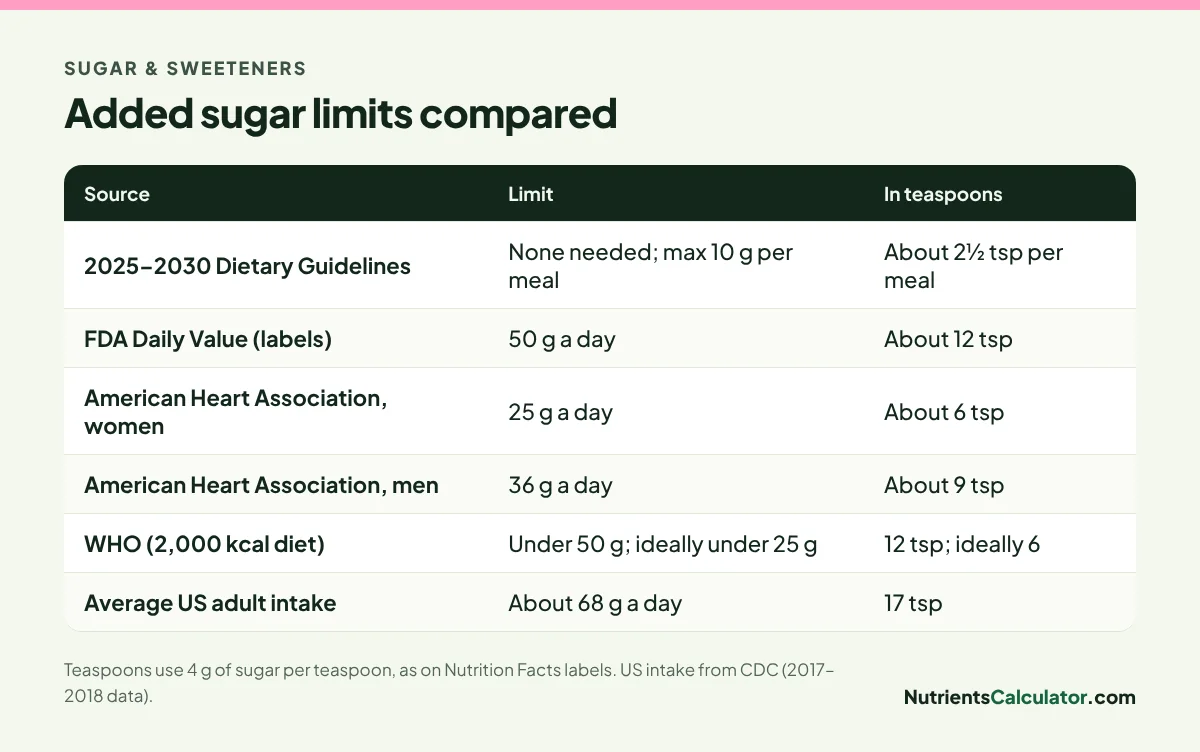
In practice, all of these point the same way. If you keep added sugar to a few teaspoons spread across the day, you’re within every limit except the strictest reading of the new guidelines.

Etekcity Food Scale
0.1g accuracy — the perfect companion for exact portions.
What counts as added sugar?
Added sugars are sugars and syrups put into food during processing or cooking, plus the sugar you add yourself. That includes table sugar, brown sugar, honey, maple syrup, agave, corn syrup, coconut sugar and fruit juice concentrates used as sweeteners. Honey and maple syrup sound more natural, but your body treats them much like table sugar.
Sugar that comes naturally in whole fruit, vegetables and plain milk or yogurt is not added sugar. Our guide to added sugar vs natural sugar explains why that difference matters.
What 25 to 50 grams looks like

Here’s how fast added sugar adds up (USDA values; drinks and sweets are almost entirely added sugar):
| Food or drink | Sugar |
|---|---|
| 12 oz can of cola | 37 g |
| 20 oz bottle of cola | 59 g |
| 20 oz sports drink | 31 g |
| 6 oz fruit yogurt (low fat) | 32 g total, about 20 g added |
| 8.4 oz energy drink | 26 g |
| 8 oz bottled iced mocha | 25 g |
| 2 tbsp barbecue sauce | 11 g |
| 1 packet flavored instant oatmeal | 11 g |
| 1 tbsp honey | 17 g |
One 20 oz soda is more than the FDA’s whole daily value and more than double the AHA limit for women. That’s why drinks are the first place to look. See how much sugar is in sugary drinks for a full comparison.
Where Americans get their added sugar

According to the CDC, US adults average about 17 teaspoons of added sugar a day: 19 for men and 15 for women. The leading sources are:
- Sugar-sweetened drinks: soda, sweet tea, energy and sports drinks, sweetened coffee.
- Desserts and sweet snacks: cookies, cakes, pastries, ice cream.
- Candy.
- Breakfast cereals and bars.
The less obvious sources add up too: flavored yogurt, granola, sauces, dressings and bread. We list them in foods with hidden sugar.
How to read sugar on a food label
Every US Nutrition Facts label now shows two lines:
- Total Sugars: all sugar in the food, natural and added.
- Includes Added Sugars: only the added part, with a %DV based on 50 g.
So plain yogurt might show 7 g Total Sugars and 0 g Added Sugars, while a vanilla yogurt shows 18 g total with 11 g added. For quick math, divide grams by 4 to get teaspoons. For the full walkthrough, see how to read a nutrition label.
Why the limits exist
Added sugar isn’t toxic in small amounts, but large amounts cause problems in a few predictable ways:
- Extra calories without fullness, especially from drinks. Liquid sugar doesn’t reduce how much you eat later.
- Displacing better foods. Calories spent on sugar aren’t spent on protein, fiber and micronutrients.
- Tooth decay. Frequent sugar is a major driver of cavities.
- Heart and metabolic health. High intakes, particularly from sweetened drinks, are linked with weight gain, type 2 diabetes and heart disease in large studies.
Easy ways to stay under the limit

- Swap one sweet drink a day for water, sparkling water, unsweetened tea or coffee. This alone can cut 25–60 g.
- Buy plain, then sweeten yourself. Plain yogurt with berries and a teaspoon of honey has far less added sugar than most flavored versions.
- Check the Added Sugars line on cereals, granola, bars and sauces. Aim for 5 g or less per serving where you can.
- Keep sweets as a planned treat rather than an everyday default.
- Eat protein and fiber with meals. Steadier blood sugar means fewer cravings later. Our tips on how to stop sugar cravings go further.
Do you need to cut out sugar completely?
No. The new guidelines set a high bar, but they don’t mean a slice of birthday cake ruins your diet. The practical goal is to make added sugar a small, deliberate part of what you eat rather than something that sneaks in through drinks and packaged foods. If you also want to watch artificial sweeteners, read are artificial sweeteners safe?
Fruit is different. A banana or a bowl of berries brings fiber, potassium and vitamin C with its sugar, and the guidelines recommend two servings a day. See is the sugar in fruit bad for you?
The bottom line
How much sugar per day is OK? Less than most of us eat. The 2025–2030 Dietary Guidelines say no added sugar is needed and no more than 10 g per meal; the AHA’s 25 g for women and 36 g for men is a realistic daily ceiling. Start with drinks, read the Added Sugars line, and let whole fruit cover your sweet tooth.
Frequently asked questions
How much sugar per day is OK for an adult?
The 2025–2030 Dietary Guidelines say no amount of added sugar is needed, and that meals shouldn't contain more than 10 g. The American Heart Association suggests no more than 25 g a day for women and 36 g for men. Sugar naturally present in whole fruit and plain milk doesn't count toward these limits.
How many grams of sugar are in a teaspoon?
About 4 grams. Nutrition Facts labels use 4 g per teaspoon, and USDA data puts a level teaspoon of granulated sugar at about 4.2 g.
Does sugar in fruit count toward the limit?
No. Limits apply to added sugars: sugar, syrups and honey added to foods, and sugar in juice concentrates. Sugar in whole fruit comes with fiber and water and isn't counted. 100% fruit juice is a gray area: it isn't labeled as added sugar, but it's easy to drink a lot of it.
What is the difference between Total Sugars and Added Sugars on a label?
Total Sugars includes everything: natural sugar from milk and fruit plus any added sugar. Added Sugars is the part put in during processing, and it's the line to compare with daily limits.
Sources
- AAFP: Dietary Guidelines for 2025–2030, Recommendations From the USDA and HHS
- Harvard T.H. Chan School of Public Health: Dietary Guidelines for Americans 2025–2030
- CDC: Get the Facts, Added Sugars
- FDA: Added Sugars on the Nutrition Facts Label
- American Heart Association: Added Sugars
- WHO: Guideline on sugars intake for adults and children (2015)
- USDA FoodData Central
This article is for general information and isn’t medical advice. Talk to your doctor or a registered dietitian about your own needs, especially if you have a health condition, are pregnant or take medication.