We independently choose the products in this guide. As an Amazon Associate we earn from qualifying purchases, at no extra cost to you. How we make money.
Key takeaways
- Fermentation kits make it easy to turn cabbage, cucumbers, tea and milk into sauerkraut, pickles, kombucha and kefir.
- Best overall: Masontops mason jar kit. Best kombucha: The Kombucha Shop. Best kefir: Kefirko.
- The keys to safety: clean jars, about 2% salt, vegetables under the brine.
- A Stanford study found a high-fermented-food diet increased gut microbiome diversity.
Fermented foods are having a moment, and for good reason. A Stanford study found that eating more fermented foods for 10 weeks increased gut microbiome diversity and reduced markers of inflammation. Store-bought kombucha, kefir and sauerkraut add up, though. Fermentation kits let you make your own for a fraction of the cost. Here are the best for beginners. For the foods themselves, see our fermented foods list and foods for gut health.
Why make fermented foods at home?
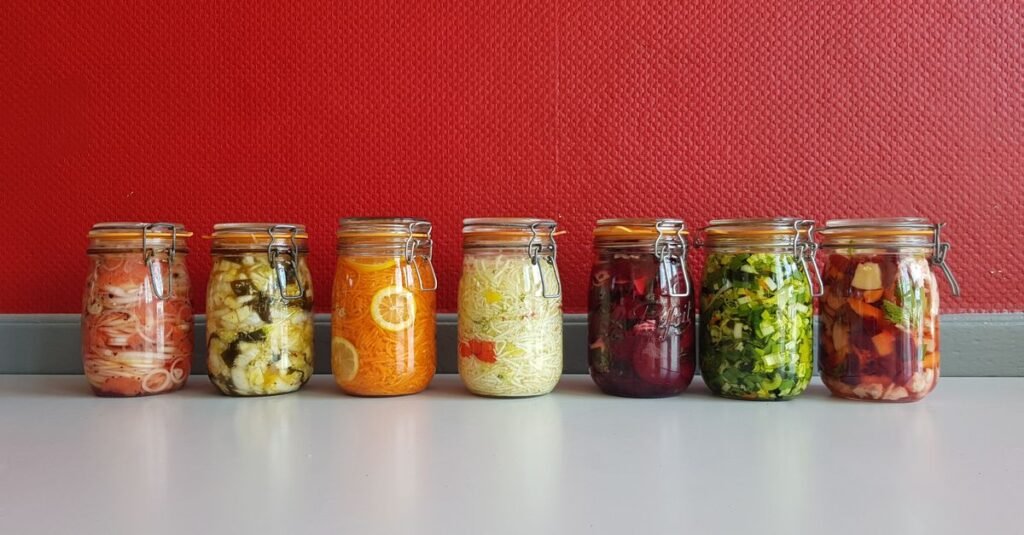
- Cheaper: a head of cabbage and some salt make a big jar of sauerkraut.
- Live cultures: many store-bought sauerkrauts and pickles are pasteurized or made with vinegar, so they have no live microbes. Homemade raw ferments do.
- Control: you choose the salt, sugar and flavors.
- It’s fun: fermentation is part science experiment, part cooking.

Etekcity Food Scale
0.1g accuracy — the perfect companion for exact portions.
The best fermentation kits
1. Masontops Complete Mason Jar Fermentation Kit: best overall
Masontops’ kit turns regular wide-mouth mason jars into fermenters, with airlock lids that let gas out without letting air in, glass weights that keep vegetables under the brine, and a tamper for packing. Ideal for sauerkraut, kimchi and pickles.
Check price on Amazon Masontops Complete Mason Jar Fermentation Kit
2. The Kombucha Shop Kombucha Brewing Kit: best kombucha kit

Everything you need for your first batch: a gallon jar, a SCOBY with starter liquid, organic tea and sugar, a thermometer strip and instructions. The sugar feeds the culture; most of it is used up during fermentation.
Check price on Amazon The Kombucha Shop Kombucha Brewing Kit
3. Kefirko Kefir Maker: best for kefir
Kefirko’s jar has a built-in strainer that makes separating kefir grains from finished kefir easy. Pair it with live milk or water kefir grains.
Check price on Amazon Kefirko Kefir Maker
4. Ball Fermentation Kit: best budget pick
Ball’s kit includes fermentation lids and a recipe guide for its jars. A simple, inexpensive way to try pickles and sauerkraut.
Check price on Amazon Ball Fermentation Kit Wide Mouth
5. Ohio Stoneware fermentation crock: best for big batches
For serious kraut makers, a traditional stoneware crock with weights makes several pounds at once.
Check price on Amazon Ohio Stoneware Fermentation Crock with Weights
Fermentation safety basics
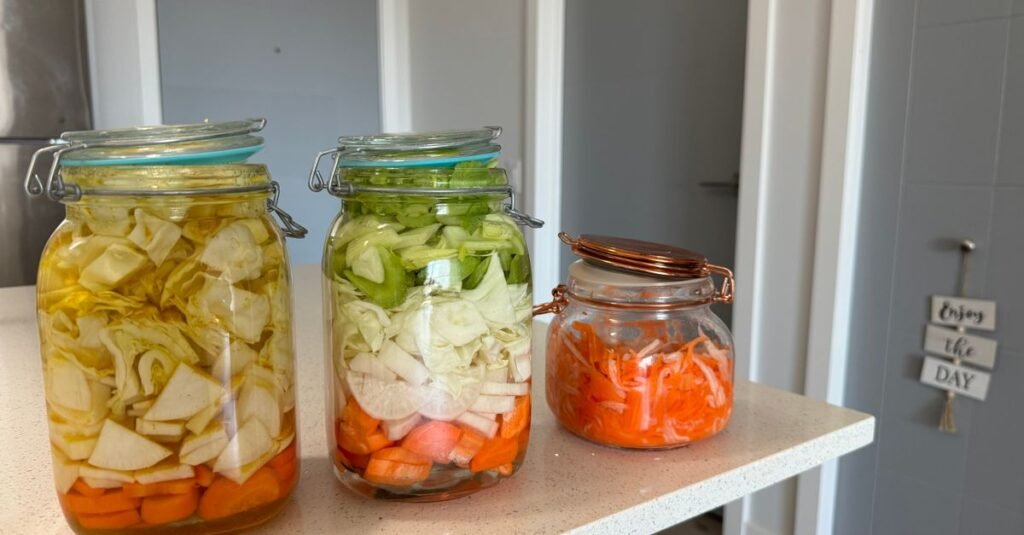
- Start clean: wash jars, weights and hands well.
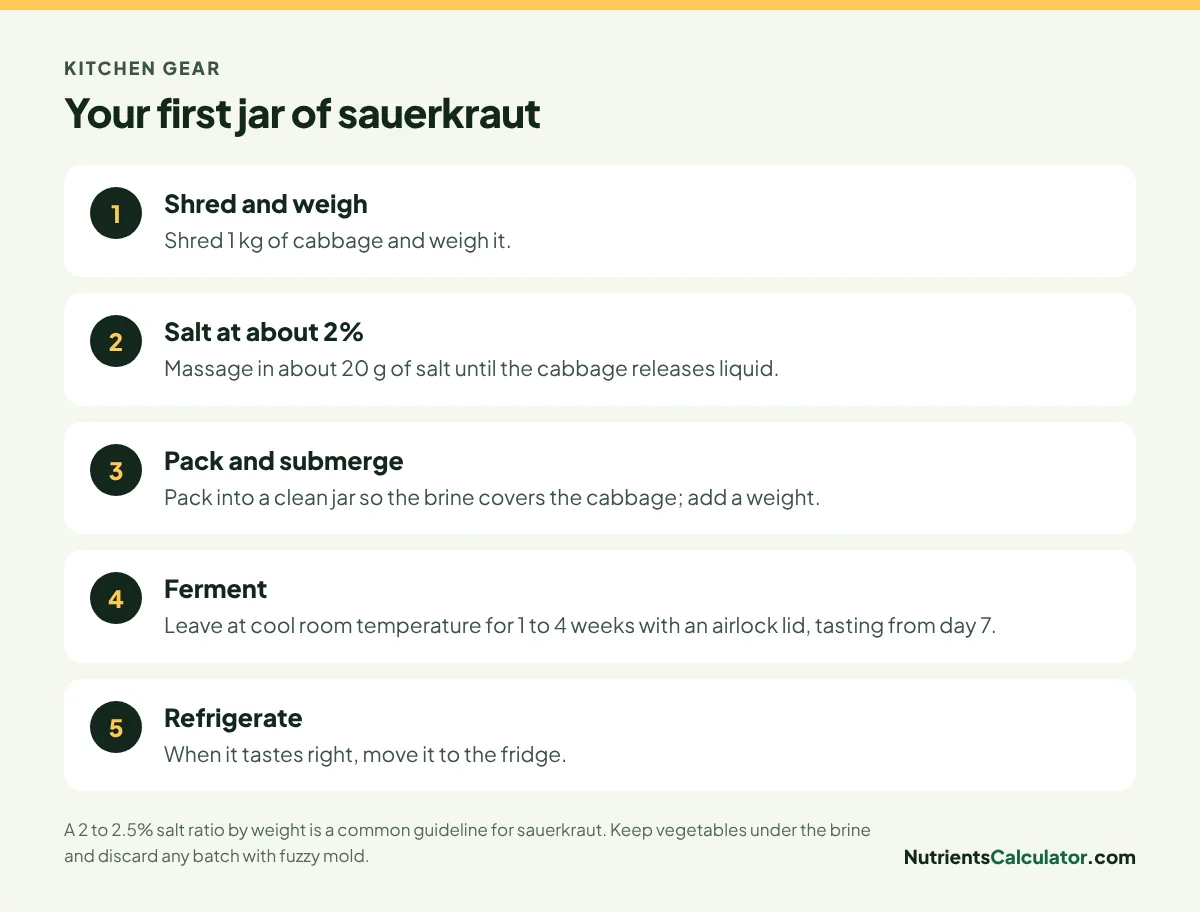
- Use the right salt: about 2–2.5% of the vegetables’ weight for sauerkraut. Use non-iodized salt.
- Keep it submerged: vegetables above the brine can mold.
- Ferment at cool room temperature, about 60–75°F (15–24°C).
- Trust your senses: pleasantly sour is good. Fuzzy mold, slime or a rotten smell means throw it out.
- Refrigerate once it tastes right.
For people who are pregnant, older or immunocompromised, talk to your doctor about homemade ferments, especially kombucha.
Getting started: a simple plan
- Week 1: a jar of sauerkraut (cabbage and salt only).
- Week 2: quick-fermented dill pickles.
- Week 3: your first kombucha or kefir.
Fermented foods pair well with other gut-friendly foods: see prebiotic foods and soluble vs insoluble fiber. If you’d rather make yogurt, our yogurt maker guide covers that.
How to choose fermentation kits
What do you want to make?
- Sauerkraut, kimchi and pickles: a mason jar kit with airlock lids and glass weights.
- Kombucha: a gallon jar kit with a SCOBY and starter tea.
- Kefir: a kefir jar with a built-in strainer, plus grains.
- Large batches: a stoneware crock with weights.
Airlock lids vs open jars
Airlock lids let carbon dioxide escape without letting air in, which lowers the chance of mold and means you don’t need to “burp” jars. Open-jar methods work too but need more attention.
Weights matter
Vegetables floating above the brine are the most common cause of spoiled batches. Glass or ceramic weights keep everything submerged. A small zip bag filled with brine also works in a pinch.
Fermentation kits: troubleshooting
- Brine overflow: leave 1 to 2 inches of space at the top and set jars on a plate.
- Not enough liquid: press harder when packing, or top up with a 2% salt brine.
- Too sour or soft: ferment at a cooler temperature and for less time.
- Kombucha not fizzy: try a second fermentation in sealed bottles with a little fruit for 1 to 3 days. Open carefully, as pressure builds.
Fermented foods and your gut
Raw fermented foods contain live microbes, and research such as the Stanford study suggests eating more of them can increase microbiome diversity. They aren’t magic, though. A gut-friendly diet also needs fiber from vegetables, fruit, legumes and whole grains. See what counts as a whole grain and foods that cause bloating if you’re easing into more fiber.
Easy ferments to try after sauerkraut
- Kimchi with napa cabbage, radish, garlic, ginger and chili.
- Fermented carrots with garlic and dill.
- Hot sauce from fermented chilies.
- Water kefir flavored with fruit.
Start small with one jar at a time, label each with the date, and taste as you go.
The bottom line
Fermentation kits make it easy and cheap to enjoy raw, live-culture foods at home. The Masontops kit is our top pick for vegetables, The Kombucha Shop kit is the easiest way to brew kombucha, and Kefirko makes kefir simple. Keep things clean, salted and submerged, and you’ll have a fridge full of gut-friendly foods.
Frequently asked questions
What's the easiest food to ferment at home?
Sauerkraut is the easiest: just cabbage and salt in a jar. Quick pickles and kefir are also beginner-friendly.
Is home fermentation safe?
Vegetable ferments are generally safe when you use clean equipment, the right amount of salt and keep vegetables under the brine. Throw out anything with fuzzy mold, a slimy texture or a rotten smell. People who are pregnant or have weakened immune systems should check with their doctor.
Are homemade fermented foods probiotic?
Raw, unpasteurized ferments like homemade sauerkraut, kimchi, kefir and kombucha contain live microbes. Research links fermented food intake with a more diverse gut microbiome, though benefits vary from person to person.
Does kombucha contain alcohol?
Kombucha naturally contains a small amount of alcohol, and home-brewed kombucha can contain more than store-bought. Keep that in mind if you avoid alcohol.
How long does homemade sauerkraut last?
Once fermented and refrigerated, homemade sauerkraut usually keeps for several months if kept submerged in brine in a clean, covered jar.
Do I need special salt for fermenting?
Use salt without iodine or anti-caking agents, such as pickling salt, kosher salt or sea salt. Iodized salt can slow fermentation and cloud the brine.
What's the white film on my ferment?
A flat white film, called kahm yeast, is common and usually harmless; skim it off. Fuzzy, colored mold (green, black, pink or blue) means you should throw the batch away.
How much does it cost to make sauerkraut at home?
Very little: a head of cabbage and some salt make a large jar. A fermentation kit is a one-time purchase you can reuse for years.
Can I ferment in plastic containers?
Food-grade plastic can work, but glass and ceramic are preferred because they don't scratch, stain or absorb smells.
How do I know when my ferment is ready?
Taste it. When it's pleasantly sour and the texture is how you like it, move it to the fridge to slow fermentation.
Can I reuse brine from a finished ferment?
A splash of brine from a successful batch can help start the next one faster. Always use fresh vegetables and salt for each batch.
Is a fermentation kit a good gift?
Yes, for anyone who likes cooking or gut-friendly foods. Pair a kit with a head of cabbage, good salt and a simple recipe card.
Do I need an airlock to ferment vegetables?
No, but it makes things easier. Without one, loosen the lid daily to release gas, or use a cloth cover and keep vegetables well submerged.
Sources
- Wastyk HC et al. Gut-microbiota-targeted diets modulate human immune status. Cell, 2021
- National Center for Home Food Preservation
- Harvard T.H. Chan School of Public Health: Fermented Foods
This article is for general information and isn’t medical advice. Talk to your doctor or a registered dietitian about your own needs, especially if you have a health condition, are pregnant or take medication.