We independently choose the products in this guide. As an Amazon Associate we earn from qualifying purchases, at no extra cost to you. How we make money.
Key takeaways
- Non-toxic cookware usually means coating-free materials: cast iron, stainless steel, enameled cast iron and PTFE-free ceramic.
- Best overall: Lodge cast iron. Best stainless: All-Clad D3 or Tramontina tri-ply. Best ceramic: Caraway or GreenPan.
- Standard nonstick is considered safe at normal temperatures; just don’t overheat empty pans.
- Good cookware lets you cook with less oil and lasts for years.
“Non-toxic cookware” is a marketing phrase, but behind it is a reasonable wish: pans without coatings you’re unsure about, that last a long time and cook healthy food well. Here are the best non-toxic cookware picks across cast iron, stainless steel and ceramic, plus a balanced look at the science on nonstick.
What does non-toxic cookware mean?
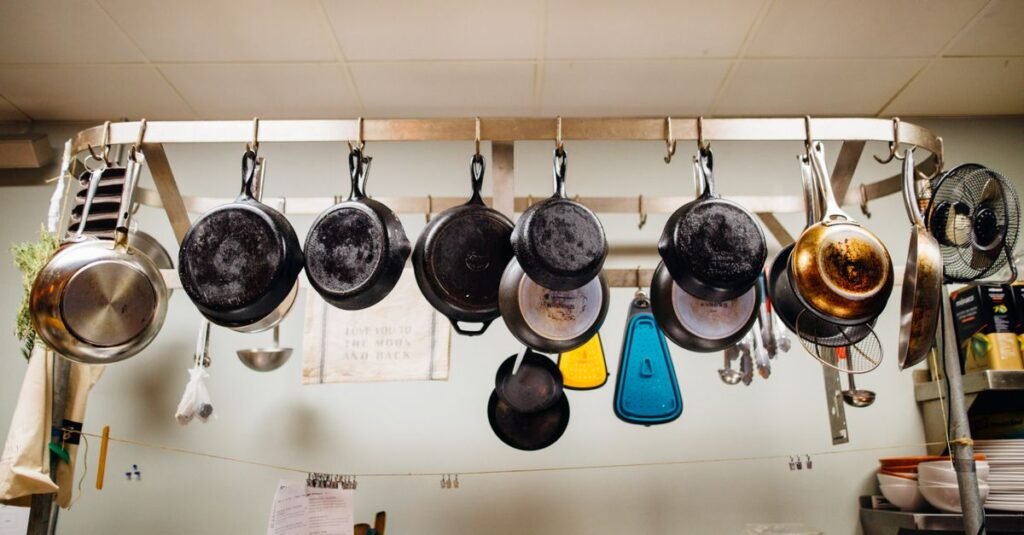
Most people mean cookware without PTFE (Teflon-type) nonstick coatings, or PFAS more broadly. The facts:
- PTFE nonstick is considered safe at normal cooking temperatures. It can release fumes if overheated, roughly above 500°F (260°C), such as an empty pan left on high.
- PFOA, a chemical once used to make PTFE, was phased out of US manufacturing by 2015.
- Coating-free materials like cast iron and stainless steel avoid the question entirely, and they last for decades.
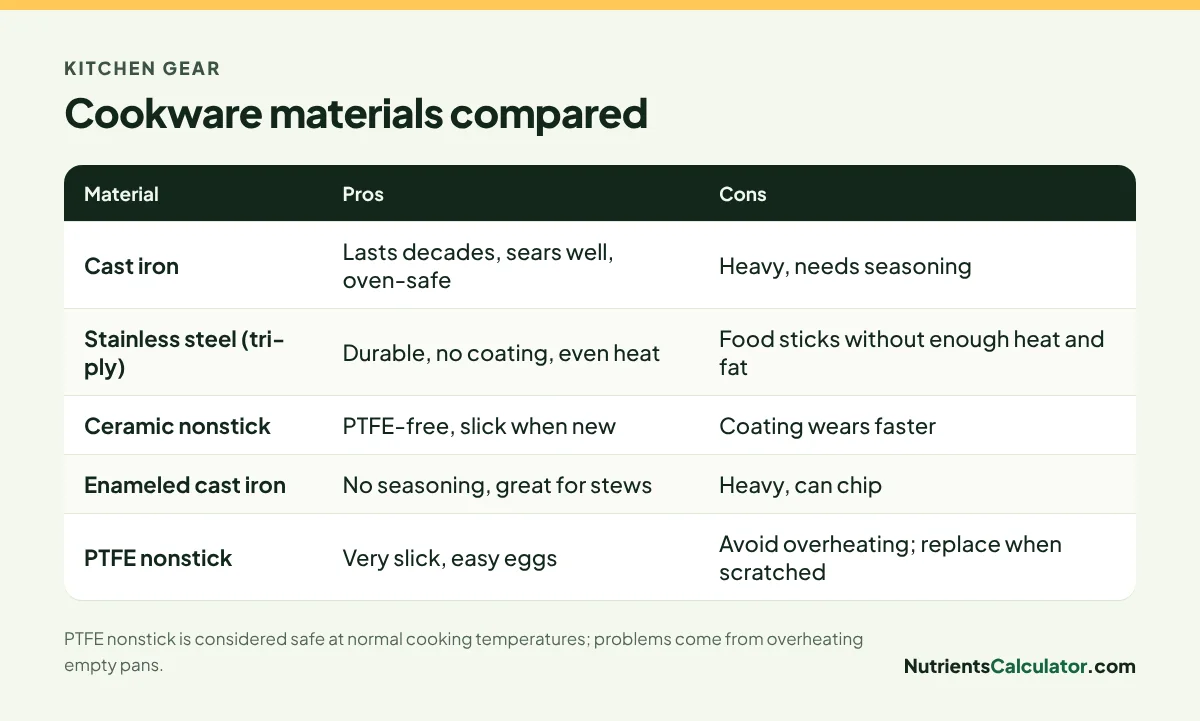
| Material | Pros | Cons |
|---|---|---|
| Cast iron | Lasts decades, sears well, oven-safe | Heavy, needs seasoning |
| Stainless steel (tri-ply) | Durable, no coating, even heat | Food sticks without enough heat and fat |
| Ceramic nonstick | PTFE-free, slick when new | Coating wears faster |
| Enameled cast iron | No seasoning, great for stews | Heavy, can chip |
| PTFE nonstick | Very slick, easy eggs | Avoid overheating; replace when scratched |
Etekcity Food Scale
0.1g accuracy — the perfect companion for exact portions.
The best non-toxic cookware
1. Lodge Cast Iron Skillet: best overall
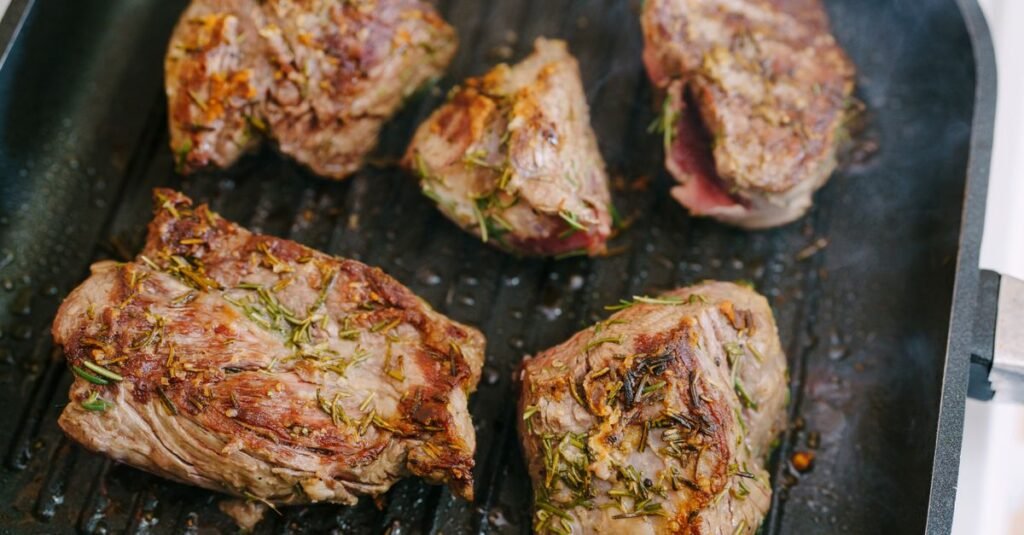
Lodge cast iron is inexpensive, nearly indestructible and becomes naturally nonstick as its seasoning builds. It sears meat and vegetables beautifully with very little oil and goes from stove to oven.
- Good for: searing, roasting, cornbread, eggs once seasoned.
- Watch out: heavy; dry it after washing and wipe with oil.
Check price on Amazon Lodge 10.25 Inch Cast Iron Skillet
2. All-Clad D3 Stainless Steel Fry Pan: best premium stainless
All-Clad’s tri-ply pans heat evenly and last a lifetime. Food releases easily once you preheat the pan and add a little fat.
Check price on Amazon All-Clad D3 Stainless Steel 10 Inch Fry Pan
3. Tramontina Tri-Ply Clad Stainless Steel: best value stainless
Tramontina’s tri-ply cookware is often compared favorably with pricier brands for even heating, at a much lower price.
Check price on Amazon Tramontina Tri-Ply Clad Stainless Steel Cookware Set
4. Caraway Ceramic Cookware Set: best ceramic set
Caraway’s ceramic-coated pans are PTFE-free, slick when new, and come with a storage system. Use low to medium heat to extend the coating’s life.
Check price on Amazon Caraway Nonstick Ceramic Cookware Set
5. GreenPan Valencia Pro: best ceramic frying pan
A popular PTFE-free ceramic nonstick pan with a sturdy, induction-friendly base. Great for eggs and fish.
Check price on Amazon GreenPan Valencia Pro Ceramic Nonstick Frying Pan
6. Lodge Enameled Cast Iron Dutch Oven: best for soups and stews
Enameled cast iron needs no seasoning and is perfect for soups, stews, beans and bread. Lodge’s version costs far less than premium brands.
Check price on Amazon Lodge Enameled Cast Iron Dutch Oven 6 Quart
How to cook healthy with non-toxic cookware
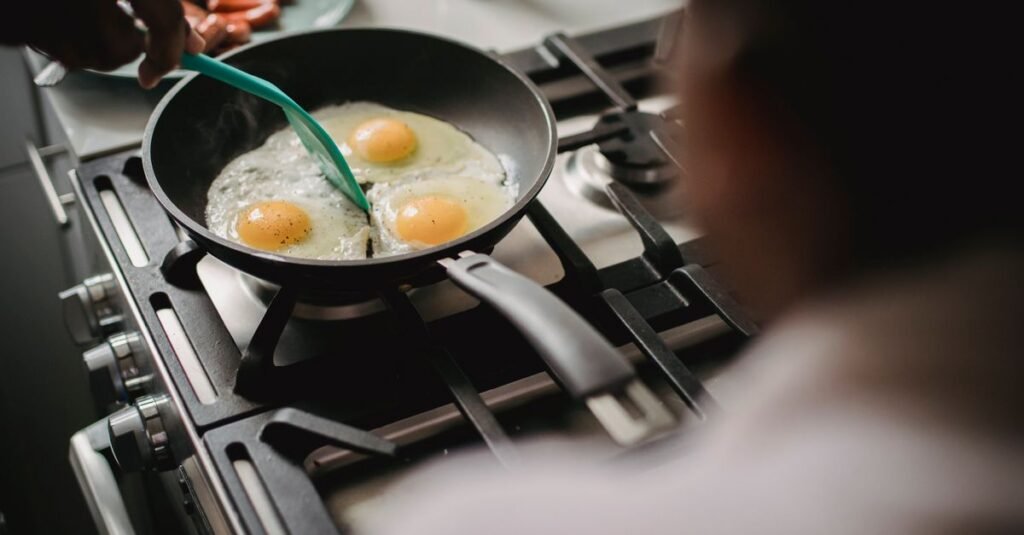
- Preheat stainless and cast iron before adding oil and food to reduce sticking.
- Use a light coat of oil. An oil sprayer helps.
- Keep ceramic on low to medium heat and avoid metal utensils.
- Pick the right method: see healthy cooking methods and the best oils for cooking.
- Check doneness with a thermometer so lean protein stays juicy; see our thermometer guide.
A small bonus: cooking acidic or moist foods in cast iron can add a little iron to food. Learn more in how to absorb more iron from food.
How to choose non-toxic cookware for how you cook
For everyday eggs and fish
A ceramic nonstick pan or a well-seasoned cast iron skillet handles delicate foods. Use medium heat and a little oil.
For searing meat and vegetables
Cast iron and stainless steel give the best browning. They can handle high heat without any coating concerns.
For soups, stews and beans
An enameled cast iron Dutch oven holds steady heat for long, slow cooking and goes from stove to oven.
For sauces and boiling
A stainless steel saucepan and stockpot are durable, easy to clean and won’t react with acidic foods.
Building a simple non-toxic cookware set
You don’t need a 15-piece set. Most home cooks can do almost everything with:
- A 10 to 12 inch cast iron skillet.
- A 10 inch stainless steel or ceramic frying pan.
- A 3 quart stainless steel saucepan.
- A 6 quart Dutch oven or stockpot.
- A sheet pan for roasting vegetables.
Buying pieces individually often costs less and avoids pans you’ll never use.
Caring for non-toxic cookware
- Cast iron: wash with hot water and a little soap, dry immediately, wipe with a thin layer of oil.
- Stainless steel: use a stainless cleaner or baking soda paste for stuck-on bits.
- Ceramic nonstick: hand wash, use soft sponges, and avoid aerosol cooking sprays that can leave residue.
- Enameled cast iron: avoid metal utensils and sudden temperature changes to prevent chips.
Non-toxic cookware and healthy cooking
The right pans make it easier to cook with less oil and fewer processed foods. A hot cast iron pan sears chicken with a teaspoon of oil, a sheet pan roasts a whole tray of vegetables, and a Dutch oven turns beans and lentils into a week of meals. See healthy cooking methods, slow cookers for meal prep and air fryers for healthy cooking for more.
What about aluminum and copper?
Uncoated aluminum and copper can react with acidic foods, which is why most modern pans line them with stainless steel. Anodized aluminum and stainless-clad pans avoid this issue and are widely used.
The bottom line
The best non-toxic cookware is durable, coating-free or PTFE-free, and easy to cook healthy food in. A Lodge cast iron skillet is the best value, All-Clad and Tramontina lead for stainless steel, and Caraway and GreenPan are the top ceramic choices. If you keep standard nonstick, use it on moderate heat and replace it when it’s scratched.
Frequently asked questions
Is nonstick cookware toxic?
Modern PTFE nonstick (like Teflon) is considered safe at normal cooking temperatures. It can release fumes if overheated, roughly above 500°F (260°C), for example when an empty pan is left on high heat. PFOA, a chemical once used to make it, was phased out of US manufacturing by 2015.
What is the safest cookware material?
Cast iron, stainless steel, enameled cast iron and glass are all stable, coating-free choices that last for years. Ceramic nonstick is PTFE-free but wears out faster.
Does cast iron add iron to food?
Yes, a small amount, especially with acidic or moist foods cooked for a long time. That can be a small bonus for people low in iron, but don't rely on it as an iron source.
How long does ceramic nonstick last?
Usually a few years with gentle use. Use low to medium heat, a little oil, and wooden or silicone tools, and hand wash to extend its life.
Is stainless steel cookware hard to cook with?
There's a small learning curve. Preheat the pan, add oil, and let food sear without moving it; it will release when browned. Stainless steel is great for searing, sauces and browning.
How do you season a cast iron skillet?
Wash and dry it well, rub a very thin layer of neutral oil all over, wipe off the excess, and bake it upside down at about 450 to 500°F for an hour. Repeat a few times for a stronger finish.
When should I replace a nonstick pan?
Replace it when the coating is visibly scratched, flaking or no longer releases food well.
Is ceramic cookware non-toxic?
Ceramic-coated pans are PTFE-free and considered safe at normal cooking temperatures. Their main downside is that the coating wears out faster than other materials.
Can I use cast iron on a glass stovetop?
Yes, but lift it rather than sliding it to avoid scratches, and heat it gradually.
Is stainless steel cookware safe?
Yes. Stainless steel is durable, stable and doesn't need a coating, which is why it's widely used in professional kitchens.
Is non-toxic cookware more expensive?
Not necessarily. A cast iron skillet is one of the cheapest pans you can buy, and value stainless steel brands cost less than many nonstick sets.
Sources
- FDA: Authorized Uses of PFAS in Food Contact Applications
- U.S. EPA: PFAS Explained
- NIH Office of Dietary Supplements: Iron Fact Sheet
This article is for general information and isn’t medical advice. Talk to your doctor or a registered dietitian about your own needs, especially if you have a health condition, are pregnant or take medication.