Part of our guide: How to Count Macros: A Simple Beginner’s Guide With Examples
Key takeaways
- There’s no single best macro ratio for weight loss. Large trials found low-carb and low-fat diets lead to similar weight loss when people stick to them.
- Calories decide fat loss; protein decides how much muscle you keep and how full you feel.
- Set protein first (about 1.2–1.6 g per kg), then split the remaining calories between carbs and fat to suit your taste.
- The best ratio is the one you can sustain for months.
If you search for the best macro ratio for weight loss, you’ll find confident claims for everything from 70% fat keto to 60% carb plant-based plans. The research tells a calmer story: when people eat the same calories, the split between carbs and fat makes surprisingly little difference to how much weight they lose. What does make a difference is protein, and whether you can keep the diet going. Here’s how to use that to set your own macro ratio for weight loss.
What the big studies found
Two of the largest and longest diet trials are worth knowing:
- POUNDS Lost randomly assigned 811 adults to four diets with different amounts of fat, protein and carbohydrate. After two years, weight loss was similar across all four, and how well people stuck to their diet mattered more than which diet they were on (Sacks et al., 2009).
- DIETFITS compared a healthy low-fat diet with a healthy low-carb diet in 609 adults for a year. Average weight loss was about the same in both groups (roughly 5–6 kg). Neither genetics nor insulin levels predicted who did better on which diet (Gardner et al., 2018).
Both studies point to the same practical conclusion: pick the eating style you can live with, focus on food quality and keep a calorie deficit.

Etekcity Food Scale
0.1g accuracy — the perfect companion for exact portions.
Why low-carb seems faster at first
Many people lose several pounds in the first week of a low-carb diet. Most of that is water: carbs are stored in muscle and liver as glycogen, which holds water. Cut carbs and that glycogen (and its water) drops. It’s real weight, but not fat, and it comes back when carbs return. Our guide to daily weight fluctuations explains this in more detail.
Step 1: Set protein first
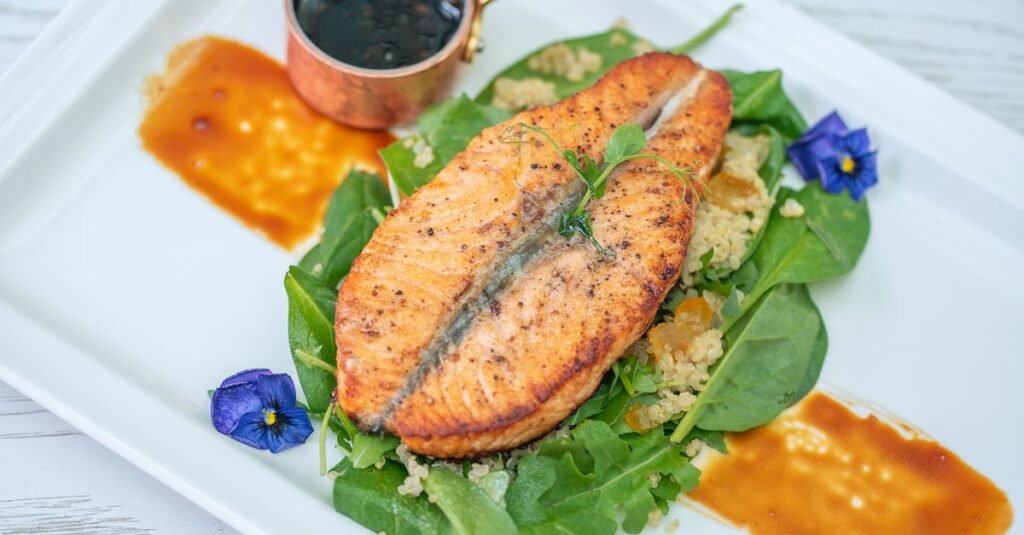
Protein is the one macro that clearly matters during weight loss. It’s the most filling nutrient, and eating enough helps you keep muscle while losing fat. A practical target is 1.2–1.6 g per kg of body weight, the range the current Dietary Guidelines describe for many adults (summary). For a 75 kg (165 lb) person that’s 90–120 g a day. Spread it across meals: 25–40 g per meal works well.
Step 2: Split the rest between carbs and fat
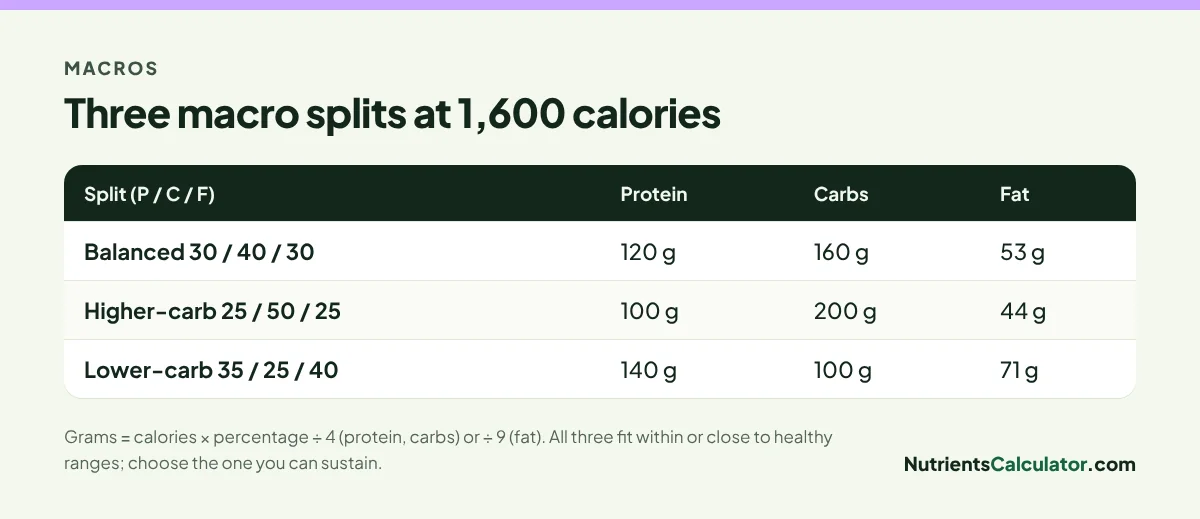
Once protein is set, the remaining calories can go to carbs and fat in whatever split you prefer. The table above shows three versions at 1,600 calories. Some guidelines for choosing:
- Prefer bread, rice, fruit and pasta? A higher-carb split (around 45–50% carbs) will feel more natural.
- Find carbs make you hungrier, or prefer eggs, nuts and cheese? A lower-carb split may suit you, but keep fiber up with vegetables, beans and berries.
- Train hard several days a week? More carbs help fuel performance.
- Not sure? Start balanced: 30% protein, 40% carbs, 30% fat.
Staying within the healthy ranges (10–35% protein, 45–65% carbs, 20–35% fat) is a sensible default (National Academies). Lower-carb diets go below 45% carbs; if you choose one, prioritize vegetables, legumes and unsaturated fats.
Our calculator works out grams for any split at your calorie target.
Step 3: Watch quality, not just numbers
The DIETFITS participants were coached to eat a healthy version of their diet: whole foods, plenty of vegetables, minimal added sugar and refined grains. That’s a big part of why both groups did well. Within any macro ratio:
- Choose carbs that bring fiber: oats, beans, lentils, whole grains, potatoes with skin, fruit.
- Choose mostly unsaturated fats: olive oil, nuts, seeds, avocado, fish.
- Keep saturated fat under about 10% of calories.
- Limit liquid calories and sweets, which add calories without fullness.
Step 4: Judge it by adherence
After three or four weeks, ask:
- Am I hungry most of the day?
- Do I have energy for work and exercise?
- Can I eat this way at restaurants and with family?
- Is my weekly average weight trending down?
If the answers aren’t good, change the split. Swapping 10% of calories from carbs to fat (or the reverse) is a small, easy experiment.
A sample day at 30 / 40 / 30 and 1,600 calories
Aiming for about 120 g protein, 160 g carbs and 53 g fat:
- Breakfast: 1 cup Greek yogurt, ½ cup blueberries, ½ cup oats, about 12 almonds.
- Lunch: 4 oz chicken breast, 1 cup quinoa, 1 cup roasted red pepper, 2 tsp olive oil.
- Snack: ½ cup 2% cottage cheese and a peach.
- Dinner: 4 oz salmon, 1 cup potatoes, 1 cup broccoli, 1 tsp olive oil.
By USDA values that’s about 1,560 calories, 121 g protein, 160 g carbs and 50 g fat: close enough to target.
For three full days at a slightly higher target, see the 1,800-calorie meal plan. For the full method, read how to count macros.
The bottom line
The best macro ratio for weight loss is the one you can stick to. Big, long trials show low-carb and low-fat diets produce similar results when calories are similar. Set protein at about 1.2–1.6 g per kg, divide the rest between carbs and fat to suit your preferences and training, choose mostly whole foods, and judge your plan by how well you can keep it up.
Frequently asked questions
What macro ratio is best for losing belly fat?
You can't target fat loss to one area with a macro ratio. Overall fat loss, from a sustained calorie deficit, reduces belly fat along with fat elsewhere. Adequate protein and regular exercise help you keep muscle while you lose.
Is 40/30/30 a good macro ratio for weight loss?
A 40% carb, 30% protein, 30% fat split is a reasonable, balanced choice for many people. Whether it beats other splits depends on whether it helps you stay in a calorie deficit comfortably.
Should I go low-carb to lose weight faster?
Low-carb diets often cause faster loss in the first week or two, mostly from water as glycogen stores drop. Over a year, large trials find similar fat loss to low-fat diets when calories are matched.
How much protein should I eat to lose weight?
A common evidence-based range is about 1.2–1.6 g per kg of body weight a day, often more for people who lift weights. Spreading it across meals helps with fullness.
Sources
- Gardner CD et al. Effect of low-fat vs low-carbohydrate diet on 12-month weight loss (DIETFITS). JAMA, 2018
- Sacks FM et al. Comparison of weight-loss diets with different compositions of fat, protein, and carbohydrates. NEJM, 2009
- National Academies: Dietary Reference Intakes for macronutrients
- 2025–2030 Dietary Guidelines for Americans: key changes (Perkins Coie summary)
This article is for general information and isn’t medical advice. Talk to your doctor or a registered dietitian about your own needs, especially if you have a health condition, are pregnant or take medication.