Part of our guide: Calories in Alcohol: Beer, Wine, Spirits and Cocktails Compared
Key takeaways
- Non-alcoholic beer and wine taste close to the real thing with little or no alcohol: under 0.5% if labeled “non-alcoholic”, essentially none if “0.0%”.
- They’re usually lower in calories: many non-alcoholic beers are around 50–100 calories per can vs about 153 for regular beer.
- Some are sweetened, so check sugar and calories on the label.
- People who must avoid alcohol completely (pregnancy, recovery, some medicines) should choose 0.0% products or skip them.
Non-alcoholic beer, wine and spirits have gone from an afterthought to whole supermarket aisles. They’re popular with people cutting back on alcohol, drivers, athletes and anyone who wants the ritual of a drink without the effects. But are they actually healthier? Here’s how non-alcoholic beer and wine compare on calories and sugar, what the labels mean, and who should still be careful.
What “non-alcoholic” means on US labels
Under US federal labeling rules for malt beverages, “non-alcoholic” means less than 0.5% alcohol by volume, while “alcohol-free” means none (27 CFR Part 7). Many products now say 0.0% on the label. For comparison, regular beer is usually around 5% and wine around 12–14%.
At 0.5%, a 12 oz can contains about a tenth of the alcohol in a standard drink (NIAAA), which won’t cause intoxication for healthy adults but isn’t zero.
Etekcity Food Scale
0.1g accuracy — the perfect companion for exact portions.
Calories: why non-alcoholic is usually lighter
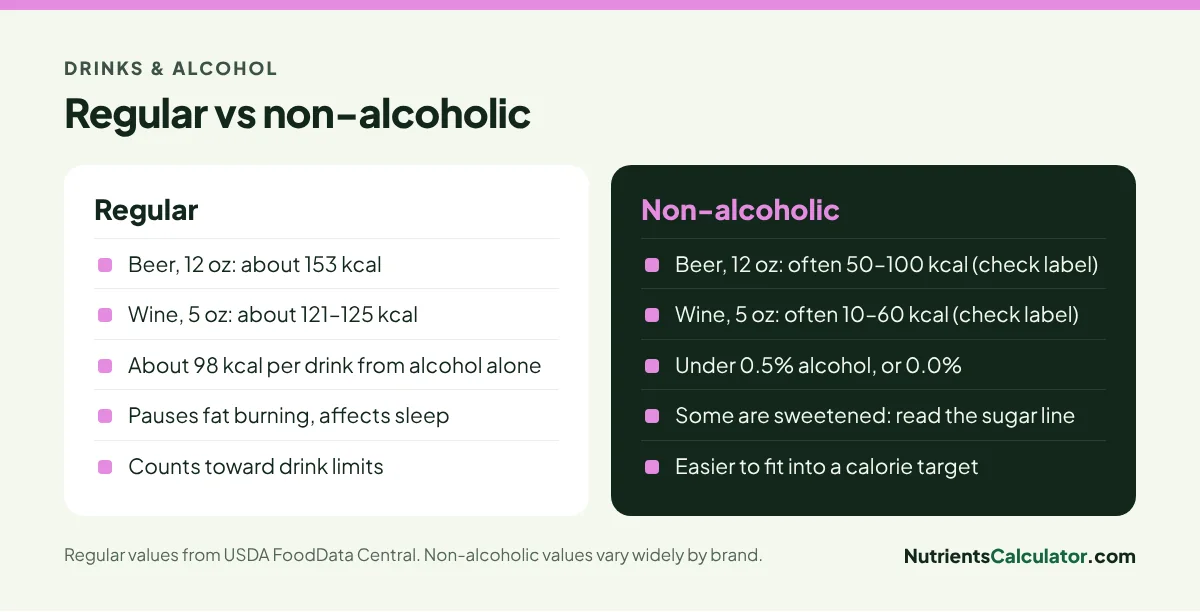
Alcohol has about 7 calories per gram, so removing it removes a lot of calories. From USDA data, a 12 oz regular beer has about 153 calories and a 5 oz glass of wine about 121–125. Of that, roughly 98 calories in each standard drink come from the alcohol itself.
Non-alcoholic versions vary much more than regular ones:
- Non-alcoholic lagers and IPAs are commonly around 50–100 calories per 12 oz can, and some light versions are lower. USDA’s general “malt beverage” entry, which also covers sweet malt drinks, lists about 131 calories and 29 g of sugar per 12 oz, a reminder that not all are light.
- Non-alcoholic wine can be very low: USDA lists about 9 calories per 5 oz. Many branded alcohol-free wines are higher, often 10–60 calories per glass, especially if grape juice or sugar is added to restore body.
Always check the label, since the range between brands is wide.
Sugar: the thing to watch
When alcohol is removed, some flavor and body go with it. Some brewers and winemakers make up for it with extra malt sugars, grape juice or sweeteners. Look at:
- Total sugars and, if listed, added sugars on the Nutrition Facts panel.
- Serving size: some cans are 16 oz.
A non-alcoholic beer with 15–20 g of sugar is still better than regular beer for alcohol, but it isn’t a “free” drink. For comparison, a 12 oz cola has about 37 g of sugar (sugary drinks).
Are they healthier?
For most adults, swapping a regular drink for a non-alcoholic one is a clear improvement:
- No (or very little) alcohol, which removes the main health risks. The 2025–2030 Dietary Guidelines advise drinking less alcohol for better health (HCPLive summary).
- Fewer calories, which helps with weight goals (alcohol and weight loss).
- Better sleep than after drinking alcohol.
- You can drive and wake up clear-headed.
They’re not health drinks, though. Water, unsweetened tea and sparkling water are still the best everyday choices.
Who should still be careful
- Pregnancy: many health authorities advise no alcohol at all in pregnancy. Choose 0.0% products, or skip them, and ask your doctor or midwife.
- Recovery from alcohol use disorder: the taste, smell and ritual can be triggers for some people. Talk to your support team before trying them.
- Certain medicines that react with even small amounts of alcohol.
- Children and teenagers: not appropriate as everyday drinks.
How to choose a good one

- Check the ABV: 0.0% if you need to avoid alcohol completely.
- Compare calories and sugar per serving.
- Check the serving size.
- Try a few styles: non-alcoholic IPAs and stouts often taste closer to the original than lagers; sparkling wines are often better than still.
- Use them as a pacing tool: alternate with alcoholic drinks on nights out to halve your total.
Track your drinks
Our alcohol calculator handles any ABV, including 0.5% drinks, and shows calories and standard drinks side by side.
The bottom line
Non-alcoholic beer and wine give you the taste and ritual of a drink with little or no alcohol and, usually, far fewer calories: many beers are 50–100 calories per can against about 153 for regular. Check labels for sugar and serving size, choose 0.0% if you need to avoid alcohol completely, and use them to cut back without missing out. For the full comparison of regular drinks, see calories in alcohol and low-calorie alcoholic drinks.
Frequently asked questions
Does non-alcoholic beer have any alcohol?
Often a little. In the US, drinks labeled 'non-alcoholic' can contain up to 0.5% alcohol by volume. Drinks labeled 'alcohol-free' or '0.0%' should contain essentially none.
Is non-alcoholic beer good for weight loss?
It's usually lower in calories than regular beer, so it can help if it replaces regular beer. Some brands have 50 calories or fewer per can; others are sweeter and higher. Check the label.
Can I drink non-alcoholic beer while pregnant?
Many health authorities advise avoiding alcohol entirely in pregnancy. Because 'non-alcoholic' drinks can contain up to 0.5%, choose products labeled 0.0% or skip them, and ask your doctor or midwife.
Is non-alcoholic wine healthier than regular wine?
It removes the alcohol, which is the main health concern, and usually most of the calories. Some versions add grape juice or sugar, so compare sugar and calories on the label.
Sources
- USDA FoodData Central
- eCFR: 27 CFR Part 7 — Labeling and Advertising of Malt Beverages
- NIAAA: What is a standard drink?
- HCPLive: 2025–2030 Dietary Guidelines and alcohol intake recommendations
This article is for general information and isn’t medical advice. Talk to your doctor or a registered dietitian about your own needs, especially if you have a health condition, are pregnant or take medication.