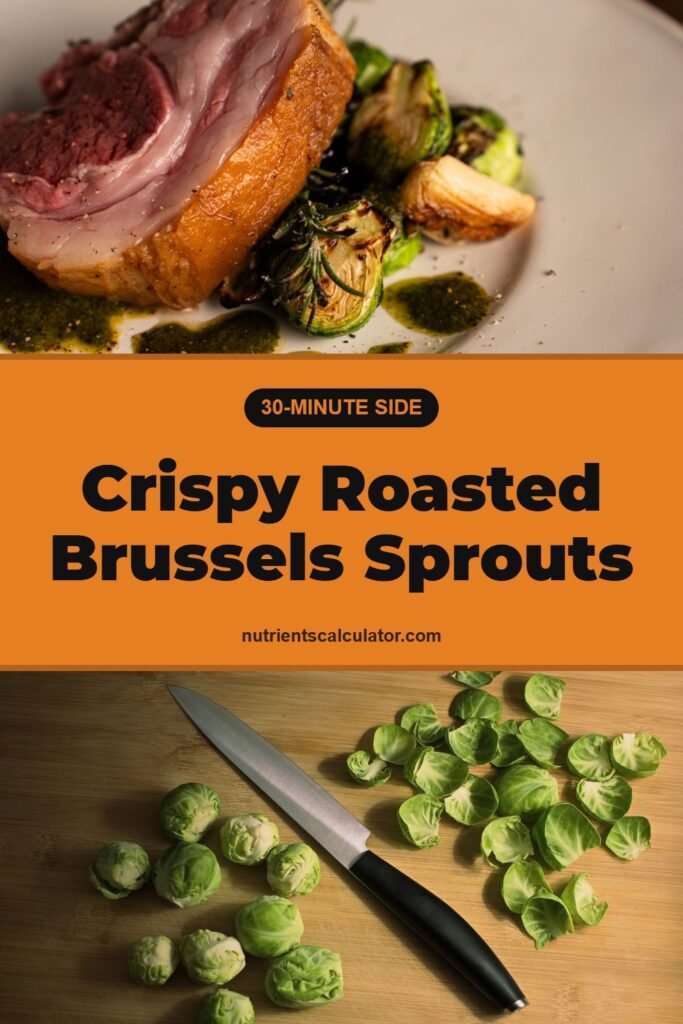
Roasted brussels sprouts are one of the most reliable vegetable sides you can make on a weeknight. High heat turns their natural sugars into a deep, nutty caramel, and the outer leaves crisp up while the centers stay tender. This version adds a balsamic glaze that clings to the sprouts and brings a sweet-tangy finish without any heavy sauce.
The method is simple: trim and halve the sprouts, toss them with a little oil, salt and pepper, roast them on a single layer at 425°F, then add the balsamic in the last few minutes. The whole dish takes about 35 minutes and needs only one sheet pan. It works as a side for roast chicken, pork or a simple grain bowl.
Once you understand the few variables that matter, such as pan spacing, oven temperature and when to add the vinegar, you can make roasted brussels sprouts consistently well every time.
Full recipe below
Balsamic Roasted Brussels Sprouts
Why this recipe works for roasted brussels sprouts
The biggest factor in good roasted brussels sprouts is heat. At 425°F, the sprouts brown on the cut side and the loose outer leaves turn crisp and almost chip-like. Lower temperatures steam the cabbage flavor out of them and leave a soft, grayish result. A hot oven also cooks the sprouts in about 20 to 25 minutes, which keeps the prep-to-plate time short.
Balsamic vinegar works well here for two reasons. Its acidity balances the natural bitterness of the sprouts, and its sugars darken and thicken as they reduce in the hot pan. Adding it near the end of cooking, rather than at the start, keeps it from scorching while still giving you a glossy coating.
Brussels sprouts are also a useful vegetable for nutrition. A 1-cup serving of cooked sprouts provides a good amount of vitamin C, vitamin K and fiber. You can look up the exact figures in the USDA FoodData Central database, which is the source used to calculate the nutrition for this recipe. Vegetables like this fit well into the pattern described in the Dietary Guidelines for Americans, which recommends filling half the plate with fruits and vegetables.
Ingredients you need and how to choose them
- Brussels sprouts, 1.5 lb: Choose firm, bright green sprouts about 1 to 1.5 inches across. Smaller sprouts are sweeter and cook more evenly. Avoid sprouts with yellowing leaves or loose, wilted outer layers.
- Extra-virgin olive oil, 2 tbsp: A fruity oil adds flavor at high heat. Avoid cooking with the most delicate finishing oils at 425°F.
- Kosher salt, 1 tsp: Diamond Crystal and Morton have different densities, so start with the smaller amount and adjust to taste.
- Black pepper, 0.5 tsp: Freshly cracked pepper gives better flavor than pre-ground.
- Balsamic vinegar, 3 tbsp: Use a mid-range balsamic labeled as aged or with a short ingredient list. Very thin, cheap balsamic can taste harsh; very thick glazes are often sweetened with added sugar.
- Honey, 1 tsp (optional): A small amount helps the glaze caramelize and balances sharp vinegar. Maple syrup works as a substitute.
- Garlic, 2 cloves: Thinly sliced garlic becomes golden and sweet. Minced garlic burns faster, so add it in the last 5 minutes if you use it.

How to make roasted brussels sprouts step by step
- Preheat the oven to 425°F and place a rimmed sheet pan inside while it heats. A hot pan gives the sprouts an immediate sear.
- Trim the stem ends of 1.5 lb of brussels sprouts and remove any loose or yellowed outer leaves. Cut large sprouts in half lengthwise and leave small ones whole.
- In a large bowl, toss the sprouts with 2 tbsp olive oil, 1 tsp kosher salt and 0.5 tsp black pepper until every piece is lightly coated. Oil on the leaves helps them crisp.
- Carefully spread the sprouts cut-side down on the hot sheet pan in a single layer. Leave space between them. Crowding causes steaming instead of browning, so use two pans if needed.
- Roast for 15 minutes, then stir or flip the sprouts with a spatula and roast 10 to 12 more minutes, until the cut sides are deeply browned and the centers are fork-tender.
- While the sprouts roast, stir together 3 tbsp balsamic vinegar and 1 tsp honey in a small saucepan. Simmer over medium heat for 2 to 3 minutes, until it thickens slightly and coats the back of a spoon.
- Transfer the hot sprouts to a serving bowl, drizzle with the balsamic glaze and toss gently. Taste and add more salt or pepper if needed, then serve immediately.
Storage and reheating roasted brussels sprouts
Let leftover roasted brussels sprouts cool to room temperature for no more than 2 hours, then move them into a shallow airtight container. The FoodSafety.gov cold food storage chart recommends refrigerating cooked vegetables within two hours and eating leftovers within 3 to 4 days.
To reheat, spread the sprouts on a sheet pan and warm them at 400°F for 6 to 8 minutes. This brings back some of the crisp edges that a microwave would soften. Avoid reheating them more than once.
Roasted brussels sprouts do not freeze well. Their texture turns mushy after thawing, so cook only the amount you plan to eat within a few days.
Common mistakes to avoid with roasted brussels sprouts
- Crowding the pan: Piling sprouts on top of each other traps steam. Use a large sheet pan or two pans so the sprouts sit in one layer with room to brown.
- Using a low oven: Temperatures below 400°F tend to dry out the outside before the centers cook. Stay at 425°F for the best caramelization.
- Adding balsamic too early: Vinegar with sugar can burn on a hot pan. Reduce it separately and drizzle it on at the end.
- Cutting the sprouts unevenly: Mixed sizes cook at different rates. Halve or quarter the larger sprouts so every piece is about the same size.
- Skipping the trim: Old, thick stem ends stay tough even when the leaves are crisp. Trim the base and peel off any damaged leaves before roasting.
Swaps and variations, including a lighter option
- Lighter version: Use 1 tbsp olive oil instead of 2 tbsp and skip the honey. The sprouts still brown well because of the high heat, and the calorie count drops noticeably.
- Maple balsamic: Replace the honey with 1 tsp maple syrup for a warm, rich flavor that suits fall meals.
- Bacon version: Crisp 2 oz of diced bacon first, then roast the sprouts in the rendered fat and skip the added oil. Use a little less salt because bacon is salty.
- Parmesan finish: Add 2 tbsp finely grated Parmesan during the last 2 minutes of roasting for a savory edge.
- Crunchy topping: Scatter 2 tbsp toasted pecans or sliced almonds over the finished dish for texture.
- Garlic and lemon: Toss the cooked sprouts with 1 tsp lemon zest and a squeeze of lemon juice in place of the balsamic for a brighter, lighter side.

What to serve with roasted brussels sprouts
These sprouts pair well with roast chicken, pork tenderloin or a simple baked salmon. The sweet-tangy glaze matches rich, savory mains without overpowering them. For a complete plate, add a starch such as roasted potatoes or a grain. Our quinoa side dish with lemon and herbs is a light option that balances the richness of the sprouts.
For a vegetarian dinner, serve the sprouts over warm farro or lentils with a spoonful of plain Greek yogurt. If you want to build a larger spread, pair them with roasted root vegetables for a warm, colorful side table.
Frequently asked questions
How long do roasted brussels sprouts take in the oven?
At 425°F, halved brussels sprouts take about 25 to 27 minutes total, with a flip halfway through. Small whole sprouts may need an extra 3 to 5 minutes.
What temperature should I roast brussels sprouts at?
Roast brussels sprouts at 425°F. This high heat browns the cut sides and crisps the outer leaves without drying out the center.
Why are my roasted brussels sprouts soggy?
Soggy sprouts usually mean the pan was crowded or the oven was not hot enough. Spread them in a single layer with space between them and make sure the oven is fully preheated.
Can I make roasted brussels sprouts ahead of time?
You can trim and halve the sprouts up to a day ahead and store them in the refrigerator. Roast them just before serving for the best texture, and make the balsamic glaze fresh.
Is balsamic glaze the same as balsamic vinegar?
Not exactly. Balsamic glaze is balsamic vinegar reduced until thick and often sweetened. In this recipe, you can reduce regular balsamic vinegar with a little honey to create a similar glaze.

Balsamic Roasted Brussels Sprouts
Crispy, caramelized brussels sprouts roasted at 425°F and finished with a sweet-tangy balsamic glaze.
Ingredients
For the glaze
Instructions
- Preheat the oven to 425°F and place a rimmed sheet pan inside while it heats.
- Trim the stem ends of the brussels sprouts, remove damaged outer leaves, and halve larger sprouts lengthwise.
- Toss the sprouts with olive oil, kosher salt and black pepper.
- Spread the sprouts cut-side down on the hot pan in a single layer with space between them.
- Roast for 15 minutes, flip or stir, then roast 10 to 12 more minutes until deeply browned and tender.
- Simmer the balsamic vinegar and honey in a small saucepan over medium heat for 2 to 3 minutes until slightly thickened.
- Transfer the sprouts to a bowl, drizzle with the balsamic glaze, toss and serve.
Notes
- Leftovers keep refrigerated for 3 to 4 days. Reheat at 400°F for 6 to 8 minutes to restore crispness.
- For a lighter version, use 1 tbsp olive oil and omit the honey.
Nutrition per serving
- Calories
- 159
- Protein
- 6.9g
- Carbs
- 19.9g
- Fat
- 7.7g
- Saturated fat
- 1g
- Fiber
- 8.2g
- Sugar
- 3.1g
- Sodium
- 628mg
- Cholesterol
- 0mg