We independently choose the products in this guide. As an Amazon Associate we earn from qualifying purchases, at no extra cost to you. How we make money.
Key takeaways
- Food journals build awareness: in one large trial, daily food records doubled weight loss.
- Best overall: Clever Fox Food Journal. Fitness and food: Fitlosophy Fitbook. Meal planning: Knock Knock pad.
- Track what, how much and when; add hunger and mood if helpful.
- Paper or app, the best tool is the one you’ll keep using.
Not everyone wants to log meals in an app. Food journals offer a calmer, screen-free way to track what you eat, and paper has real advantages: it’s flexible, quick, and makes room for notes about hunger, mood and sleep that apps often skip. Here are the best food journals and meal planner notebooks, and how to use them well. If you’re building the habit, start with how to build a food tracking habit.
Why food journals work
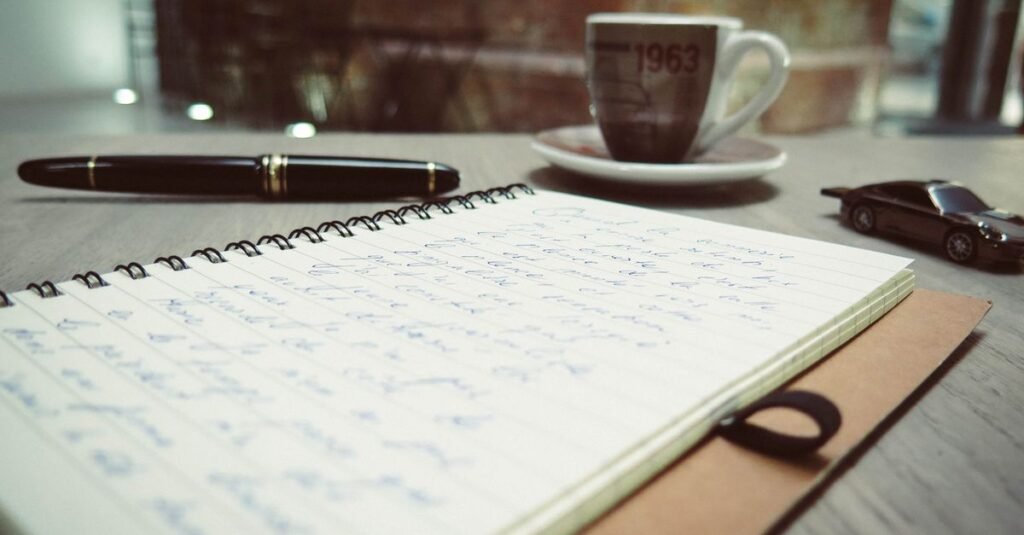
Writing food down makes you notice what you eat. In the Weight Loss Maintenance Trial, people who kept daily food records lost about twice as much weight as those who kept none. A review of self-monitoring studies found a consistent link between tracking and weight loss. The act of recording, not perfect accuracy, seems to do much of the work.
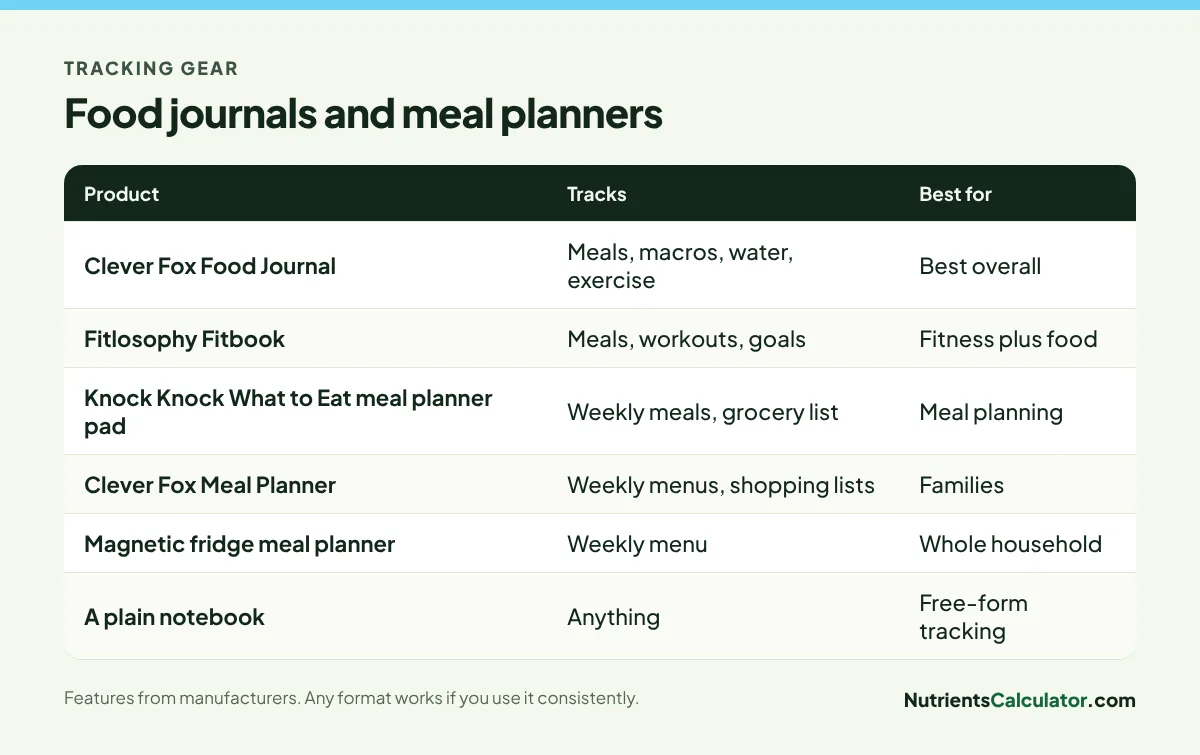
| Product | Tracks | Best for |
|---|---|---|
| Clever Fox Food Journal | Meals, macros, water, exercise | Best overall |
| Fitlosophy Fitbook | Meals, workouts, goals | Fitness plus food |
| Knock Knock What to Eat meal planner pad | Weekly meals, grocery list | Meal planning |
| Clever Fox Meal Planner | Weekly menus, shopping lists | Families |
| Magnetic fridge meal planner | Weekly menu | Whole household |
| A plain notebook | Anything | Free-form tracking |
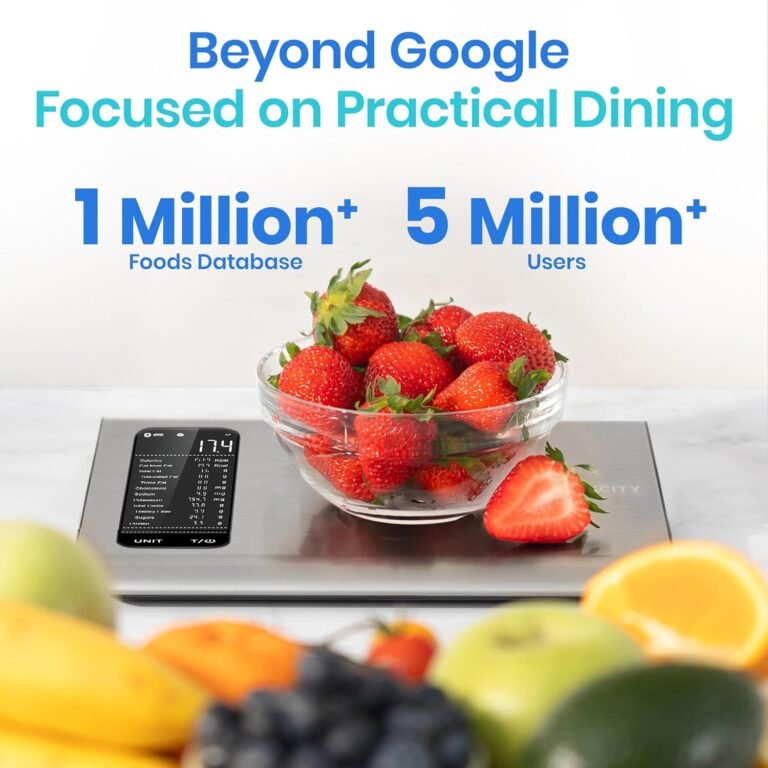
Etekcity Food Scale
0.1g accuracy — the perfect companion for exact portions.
What to look for
- Layout: daily pages with space for each meal, snacks, water and notes.
- Macro columns if you track protein, carbs and fat.
- Undated pages so a missed week isn’t wasted.
- Size: small enough to carry, big enough to write in.
- Extras: goal pages, weekly reviews, habit trackers.
The best food journals and meal planners
1. Clever Fox Food Journal: best overall

Clever Fox’s food journal has daily pages for meals, calories, macros, water and exercise, plus goal-setting and weekly review pages. It’s undated, so you can start any day.
Check price on Amazon Clever Fox Food Journal
2. Fitlosophy Fitbook: best for fitness and food
The Fitbook combines a food log with workout tracking and goal setting in a compact 12-week format.
Check price on Amazon Fitlosophy Fitbook Fitness Journal and Planner
3. Knock Knock What to Eat meal planner pad: best for meal planning
A tear-off weekly pad with space for each day’s meals and a shopping list. Stick it on the fridge and plan in five minutes.
Check price on Amazon Knock Knock What to Eat Meal Planner Pad
4. Clever Fox Meal Planner: best for families
A notebook for weekly menus, recipes and shopping lists. Great for families planning together.
Check price on Amazon Clever Fox Meal Planner Notebook
5. Magnetic fridge meal planner: best for the whole household
A dry-erase weekly menu board on the fridge means everyone knows what’s for dinner.
Check price on Amazon Magnetic Weekly Meal Planner Whiteboard for Fridge
6. A plain notebook: free-form tracking
You don’t need a special journal. A cheap notebook works fine. Write the date, meals, portions and a line about how you felt.
Check price on Amazon Moleskine Classic Notebook
How to use food journals without obsessing
- Log as you go, not at the end of the day, when it’s easy to forget.
- Estimate portions with your hand if you don’t weigh food. See the hand portion guide or use a food scale.
- Review weekly: look for patterns, like late-night snacking or low-protein breakfasts. Our weekly nutrition review shows how.
- Be kind to yourself: the goal is information, not judgment. See how to track food without obsessing.
If food tracking ever starts to feel stressful or controlling, take a break and talk to a doctor or registered dietitian.
How to set up food journals for success
A food journal works best when it takes less than a minute per meal. Set yourself up like this:
- Keep it where you eat: on the kitchen counter, in your bag or on your desk.
- Use a simple format: time, food, amount, and an optional note.
- Add one extra detail at a time: hunger level, mood, sleep or water.
- Review every Sunday: what went well, what got in the way, one small change for next week.
What to look for when you review
- Patterns in timing: long gaps between meals that end in big evening snacks.
- Protein at breakfast: a common gap; see is breakfast the most important meal?
- Vegetables and fruit: how many servings a day?
- Liquid calories: coffee drinks, juice and alcohol.
- Emotional or stress eating: notes about mood can reveal triggers.
Bring these insights into your next meal plan. Our free meal planner turns the plan into a shopping list.
Paper vs app: which should you choose?
- Choose paper if screens distract you, you want to note feelings and context, or you find apps stressful.
- Choose an app if you want automatic calorie and macro totals, barcode scanning or charts.
- Try both: plan meals on paper and log in an app, or the other way round.
Our AI meal analyzer is a middle path: snap a photo instead of typing, then jot the totals in your journal.
Food journals and meal planners for families
A shared meal planner on the fridge helps the whole household. Everyone knows what’s for dinner, kids can help choose meals, and shopping is quicker. Our family meal plan gives a ready-made week to copy.
When to take a break
Food journals are a tool, not a test. If tracking makes you anxious, leads to skipping meals or feels like it’s controlling your life, take a break and talk to a doctor or registered dietitian. You can still eat well by focusing on simple habits: regular meals, protein, vegetables and enjoying your food.
The bottom line
Food journals are a simple, proven way to understand your eating. The Clever Fox Food Journal is our top pick, the Fitlosophy Fitbook is great if you track workouts too, and the Knock Knock pad makes weekly meal planning easy. Pick one, keep it where you eat, and review it once a week.
Frequently asked questions
Does keeping a food journal help with weight loss?
Research suggests it does. In a large weight-loss trial, people who kept daily food records lost about twice as much weight as those who didn't, likely because writing food down builds awareness.
Is a paper food journal better than an app?
Neither is better for everyone. Apps calculate calories automatically; paper is calmer, flexible and good for noting hunger, mood and habits. The best tool is the one you'll use.
What should I write in a food journal?
At minimum: what you ate, roughly how much, and when. Optional extras include hunger before and after, mood, water, sleep and exercise.
How long should I keep a food journal?
Even 2 to 4 weeks can reveal useful patterns. Some people keep going for accountability; others switch to occasional check-ins.
Should I count calories in a food journal?
You can, but you don't have to. Some people find it helpful to write calories and protein; others just note what and how much they ate. Both build awareness.
What's the difference between a food journal and a meal planner?
A food journal records what you actually ate. A meal planner plans what you'll eat in the week ahead. Many people use both: plan on Sunday, record during the week.
What should a beginner write in a food journal?
Start with the time, what you ate and a rough amount. After a week, add one extra detail like hunger or water.
Can a food journal help with bloating or stomach issues?
Yes. Noting foods alongside symptoms can reveal patterns to discuss with your doctor or a registered dietitian.
How do I stay consistent with a food journal?
Keep it visible, log right after eating, and don't skip a whole day because of one imperfect meal.
Are digital food journals better than paper?
Neither is better for everyone. Digital journals calculate totals automatically; paper is calmer and more flexible. Choose the one you'll keep using.
How do I track restaurant meals in a food journal?
Write what you ordered and a rough portion size. Our guide to estimating calories when eating out can help you put a number on it.
Can I use a food journal with intermittent fasting?
Yes. Note your eating window, meals and hunger levels to see how the schedule works for you.
Sources
- Hollis JF et al. Weight loss during the intensive intervention phase of the weight-loss maintenance trial. Am J Prev Med, 2008
- Burke LE et al. Self-monitoring in weight loss: a systematic review of the literature. J Am Diet Assoc, 2011
This article is for general information and isn’t medical advice. Talk to your doctor or a registered dietitian about your own needs, especially if you have a health condition, are pregnant or take medication.