Part of our guide: How to Make a Meal Plan for the Week (in About 30 Minutes)
Key takeaways
- The best healthy lunch ideas for work combine protein, fiber and vegetables, so you stay full until dinner.
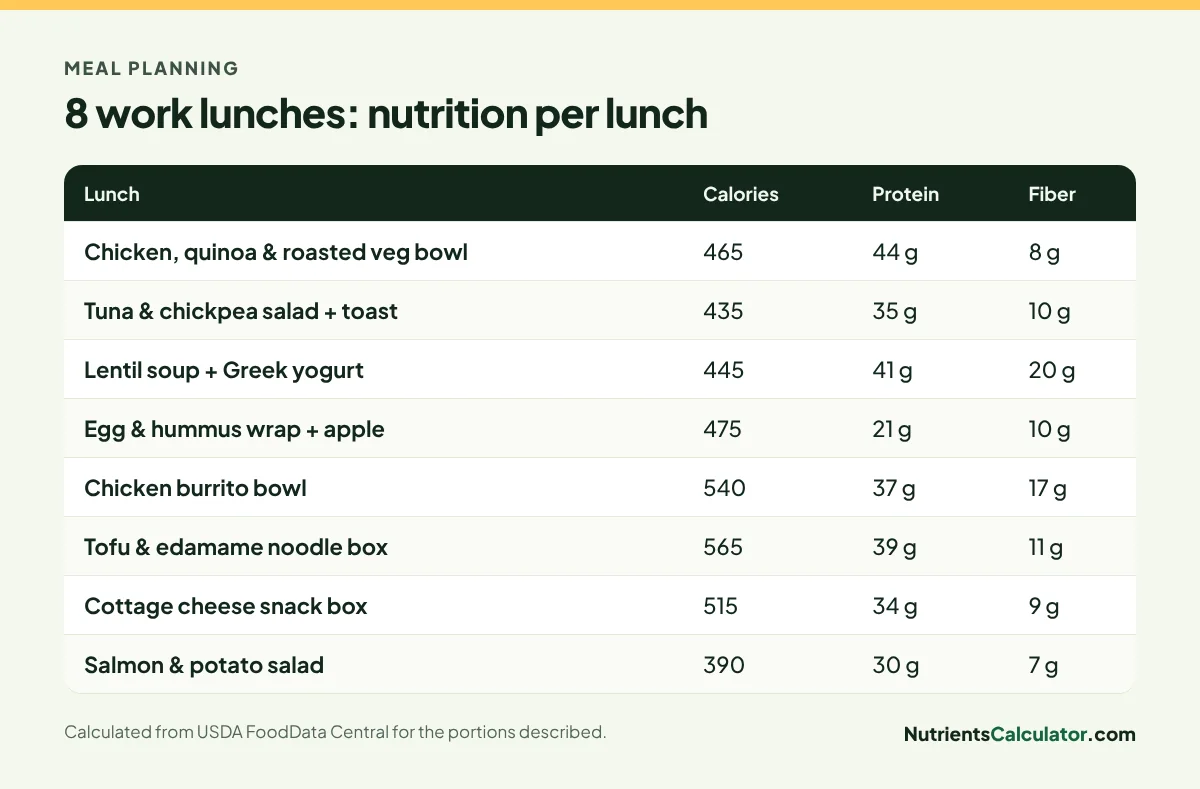
- The eight lunches here range from 390 to 565 calories with 21–44 g of protein.
- Most can be packed in 10 minutes, especially if you cook extra at dinner.
- Keep cold lunches cold: an insulated bag and ice pack, and eat within a few hours.
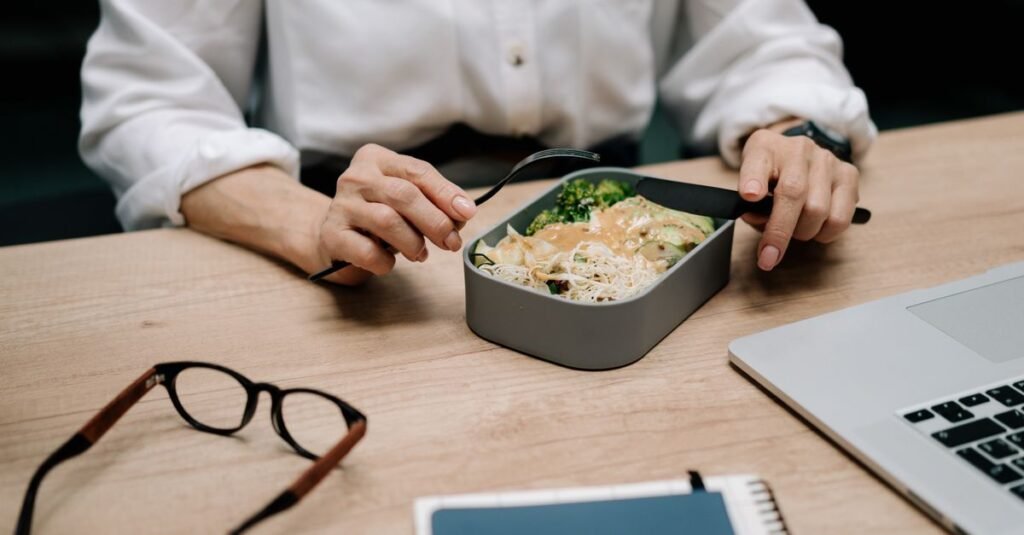
A good work lunch does two jobs: it tastes good enough that you don’t wander to the vending machine, and it’s filling enough to get you through a long afternoon. These eight healthy lunch ideas for work are easy to pack, travel well and have calories, protein and fiber calculated from USDA data, so you know what you’re getting.
The work-lunch formula
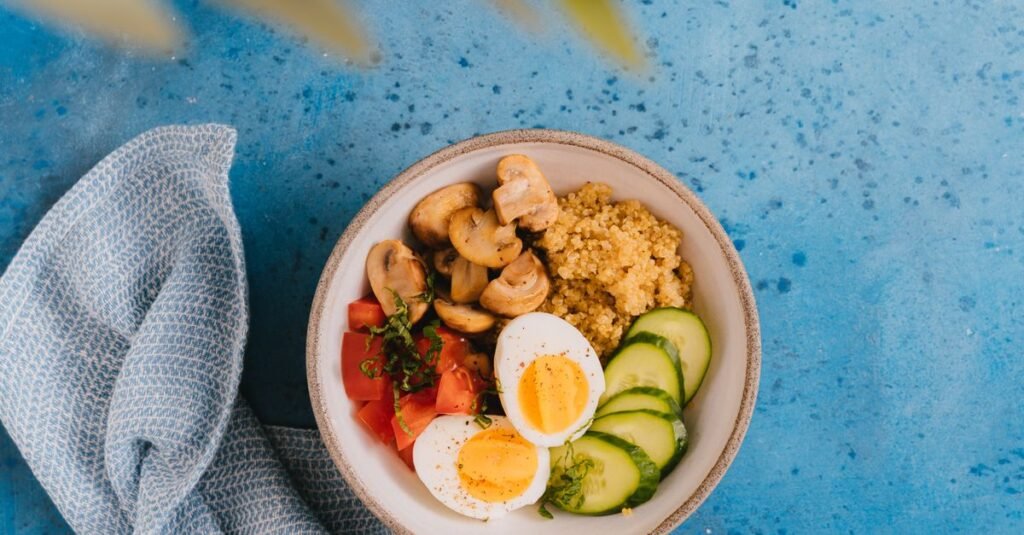
Build every lunch from four parts:
- Protein (25–40 g): chicken, tuna, salmon, eggs, tofu, lentils, Greek yogurt, cottage cheese.
- Fiber-rich carbs: quinoa, brown rice, beans, whole-wheat bread or wraps, potatoes, fruit.
- Vegetables: raw or roasted, the more colorful the better.
- A little fat: olive oil, avocado, hummus, nuts, cheese.
Protein and fiber are what keep afternoon hunger away. Our guide to protein per meal explains why 25–40 g works well.
Etekcity Food Scale
0.1g accuracy — the perfect companion for exact portions.
8 healthy lunch ideas for work
1. Chicken, quinoa and roasted vegetable bowl (465 kcal, 44 g protein)
4 oz roasted chicken breast, ¾ cup cooked quinoa, roasted red pepper and broccoli, drizzled with 1½ tsp olive oil and lemon. Make the chicken and vegetables in one tray at dinner.
2. Tuna and chickpea salad with toast (435 kcal, 35 g protein)
A 4 oz drained can of light tuna mixed with ½ cup chickpeas, chopped tomato and cucumber, 2 tsp olive oil and lemon; one slice of whole-wheat bread on the side. Keep the dressing separate until lunchtime so it stays crisp.
3. Lentil soup with Greek yogurt (445 kcal, 41 g protein, 20 g fiber)
A big thermos of lentil and carrot soup with spinach (1 cup lentils), a 6 oz pot of plain Greek yogurt on the side (or stirred in), and a slice of whole-wheat bread. The most filling lunch here.
4. Egg and hummus wrap with an apple (475 kcal, 21 g protein)
Two sliced hard-boiled eggs, 2 tbsp hummus, spinach and red pepper in a flour tortilla, plus an apple. The lowest protein of the eight; add a cheese stick or Greek yogurt if you need more.
5. Chicken burrito bowl (540 kcal, 37 g protein, 17 g fiber)
Black beans, brown rice, 3 oz roasted chicken thigh, chopped tomatoes or salsa and ¼ avocado. Pack the avocado with a squeeze of lime so it doesn’t brown.
6. Tofu and edamame noodle box (565 kcal, 39 g protein)
Crispy cubes of firm tofu, egg noodles, edamame and grated carrot with a soy-ginger dressing. Good cold or warmed.
7. Cottage cheese snack box (515 kcal, 34 g protein)
1 cup 2% cottage cheese, 1 cup strawberries, 1 oz almonds and 1 oz whole-wheat crackers. Zero cooking; ideal for days with no prep time.
8. Salmon and potato salad (390 kcal, 30 g protein)
3 oz cooked salmon (leftover or canned), 1 cup boiled potatoes, green beans and a Greek-yogurt-and-dill dressing. Canned salmon works just as well and costs less (canned vs fresh salmon).
Pack it in 10 minutes
- Cook once, eat twice. Make extra chicken, rice, quinoa or roasted vegetables at dinner and pack lunch while you clear up.
- Keep a lunch shelf. Canned tuna and salmon, chickpeas, crackers, nuts and wraps make emergency lunches possible.
- Prep components on Sunday. A pot of grains, a tray of vegetables and a batch of hard-boiled eggs cover most of the week. Our meal prep for beginners guide shows a 90-minute session.
Keep it safe
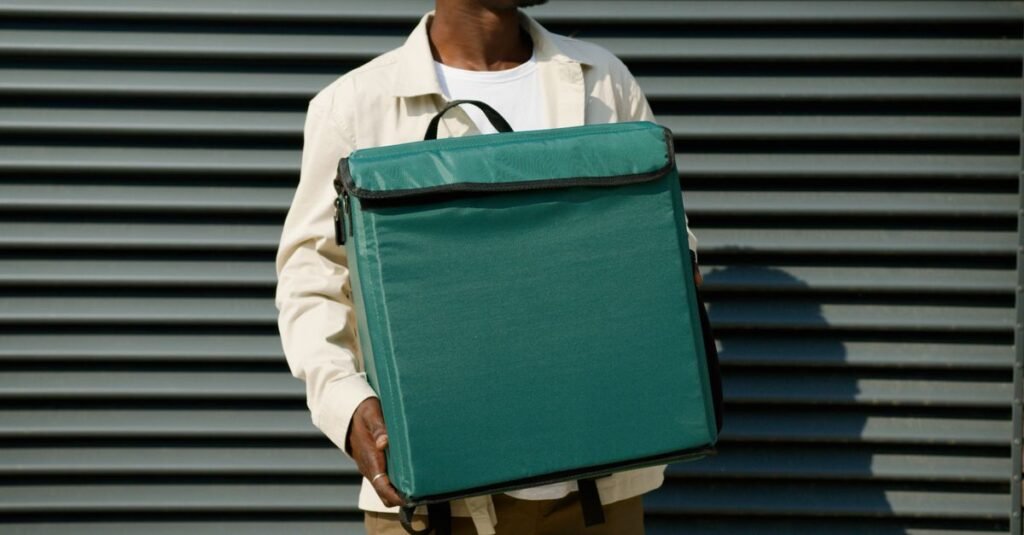
Cold food should stay at 40°F or below. Use an insulated lunch bag with at least two ice packs, keep it in a fridge at work if you can, and don’t leave perishable food out for more than two hours (USDA FSIS). Hot food stays hot in a preheated thermos. Eat cooked leftovers within 3–4 days (USDA FSIS).
Keep it interesting
Same base, different flavors:
- Mexican: beans, rice, salsa, lime, cumin.
- Mediterranean: chickpeas, cucumber, tomato, feta, lemon, oregano.
- Asian-inspired: tofu or chicken, noodles or rice, soy, ginger, sesame.
- Indian-inspired: lentils or chickpeas, spinach, curry spices, yogurt.
Rotating three or four favorites is enough for most people.
Fit lunch into your day
If you’re following a calorie target, these lunches pair well with the 1,800-calorie meal plan, and our planner can add them to your week with a shopping list.
The bottom line
Healthy lunch ideas for work don’t need to be complicated: protein, fiber-rich carbs, vegetables and a little fat, packed in 10 minutes. These eight lunches give you 390–565 calories and 21–44 g of protein each, keep well and cost far less than buying lunch. Pick three, rotate them, and use dinner leftovers to make packing almost automatic. For the planning side, see how to make a meal plan.
Frequently asked questions
What is a healthy lunch for work?
A healthy work lunch has a protein food, vegetables or fruit, a fiber-rich starch and a little healthy fat. Around 400–550 calories with 25–40 g of protein suits many adults and keeps you full through the afternoon.
How do I keep a packed lunch safe without a fridge?
Use an insulated bag with an ice pack and eat within a few hours, or choose foods that are safe at room temperature for a short time. Perishable food shouldn't sit out above 40°F for more than two hours.
How can I make work lunches less boring?
Keep the formula and change the flavors: the same chicken and rice becomes a burrito bowl, a curry bowl or a Mediterranean bowl with different sauces and vegetables.
Is it cheaper to pack lunch?
Usually, yes. Most of these lunches cost a few dollars in ingredients, well below the price of most bought lunches, especially if you cook extra at dinner.
Sources
This article is for general information and isn’t medical advice. Talk to your doctor or a registered dietitian about your own needs, especially if you have a health condition, are pregnant or take medication.