Part of our guide: How to Make a Meal Plan for the Week (in About 30 Minutes)
Key takeaways
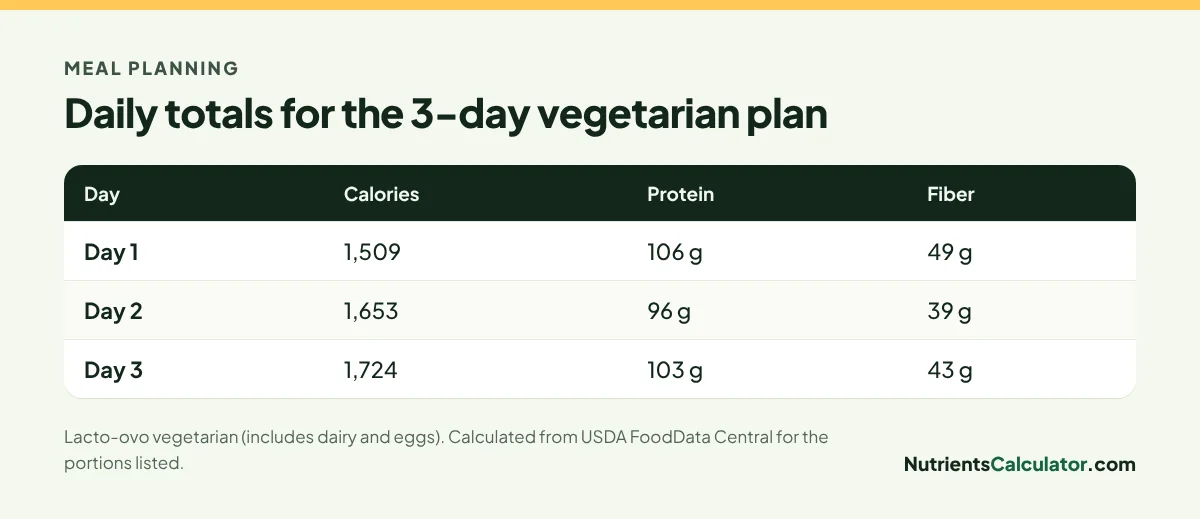
- This vegetarian meal plan gives you three full days with 96–106 g of protein and 39–49 g of fiber each.
- Protein comes from lentils, beans, chickpeas, tofu, tempeh, edamame, eggs, Greek yogurt and cottage cheese.
- Days run from about 1,500 to 1,725 calories; add a snack or bigger portions for higher needs.
- Keep an eye on iron, vitamin B12, zinc and omega-3s.
Going meat-free, or just eating less meat, raises one question more than any other: will I get enough protein? This vegetarian meal plan answers it with three complete days of ordinary meals, each delivering about 100 g of protein, calculated from USDA FoodData Central. It’s lacto-ovo vegetarian (it includes eggs and dairy), with notes for vegans.
How the plan was built
- A protein food at every meal and snack: legumes, soy, eggs or dairy.
- Fiber from beans, lentils, whole grains, fruit and vegetables, with all three days well above the 25–30 g most adults need.
- Vitamin C with iron-rich meals (peppers, tomatoes, berries) to help absorb plant iron.
- Normal ingredients from any supermarket.
If you need more calories, add a snack, a slice of bread or a larger portion of grains. To work out your own target, see how many calories you need.
Etekcity Food Scale
0.1g accuracy — the perfect companion for exact portions.
Day 1 (1,509 calories, 106 g protein, 49 g fiber)
Breakfast (about 395): 1 cup plain nonfat Greek yogurt, ½ cup rolled oats, ½ cup blueberries, 1 tbsp chia seeds.
Lunch (about 485): Lentil and quinoa salad: 1 cup cooked lentils, ½ cup cooked quinoa, a handful of spinach, 1 oz feta, ½ tbsp olive oil and lemon.
Snack (about 190): 1 cup shelled edamame, lightly salted.
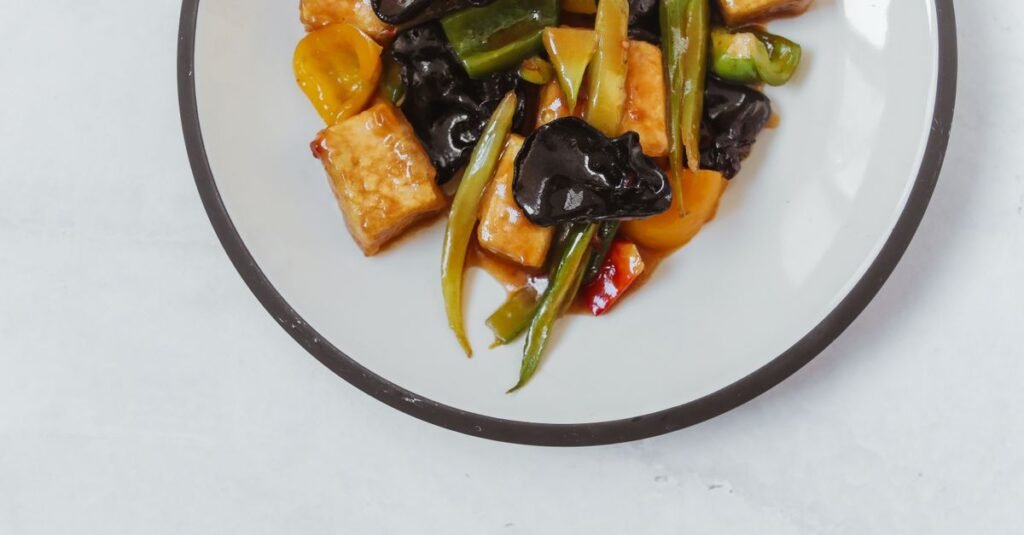
Dinner (about 440): Crispy tofu stir-fry: ½ cup firm tofu, 1 cup broccoli and ½ cup red pepper cooked in ½ tbsp oil, over ½ cup brown rice.
Day 2 (1,653 calories, 96 g protein, 39 g fiber)
Breakfast (about 425): 2 scrambled eggs on 2 slices of whole-wheat toast with ¼ avocado.
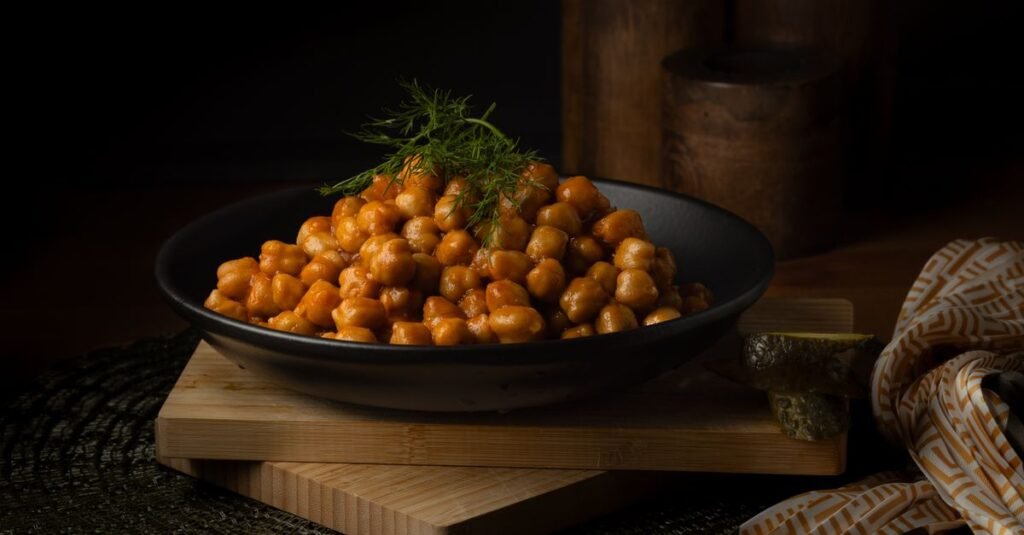
Lunch (about 590): Chickpea pita plate: 1 cup chickpeas, 1 large whole-wheat pita, 2 tbsp hummus, cucumber, tomatoes and 1 oz feta.
Snack (about 150): ½ cup 2% cottage cheese with a peach.
Dinner (about 485): Tempeh bolognese: 3½ oz crumbled tempeh simmered in ½ cup marinara, over 1 cup whole-wheat spaghetti, with ½ cup cooked spinach.
Day 3 (1,724 calories, 103 g protein, 43 g fiber)
Breakfast (about 475): ½ cup oats cooked in 1 cup 2% milk, topped with a sliced banana and 1 tbsp peanut butter.
Lunch (about 515): Black bean bowl: 1 cup black beans, ½ cup brown rice, 1 oz part-skim mozzarella, ½ cup tomatoes and ¼ avocado.
Snack (about 150): 6 oz plain nonfat Greek yogurt with 1 cup strawberries.
Dinner (about 585): Tofu and edamame noodles: ½ cup firm tofu, ½ cup edamame, 1 cup egg noodles and ½ cup broccoli in ½ tbsp oil with soy and ginger.
Where the protein comes from
USDA values for the main protein foods in the plan:
| Food | Portion | Protein |
|---|---|---|
| Firm tofu | ½ cup | 22 g |
| Tempeh | 3½ oz | about 20 g |
| Lentils, cooked | 1 cup | 18 g |
| Edamame, shelled | 1 cup | 18.5 g |
| Greek yogurt, nonfat | 1 cup | 23 g |
| Chickpeas, cooked | 1 cup | 14.5 g |
| Black beans, cooked | 1 cup | 15 g |
| Cottage cheese, 2% | ½ cup | 12 g |
| Egg | 1 large | 6 g |
You don’t need to combine proteins at each meal; eating a variety over the day covers all essential amino acids. Our guide to daily protein needs has a vegetarian section.
Nutrients to watch
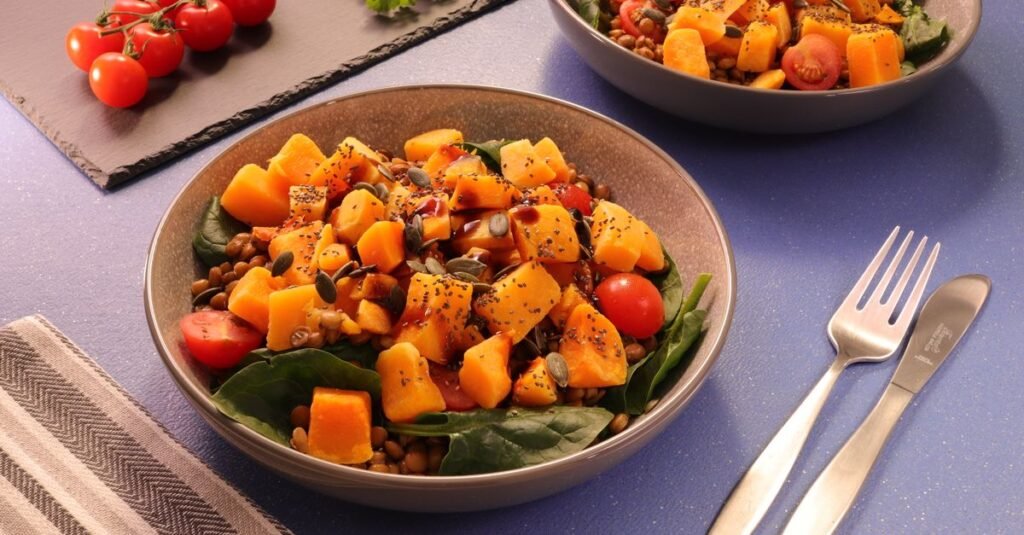
- Iron. Plant iron is absorbed less well than iron from meat. Pair beans, lentils, tofu and spinach with vitamin C (peppers, tomatoes, citrus, berries), and keep tea and coffee between meals (NIH ODS). See how to absorb more iron.
- Vitamin B12. Found naturally only in animal foods. Eggs and dairy supply it for vegetarians; vegans need fortified foods or a supplement (NIH ODS).
- Zinc. Beans, lentils, seeds, nuts, dairy and whole grains.
- Omega-3s. Chia, flax and walnuts provide ALA; algae oil supplements provide EPA and DHA.
- Calcium and vitamin D (especially for vegans): fortified plant milks and calcium-set tofu.
Making it vegan
- Swap Greek yogurt for unsweetened soy yogurt (closest in protein) and milk for soy milk.
- Replace eggs with tofu scramble.
- Use vegan cheese or nutritional yeast instead of feta and mozzarella, or skip them.
- Swap egg noodles for rice or soba noodles.
- Add a B12 supplement or fortified foods.
Shopping list for all three days
Produce: blueberries, strawberries, 1 banana, 1 peach, 1 avocado, spinach (5 oz), broccoli (1 head or frozen), 1 red pepper, 1 cucumber, tomatoes, lemon, ginger.
Protein: dry or canned lentils, 1 can chickpeas, 1 can black beans, firm tofu (1 block), tempeh (1 pack), frozen shelled edamame, 2 eggs.
Dairy: plain nonfat Greek yogurt (32 oz tub), 2% milk, 2% cottage cheese, feta, part-skim mozzarella.
Pantry: rolled oats, quinoa, brown rice, whole-wheat bread, 1 large whole-wheat pita, whole-wheat spaghetti, egg noodles, marinara, hummus, peanut butter, chia seeds, olive oil, soy sauce.
Want to build your own week? Our meal planning guide shows the method, and the free planner totals calories and protein for you.
The bottom line
A vegetarian meal plan can easily provide 95–105 g of protein a day from beans, lentils, tofu, tempeh, edamame, eggs and dairy, along with far more fiber than most diets. Use these three days as written or mix and match meals, pair iron-rich foods with vitamin C, and make sure you’re covered for B12. For more meat-free dinners, see quick healthy dinners.
Frequently asked questions
Can you get enough protein on a vegetarian meal plan?
Yes. Beans, lentils, tofu, tempeh, edamame, eggs, Greek yogurt and cottage cheese make it easy. Each day in this plan provides 96–106 g of protein.
Do vegetarians need to combine proteins at every meal?
No. Eating a variety of plant proteins over the day, such as beans and grains, covers all essential amino acids. They don't need to be in the same meal.
What nutrients should vegetarians watch?
Iron, vitamin B12, zinc, omega-3 fats, and for vegans also calcium, iodine and vitamin D. Dairy and eggs supply B12; vegans need a B12 supplement or fortified foods.
Is a vegetarian diet good for weight loss?
It can be, because many vegetarian staples are high in fiber and filling. As with any diet, total calories decide weight loss; the days in this plan are 1,500–1,725 calories.
Sources
- USDA FoodData Central
- NIH Office of Dietary Supplements: Vitamin B12 fact sheet
- NIH Office of Dietary Supplements: Iron fact sheet
- National Academies: Dietary Reference Intakes for macronutrients
This article is for general information and isn’t medical advice. Talk to your doctor or a registered dietitian about your own needs, especially if you have a health condition, are pregnant or take medication.