We independently choose the products in this guide. As an Amazon Associate we earn from qualifying purchases, at no extra cost to you. How we make money.
Key takeaways
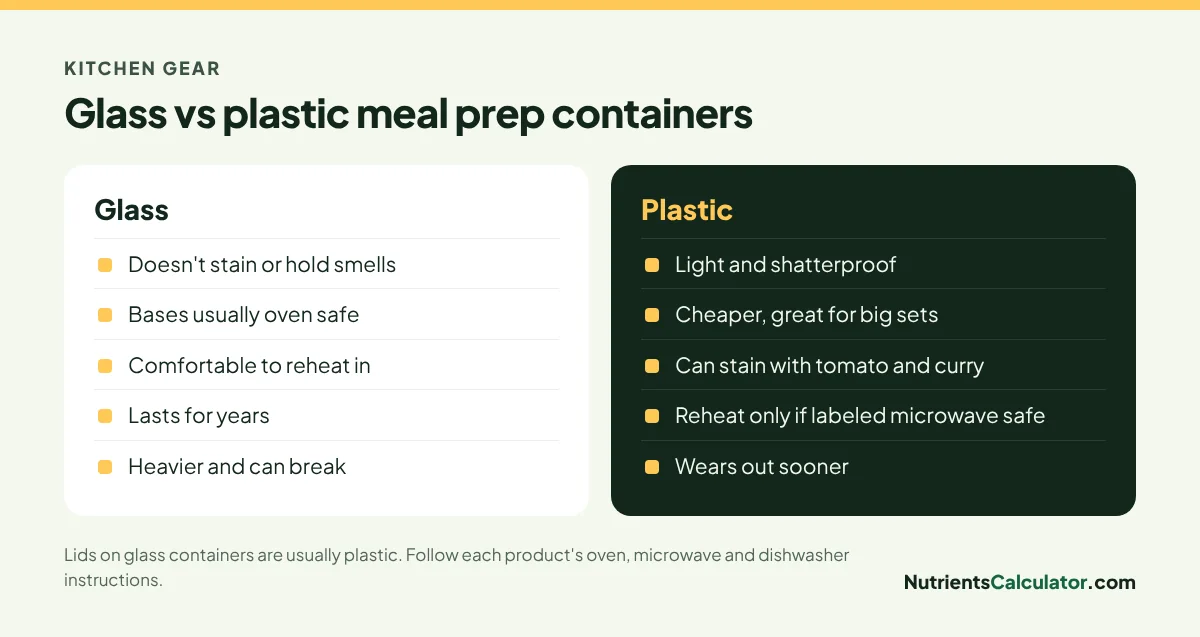
- In the glass vs plastic meal prep containers debate, glass wins for reheating, stains and lifespan; plastic wins for weight, cost and carrying.
- Only microwave plastic that’s labeled microwave safe; replace scratched or warped containers.
- Best glass: Pyrex Simply Store. Best plastic: Rubbermaid Brilliance.
- Many people use glass at home and plastic on the go.
Every meal prepper hits the same question: glass or plastic? Both keep food fresh, and both can be safe. The right choice depends on how you reheat, how you carry lunch and how long you want them to last. Here’s a clear comparison of glass vs plastic meal prep containers, with our top picks for each. For the full glass roundup, see the best glass meal prep containers.
Glass vs plastic meal prep containers: the short answer
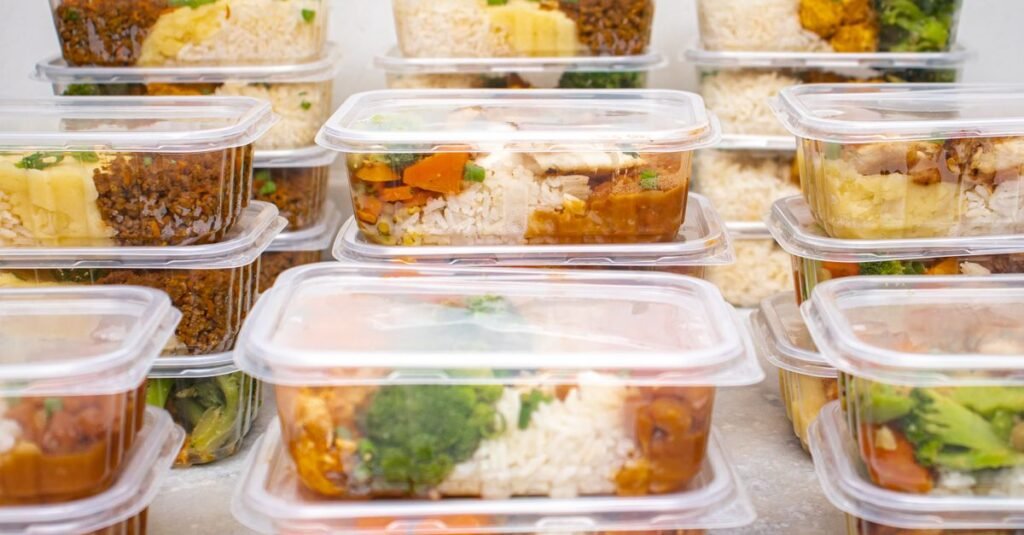
- Choose glass if you reheat in containers, cook tomato sauces and curries, or want containers that last for years.
- Choose plastic if you carry lunch on foot or by bike, pack for kids, or want a big, cheap set.
- Use both: glass for the fridge and home reheating, plastic for the commute.
Etekcity Food Scale
0.1g accuracy — the perfect companion for exact portions.
Safety
Glass is inert: it doesn’t react with food, and you can reheat food in it without concern. The lids are usually plastic, so don’t microwave them sealed or put them in the oven.
Plastic containers that are labeled microwave safe are made from materials meant for use with heat. Don’t microwave takeout tubs or margarine tubs, and replace containers that are cracked, warped or deeply scratched. If you’d rather limit heating food in plastic, move it to a plate or glass dish before microwaving.
Durability and stains
Glass doesn’t stain, scratch easily or hold smells, and a good set lasts many years. Plastic can stain from tomato sauce and turmeric, pick up odors, and warp in the dishwasher’s bottom rack. Stain-resistant plastics like Tritan last longer.
Weight and cost
Plastic is far lighter and cheaper, which matters if you prep 10 meals at a time or carry lunch all day. Glass costs more up front but often works out cheaper over its lifespan.
Best glass picks
Pyrex Simply Store: best glass overall
Affordable, oven, microwave, fridge and freezer safe glass with snap-on lids in several sizes.
Check price on Amazon Pyrex Simply Store Glass Food Storage Set
Glasslock Oven Safe Set: most leak-proof glass
Four-tab locking lids for soups and saucy meals.
Check price on Amazon Glasslock Oven Safe Glass Food Storage Container Set
Prep Naturals Glass Meal Prep Containers: best divided glass
Compartments keep protein, grains and vegetables apart.
Check price on Amazon Prep Naturals Glass Meal Prep Containers
Best plastic picks
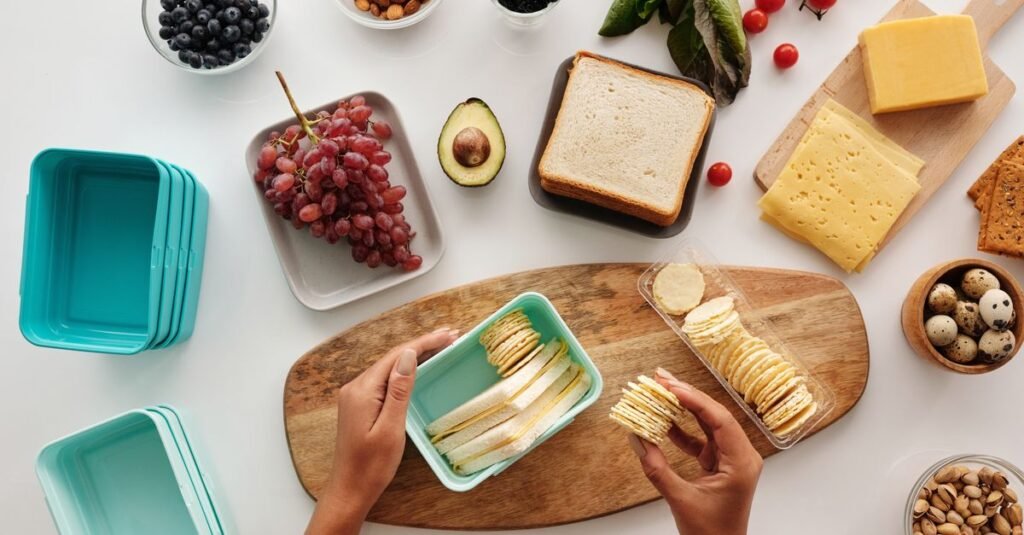
Rubbermaid Brilliance: best plastic overall
Crystal-clear, stain-resistant plastic with leak-proof latching lids that stack neatly.
Check price on Amazon Rubbermaid Brilliance Food Storage Containers Set
Bentgo Prep containers: best for portion-controlled lunches
Light, divided plastic containers that are microwave and dishwasher safe, sized for one meal.
Check price on Amazon Bentgo Prep 3-Compartment Meal Prep Containers
Rubbermaid TakeAlongs: best budget
Cheap, light containers for big batches, snacks and sending leftovers home with guests.
Check price on Amazon Rubbermaid TakeAlongs Food Storage Containers
Meal prep storage tips
- Cool food quickly and refrigerate within 2 hours.
- Eat within 3–4 days or freeze.
- Leave space for liquids to expand when freezing.
- Reheat to 165°F (74°C), stirring halfway.
- Label with dates so nothing gets forgotten.
New to prepping? Start with meal prep for beginners and plan your week with how to make a meal plan. For carrying, see the best lunch boxes for adults.
Glass vs plastic meal prep containers: cost over time
Plastic sets cost less up front, but they often need replacing as they stain, warp or crack. Glass costs more at first, yet a good set can last for years. If you meal prep every week, glass often works out cheaper in the long run. If you only prep occasionally or need lots of containers for a big family, a plastic set is a sensible start.
Which to use for which food
- Tomato sauces, curries and chili: glass, to avoid stains.
- Soups and stews: glass with locking lids, or insulated jars for carrying.
- Salads and sandwiches: plastic or glass; weight matters if you walk or bike.
- Snacks: small plastic containers or mason jars.
- Freezer meals: glass for reheating in the oven, or freezer-safe plastic for saving space.
Glass vs plastic meal prep containers: safety summary
- Glass: inert and safe for reheating. Avoid sudden temperature changes.
- Plastic: use containers labeled microwave safe for reheating, avoid takeout tubs, and replace worn containers.
- Lids: most lids are plastic for both types; vent them or remove them when microwaving.
How to build a mixed set
A practical mix for one person prepping weekday meals:
- 6 large glass containers for lunches and dinners.
- 4 small glass or plastic containers for snacks and sauces.
- 4 light plastic containers for carrying or sharing leftovers.
- A few mason jars for overnight oats and layered salads.
Meal prep habits that matter more than containers
The best containers won’t help if prep feels like a chore. Keep it simple: one protein, one grain, two vegetables and one sauce each week. Our meal prep for beginners guide shows how to do it in about an hour, and the slow cooker guide makes it even easier. Plan the week in our meal planner and it builds your shopping list for you.
The bottom line
Glass vs plastic meal prep containers isn’t an either-or. Glass is best for reheating, stain resistance and long life; plastic is best for light, cheap, portable meals. Pyrex Simply Store and Rubbermaid Brilliance are our top picks for each, and using both, glass at home and plastic on the go, gives you the best of both.
Frequently asked questions
Is glass or plastic better for meal prep?
Glass is better for reheating, stain resistance and longevity. Plastic is better for carrying, kids and big, cheap sets. Many people use glass at home and plastic for packed lunches.
Is it safe to microwave plastic containers?
Only microwave plastic containers labeled microwave safe, which are made for use with heat. Don't microwave takeout tubs or containers that are cracked or warped. If you'd rather avoid heating food in plastic, move it to glass or a plate first.
Are BPA-free plastics safe?
BPA-free containers are widely used and regulated as food-contact materials. If you want to minimize exposure to plastic chemicals in general, avoid heating food in plastic and replace containers that are scratched or cloudy.
Can glass containers go from freezer to oven?
Avoid sudden temperature changes. Let frozen glass come closer to room temperature, or thaw in the fridge, before putting it in a hot oven, and never put cold glass on a hot burner.
How long do plastic meal prep containers last?
It depends on use, but replace plastic containers when they're cracked, warped, deeply scratched, cloudy or hold onto smells. Good glass containers can last many years.
Are glass containers worth the extra cost?
For most home meal preppers, yes. They last longer, reheat better and don't stain, so the higher upfront price often pays off over time.
Which is better for the environment, glass or plastic?
Glass takes more energy to make and ship, but it lasts much longer and is endlessly recyclable in many areas. Using any reusable container for years is better than disposable packaging.
Do plastic containers stain with tomato sauce?
Often, yes. Oil-based, colorful foods like tomato sauce and curry can stain plastic. Glass or stain-resistant plastics like Tritan help.
Can you put glass meal prep containers in the freezer?
Yes, if they're labeled freezer safe. Leave space for food to expand and avoid moving them straight into a hot oven.
Are mason jars good for meal prep?
Yes, for salads, overnight oats, soups and snacks. Wide-mouth jars are easiest to fill and clean.
Which is lighter for carrying lunch, glass or plastic?
Plastic is much lighter. If you walk, bike or take transit, plastic or a mix of plastic and one glass container is easier to carry.
Sources
- USDA FSIS: Microwave Ovens and Food Safety
- USDA FSIS: Leftovers and Food Safety
- FDA: Bisphenol A (BPA): Use in Food Contact Application
This article is for general information and isn’t medical advice. Talk to your doctor or a registered dietitian about your own needs, especially if you have a health condition, are pregnant or take medication.