Part of our guide: How Much Water Should I Drink a Day? What the Science Actually Says
Key takeaways
- Learning how to drink more water is mostly about cues, not willpower: link drinks to things you already do.
- Keep a filled bottle in sight and know how many refills make your day.
- Coffee, tea, milk and sparkling water all count, and water-rich foods add about 20%.
- New habits take time: a real-world study found a median of about 66 days for a daily habit to feel automatic.
If you finish most days having had two coffees and very little else, you’re not alone. Knowing you should drink more water is easy; remembering to do it during a busy day isn’t. The good news is that small, well-placed habits make a big difference. Here’s how to drink more water without thinking about it, with 12 habits and a simple daily schedule.
First, know your target
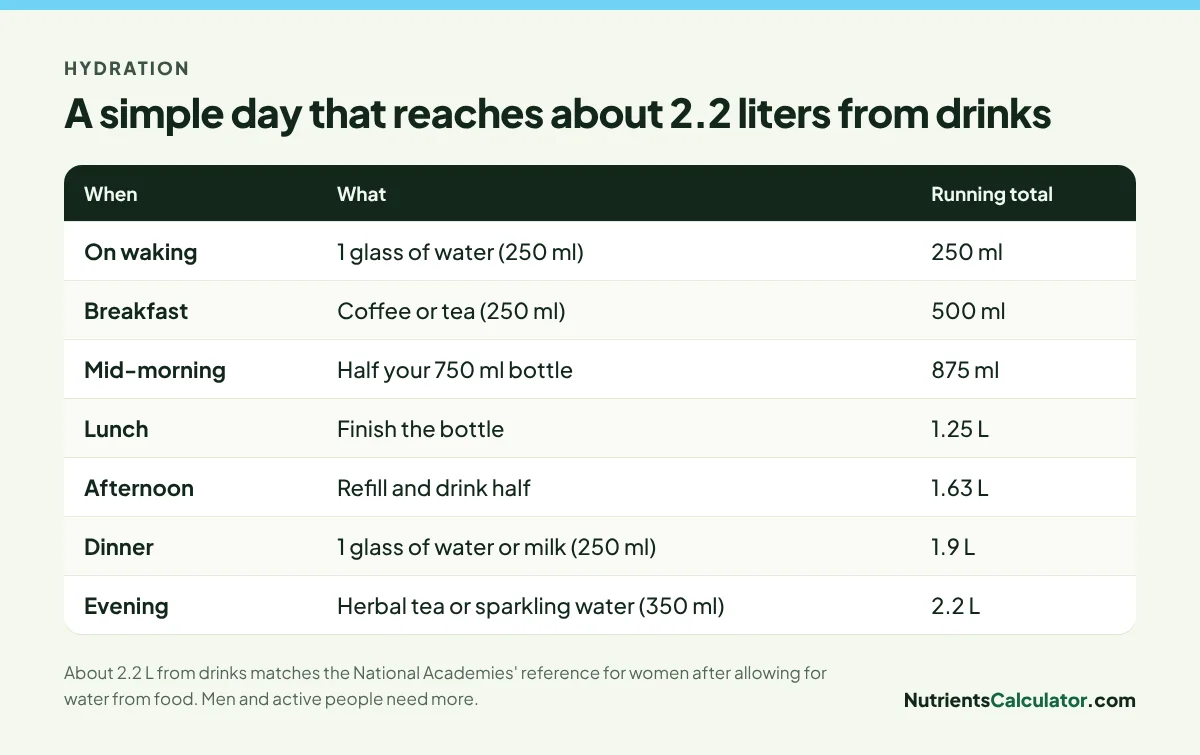
The National Academies’ reference is about 2.7 liters of total water a day for women and 3.7 liters for men, including water from food (National Academies). About 20% usually comes from food, so drinks need to supply roughly 2.2 liters (9 cups) for women and 3 liters (12.5 cups) for men, more when it’s hot or you’re active. Our pillar guide on how much water to drink a day explains the details.

Etekcity Food Scale
0.1g accuracy — the perfect companion for exact portions.
How to drink more water: 12 habits
1. Drink a glass when you wake up
Keep a glass or bottle by your bed or the kettle. It’s an easy 250 ml before the day gets busy.
2. Have a drink with every meal and snack
Three meals and two snacks with a glass each is already 1.25 liters.
3. Stack it onto existing habits
Pair water with something you already do: making coffee, starting your laptop, brushing your teeth, arriving home. Linking a new habit to an existing cue is one of the most reliable ways to build it. Our guide to how long it takes to form a habit explains why.
4. Use one bottle and know your refills
A 750 ml bottle filled three times is 2.25 liters. Knowing “three bottles” is easier than counting glasses.
5. Mark the bottle
Draw time markers on your bottle (10 AM, 12 PM, 3 PM, 5 PM) or buy one with them. It turns a vague goal into small checkpoints.
6. Keep it in sight
On your desk, in the car, in your bag. Out of sight really is out of mind.
7. Make it taste better
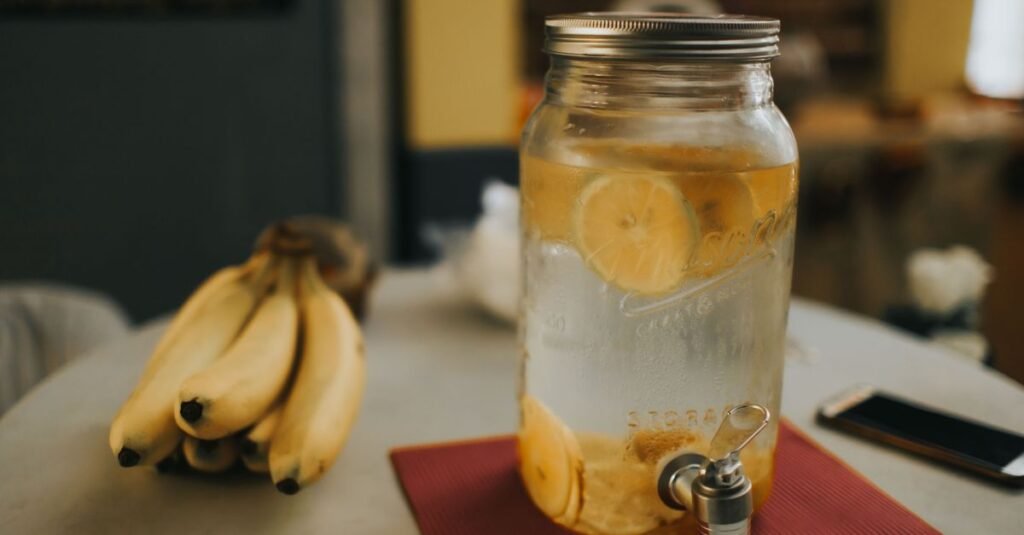
Chill it, add lemon, lime, cucumber, berries or mint, or switch to sparkling water. Herbal teas, hot or iced, count too.
8. Count coffee, tea and milk
They all count toward your fluids. In regular coffee drinkers, moderate coffee hydrated about as well as water (Killer et al., 2014); see does coffee count as water?
9. Eat your water
Cucumber, tomatoes, watermelon, strawberries, oranges and soups are mostly water. A big salad can supply a glass’s worth. See our list of water-rich foods.
10. Swap one sugary drink
Replace one soda, sweet tea or juice a day with water or sparkling water. It raises your water intake and cuts sugar at the same time (sugary drinks).
11. Drink before you’re thirsty when it’s hot or you exercise
Have a glass before a workout, sip during anything over an hour, and drink afterward. Older adults, whose thirst signals weaken, benefit from drinking on a routine rather than waiting to feel thirsty.
12. Track it for two weeks
Logging drinks for a couple of weeks shows where the gaps are, usually mid-morning and mid-afternoon. Once it’s a habit, you can stop counting.
Signs it’s working
- You rarely feel thirsty.
- Your urine is pale yellow most of the day.
- Afternoon headaches or tiredness ease.
If you’re often dizzy, have dark urine or headaches despite drinking more, read the signs of dehydration and speak to a doctor if it continues.
Don’t overdo it
Drinking far more than you need isn’t helpful and, in extreme cases (very large volumes quickly, often during long endurance events), can lower blood sodium dangerously. Spread drinks through the day and let thirst guide you once your habits are in place. If you have heart, kidney or liver disease, follow your doctor’s fluid advice.
Give it time
Habits take longer than the “21 days” myth suggests. A study that followed people building a new daily habit found it took a median of 66 days to feel automatic, and drinking a bottle of water with lunch was one of the habits people chose (Lally et al., 2010). Missing a day didn’t derail progress. Keep the cues simple and consistent, and it gets easier each week.
The bottom line
How to drink more water? Attach it to things you already do, keep a bottle in sight and know your refills, make it taste good, count coffee, tea and water-rich foods, and track it for a couple of weeks. Small habits add up to the 9–13 cups most adults need, without relying on willpower.
Frequently asked questions
What's the easiest way to drink more water?
Link drinking to things you already do: a glass when you wake up, one with every meal, one each time you make coffee. Keeping a filled bottle in sight is the other big one.
Does sparkling water count?
Yes. Plain sparkling water hydrates just like still water. Choose unsweetened versions; flavored ones with sugar add calories.
Is it OK to drink a lot of water at once?
It's better to spread drinks through the day. Your body handles steady intake well, and drinking very large amounts quickly isn't necessary for most people.
How do I drink more water if I don't like the taste?
Chill it, add citrus, cucumber, berries or mint, try sparkling water or herbal tea, and use a filter if your tap water tastes of chlorine.
Sources
- National Academies: Dietary Reference Intakes for Water, Potassium, Sodium, Chloride, and Sulfate (2005)
- Mayo Clinic: Water — how much should you drink every day?
- Lally P et al. How are habits formed: modelling habit formation in the real world. Eur J Soc Psychol, 2010
- Killer SC et al. No evidence of dehydration with moderate daily coffee intake. PLoS One, 2014
This article is for general information and isn’t medical advice. Talk to your doctor or a registered dietitian about your own needs, especially if you have a health condition, are pregnant or take medication.