Part of our guide: How to Create a Calorie Deficit Without Feeling Starved
Key takeaways
- Low-calorie filling foods are high in water, fiber or protein, so you get a lot of food for few calories.
- Research shows people tend to eat a similar amount of food by weight, so lower-calorie-per-bite meals reduce calories without extra hunger.
- The best picks: vegetables, fruit, broth soups, potatoes, oatmeal, Greek yogurt, eggs, beans and lentils.
- Fill half your plate with them, and keep a protein food at every meal.
One of the hardest parts of losing weight is feeling hungry. The good news: you don’t have to eat smaller meals, just lower-calorie ones. Low-calorie filling foods give you large, satisfying portions for relatively few calories. This approach, often called volume eating, is backed by decades of research on energy density. Here are 20 of the best foods, ranked with USDA data, and how to build meals around them.
Why some foods fill you up for fewer calories
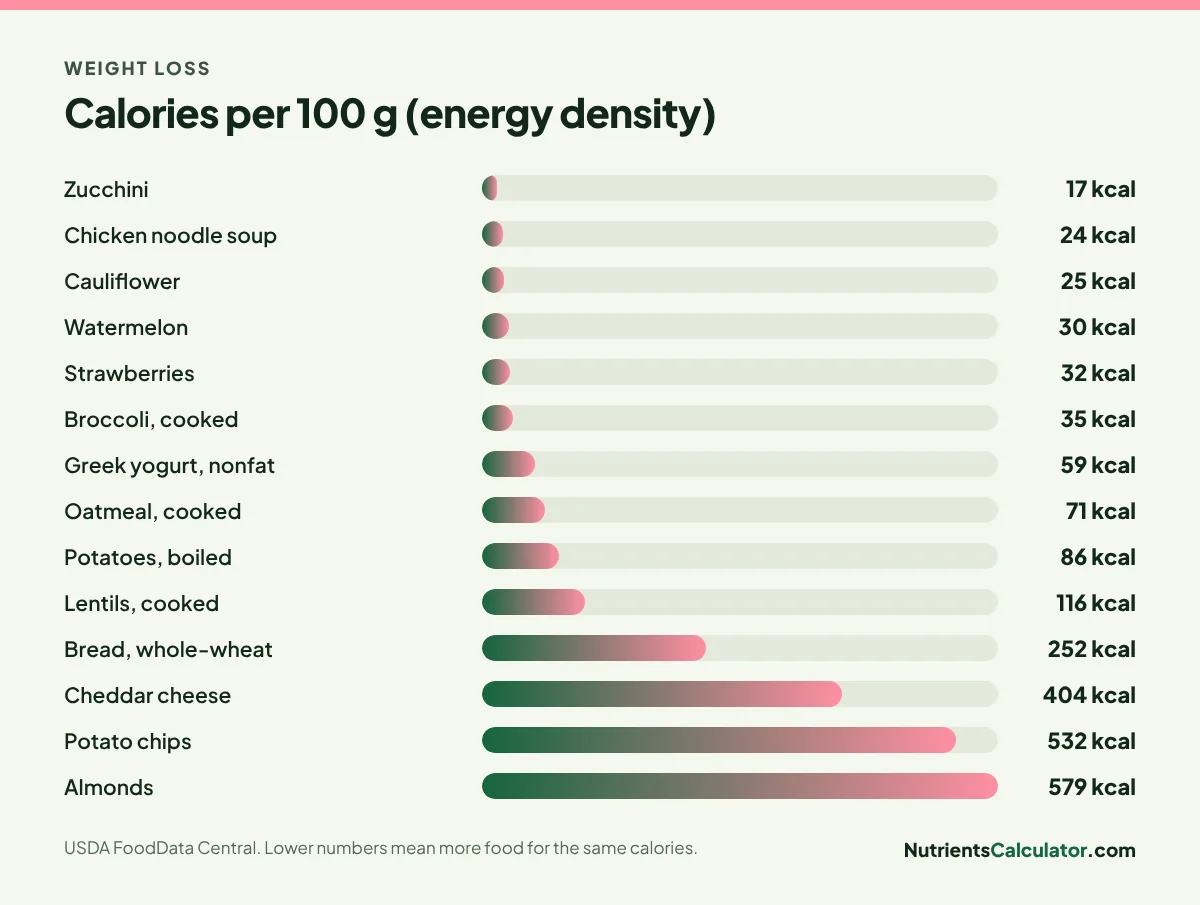
Energy density is the number of calories in a given weight of food. Zucchini has about 17 calories per 100 g; almonds have about 579. Research by Barbara Rolls and colleagues at Penn State found that people tend to eat a fairly consistent amount of food, so when meals are lower in energy density, they eat fewer calories while feeling just as full (Rolls, 2017; Rolls, 2009).
Three things lower energy density and increase fullness:
- Water adds weight and volume with zero calories.
- Fiber adds bulk and slows digestion.
- Protein is the most filling macronutrient per calorie.
Fat does the opposite: at 9 calories per gram, it raises energy density fast.
Etekcity Food Scale
0.1g accuracy — the perfect companion for exact portions.
20 low-calorie filling foods
Vegetables (10–55 calories per cup)
- Zucchini: about 21 calories per cup.
- Cauliflower: about 27 per cup raw; riced cauliflower stretches rice dishes.
- Broccoli: about 55 per cup cooked, with fiber and vitamin C.
- Spinach and salad greens: about 7 per cup raw.
- Tomatoes and cucumbers: 16–32 per cup.
- Bell peppers: about 30 per cup.
Fruit (45–85 calories per cup)
- Watermelon: about 46 calories per cup.
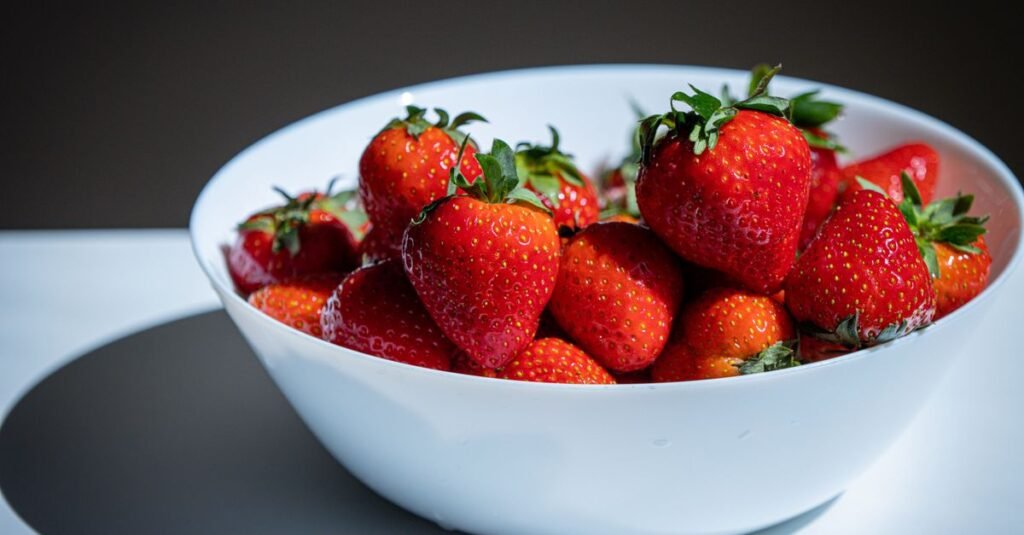
- Strawberries: about 49 per cup.
- Apples: about 95 for a medium apple, with 4 g fiber, and very chewy, which slows you down.
- Blueberries: about 84 per cup.
Soups
- Broth-based soups: chicken noodle soup (canned, prepared) is about 60 calories per cup. Starting a meal with soup tends to reduce how much people eat at the meal.
Filling starches
- Boiled potatoes: about 134 calories per cup with 3 g fiber. Potatoes are among the most filling foods per calorie when they’re not fried.
- Oatmeal, cooked with water: about 166 calories per cup and mostly water once cooked.
- Air-popped popcorn: about 31 calories per cup, a whole grain.
Protein foods
- Plain nonfat Greek yogurt: about 100 calories and 17 g protein per 6 oz.
- Egg whites: about 17 calories and 3.6 g protein each; whole eggs are about 78.
- 2% cottage cheese: about 92 calories and 12 g protein per ½ cup.
- Chicken breast: about 140 calories and 26 g protein per 3 oz.
- White fish such as cod: lean and high in protein.
Beans and lentils
- Lentils: about 230 calories, 18 g protein and 16 g fiber per cup, a rare combination of fiber and protein.
Foods that are easy to overeat
These aren’t “bad”, but their calories add up in small portions:
- Nuts and nut butters (almonds: 162 calories per ounce).
- Cheese (cheddar: 113 per ounce).
- Chips and crackers (potato chips: 149 per ounce).
- Granola (about 300 per ½ cup).
- Oils and butter (olive oil: 119 per tablespoon).
Use them as flavorings and toppings rather than the base of the meal. More examples are in foods with more calories than you think.
How to build a high-volume meal
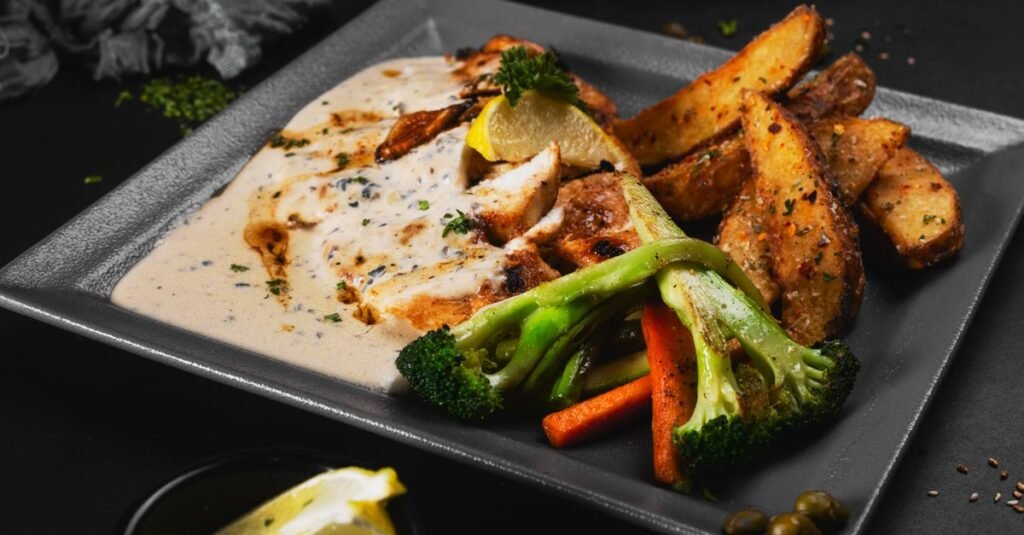
- Half the plate: vegetables or salad. Frozen vegetables count.
- A quarter: lean protein. Palm-sized portion.
- A quarter: a filling starch. Potatoes, oats, beans, whole grains.
- A thumb of fat: olive oil, cheese, avocado or nuts.
- Start with soup or salad when you’re especially hungry.
Example: same calories, very different plates
A 3 oz bag of potato chips (about 450 calories) vs a plate of 4 oz chicken breast, 1 cup boiled potatoes, 2 cups of broccoli and a teaspoon of olive oil (about 470 calories). The second is about seven times as much food by weight, with roughly 45 g of protein and 13 g of fiber.
Using volume eating to lose weight
Low-calorie filling foods make a calorie deficit much easier to keep, because the deficit doesn’t come with constant hunger. Combine them with enough protein (25–40 g per meal) and plenty of fluids (water-rich foods count), and most people find they can eat satisfying meals while losing weight steadily.
Not sure how many calories are on your plate? Snap it and our analyzer estimates calories, protein and fiber in seconds.
The bottom line
Low-calorie filling foods work because they’re full of water, fiber or protein: vegetables, fruit, broth soups, potatoes, oatmeal, popcorn, Greek yogurt, eggs, lean meats and lentils. Build half of every plate from them, add protein and a little fat, and you can eat generous portions while keeping calories in check.
Frequently asked questions
What is the most filling low-calorie food?
Foods that combine water, fiber and protein are the most filling per calorie: vegetables, broth-based soups, fruit, potatoes, oatmeal, Greek yogurt, eggs, beans and lentils. Boiled potatoes are especially filling for their calories.
What is volume eating?
Volume eating means building meals around foods with low energy density, so you eat a large, satisfying amount of food for relatively few calories. It's based on research showing people tend to eat a consistent weight of food.
Are low-calorie foods enough on their own?
No. You still need protein, healthy fats and enough total calories. Use low-calorie, high-volume foods to fill half the plate, alongside a protein food and a moderate portion of starch.
Is popcorn a good low-calorie snack?
Air-popped popcorn is about 31 calories per cup and a whole grain with fiber, so 3 cups is roughly 93 calories. Butter and oil toppings add calories quickly.
Sources
- Rolls BJ. Dietary energy density: applying behavioural science to weight management. Nutrition Bulletin, 2017
- Rolls BJ. The relationship between dietary energy density and energy intake. Physiology & Behavior, 2009
- USDA FoodData Central
This article is for general information and isn’t medical advice. Talk to your doctor or a registered dietitian about your own needs, especially if you have a health condition, are pregnant or take medication.